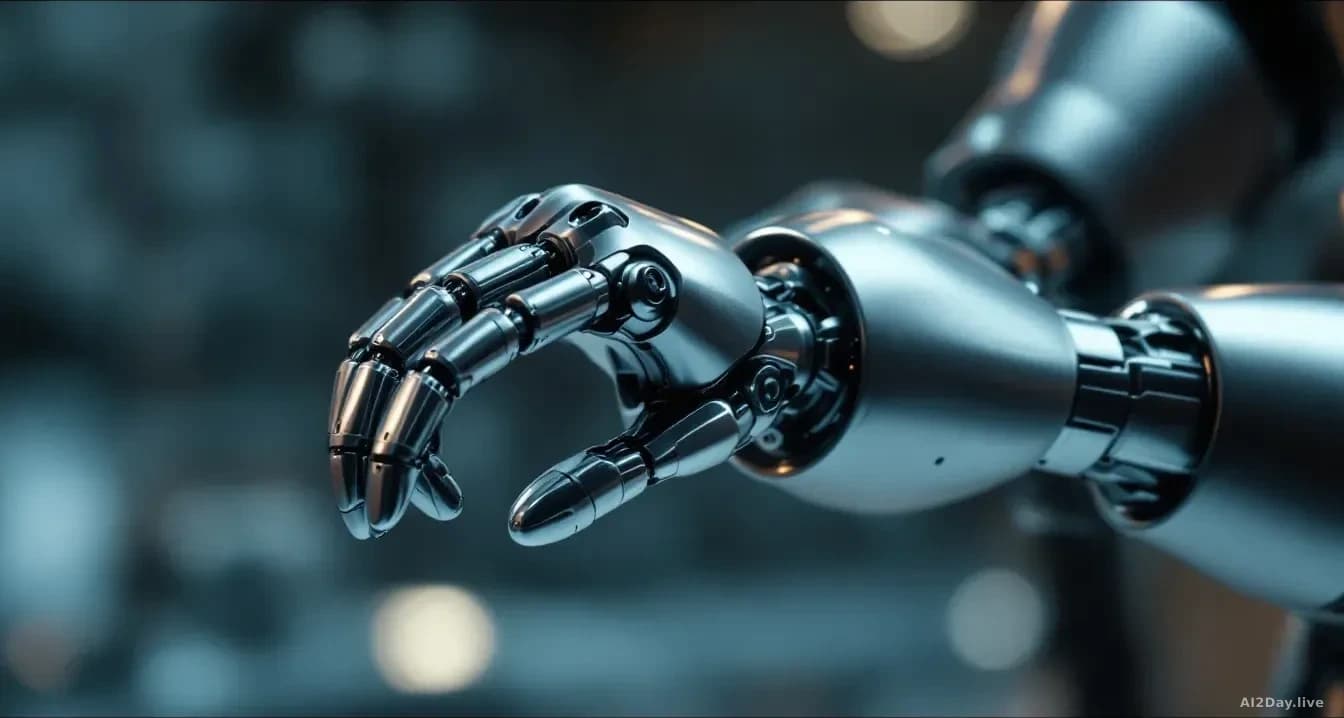
This humanoid robot can feel your touch, and it is coming to shipyards first
Generative Bionics built Gene.01 in six months. It has skin that senses temperature and force, and it is already being trained to weld ships.

Key points
- Generative Bionics unveiled the Gene.01 humanoid robot at the AMD Advancing AI 2026 event this week.
- The company built Gene.01 from concept to working prototype in six months.
- Generative Bionics raised €70 million (about $81.2 million) in late 2025 to develop the platform and build its first production plant.
- Gene.01's first confirmed industrial job is welding in complex shipyard environments, through a partnership with shipbuilder Fincantieri.
- Generative Bionics has open-sourced Gene.01's digital model so developers can start building applications with it today.
Most humanoid robots look like they belong in a science-fiction film. Gene.01 is built to work next to a welder in a shipyard.
Generative Bionics, an Italian startup spun out of the Italian Institute of Technology in 2024, brought its first robot to the United States this week. The debut happened at AMD Advancing AI 2026, a tech industry conference. As reported by The Robot Report, the company went from a blank-page concept to a fully working robot in just six months.
The thing that sets Gene.01 apart is its skin. The robot is covered in what Generative Bionics calls full-body distributed tactile skin, a layer of sensors that detects touch, temperature, closeness, and the amount of force being applied. That last one matters more than it might sound.
Teaching a robot to grip something tightly enough to hold it, but not so tightly that it crushes it, is a problem that teaching by video alone cannot solve. Gene.01 lets a human worker physically demonstrate a task, including the force needed, and the robot learns from that direct experience. It can also sense when a person is nearby and begin adjusting before any contact happens, which is exactly what you want when a machine is working beside people.
CEO Daniele Pucci describes the approach as "physical AI", meaning AI, short for artificial intelligence, the technology behind systems like ChatGPT, that is designed to understand and respond to the real physical world rather than just text and images. Instead of bolting software onto a separate hardware frame, Generative Bionics builds the robot's body, movement, and intelligence as one unified system. Think of it like designing a car so the suspension, the steering, and the computer that controls them are all optimised together from the start.
The first real-world test is a partnership with Fincantieri, one of the world's largest shipbuilders. The plan is a welding robot configured specifically for shipyard conditions.
What does this mean for workers in industrial jobs?
The honest answer is that Gene.01 is designed to work alongside people, not replace them wholesale. The whole sensing-skin system exists to make that collaboration safer. Generative Bionics is pitching this at sectors including logistics, manufacturing, public safety, inspection, and healthcare, though shipbuilding is the only confirmed deployment so far.
The company has also published Gene.01's digital twin, a software model of the robot that developers can download and experiment with today, using standard tools they likely already have. That openness could speed up how quickly useful applications appear.
Generative Bionics has the backing to move fast. The €70 million it raised in late 2025 funds product development, AI training, and a first production plant. It is also building what it calls a European physical AI supply chain, including a partnership with German actuator specialist Synapticon to keep key components manufactured and tested within Europe.