Robots Need to Feel Friction to Truly Understand the Physical World
A new model class called VμA puts the physics of grip at the centre of robot thinking. Here is why that matters for every robot that picks things up.

Key points
- Contactile, a tactile-sensor company, proposes a new AI model class called VμA (vision-mu-action) that feeds robots real-time friction data alongside camera vision.
- Current robot AI models miss a key physical quantity: the coefficient of static friction (mu), which determines whether a gripped object slips or holds.
- Contactile's PapillArray sensor computes friction and slip state at the sensor itself, with no processing delay, in real time.
- The gap between robot simulation training and real-world performance is blamed largely on the absence of friction physics in training environments.
A robot arm reaches into a box, grips a wet bottle, and drops it. The camera saw the bottle. The joints felt the load. But neither told the robot how slippery the surface was. That single missing fact is the reason robot grippers still fail on tasks a human toddler handles without thinking.
Contactile, an Australian sensor company, argues in a new technical piece first reported by The Robot Report that this gap runs deeper than anyone has fixed. The problem sits inside the AI models that robots use to reason about the world.
What is a world model, and why does it need friction?
A world model is the robot's internal picture of physical reality: a piece of software that predicts what will happen next so the robot can plan. Think of it as the robot asking itself, "If I squeeze a little harder, will this egg crack?" A good world model means the robot does not have to memorise every task. It can reason through new ones.
But a world model is only as good as the information it starts with. Today's models condition mostly on two inputs: images from cameras and joint positions from the robot's own motors. For moving through open space, that is fine. For gripping and handling objects, it is not.
The missing number is called the coefficient of static friction, written as mu. This is the physical value that decides whether a grasped object stays grasped. It changes depending on the material, whether the surface is wet, worn, or coated, and the temperature. A camera cannot see it. Motor currents cannot calculate it accurately. A pressure map can tell you something is being gripped, but not whether the grip is about to fail.
Without mu, a robot's world model is reasoning from an incomplete picture of reality. It can learn patterns from training data, but it cannot reliably transfer those lessons to a new object or a changed surface, because the one variable that governs grip success is simply not there.
The sensor that measures what cameras cannot
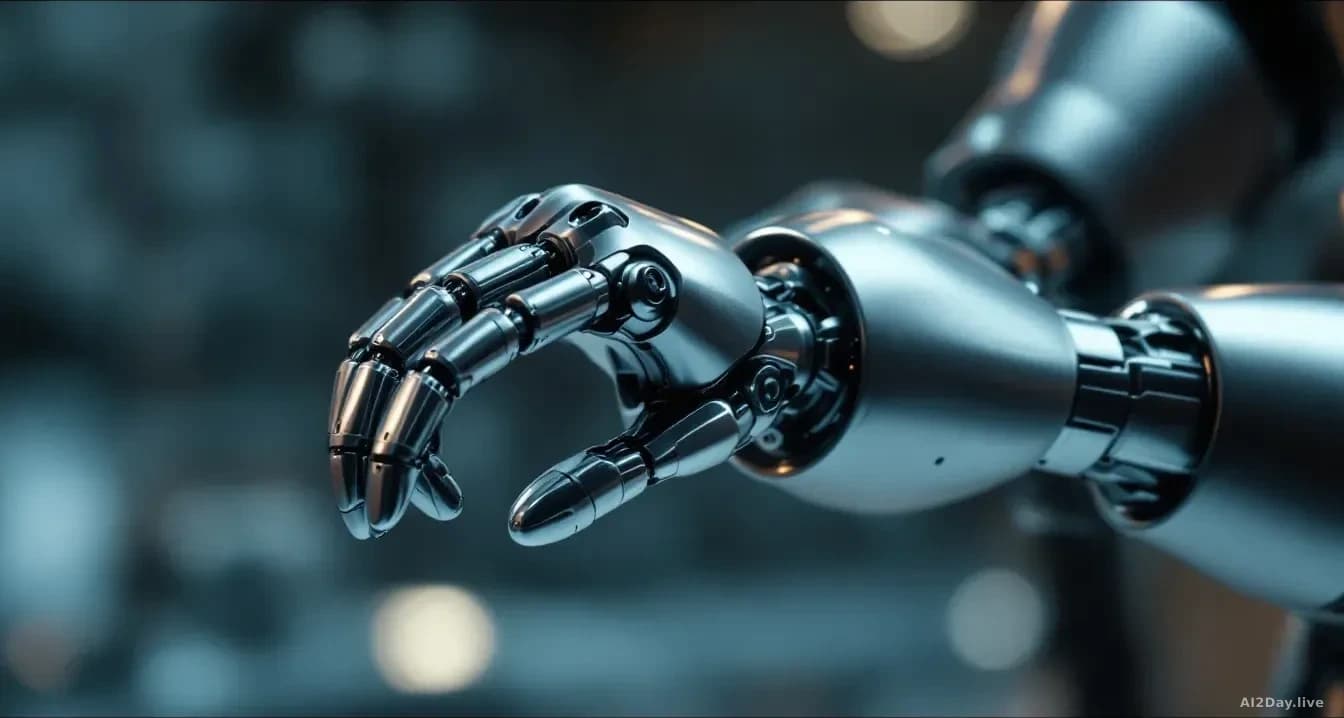
Contactile's PapillArray Tactile Compute Module is a fingertip-sized sensor array that sits on the robot's gripper. Each tiny sensing point, called a taxel, measures force in all three directions. The sensor then calculates mu directly, in real time, at the sensor itself without sending data to a separate computer first.
The outputs include the full 3D force at each taxel, overall force and torque across the contact patch, the current friction value, whether each point is slipping or holding, and the minimum grip force needed to prevent a drop. These are grounded in contact physics, not learned guesses.
Contactile proposes naming models that use this full signal stack VμA: vision-mu-action. Earlier model generations got their own names when a new input became important enough. Vision-language-action (VLA) models added natural language to robot learning. Vision-force-action (VFA) models added force. VμA adds the actual friction physics that have been absent from every prior approach.
On the training side, VμA data enriches datasets with causal physical signals rather than statistical proxies. On the deployment side, a robot equipped with a PapillArray knows the friction value of what it is holding right now, and can adapt its grip instantly if conditions change. No guesswork. No domain randomisation workarounds.
For industries where robots handle wet produce, coated packaging, or variable materials, getting grip physics right is not a research curiosity. It is the difference between a working production line and one that needs constant human correction.