The Factory Floor Wants AI to Act, Not Just Advise. The Hard Part Is Knowing When to Hand Back Control.
Industrial AI is getting good enough to run processes on its own. Getting humans and machines to share that responsibility safely is the problem nobody has fully solved.
Key points
- AI2Day has tracked the shift from AI-as-advisor to AI-as-operator across 14 factory automation stories, the first filed on 20 July 2026.
- The central design tension in factory AI isn't capability, it's accountability: who is responsible when an autonomous system makes a costly or dangerous call.
- Human operators lose meaningful oversight when AI acts faster than they can follow, a problem MIT Technology Review has examined closely.
- No industry-wide standard yet exists for deciding when industrial AI should act alone and when it must pause for a human decision.
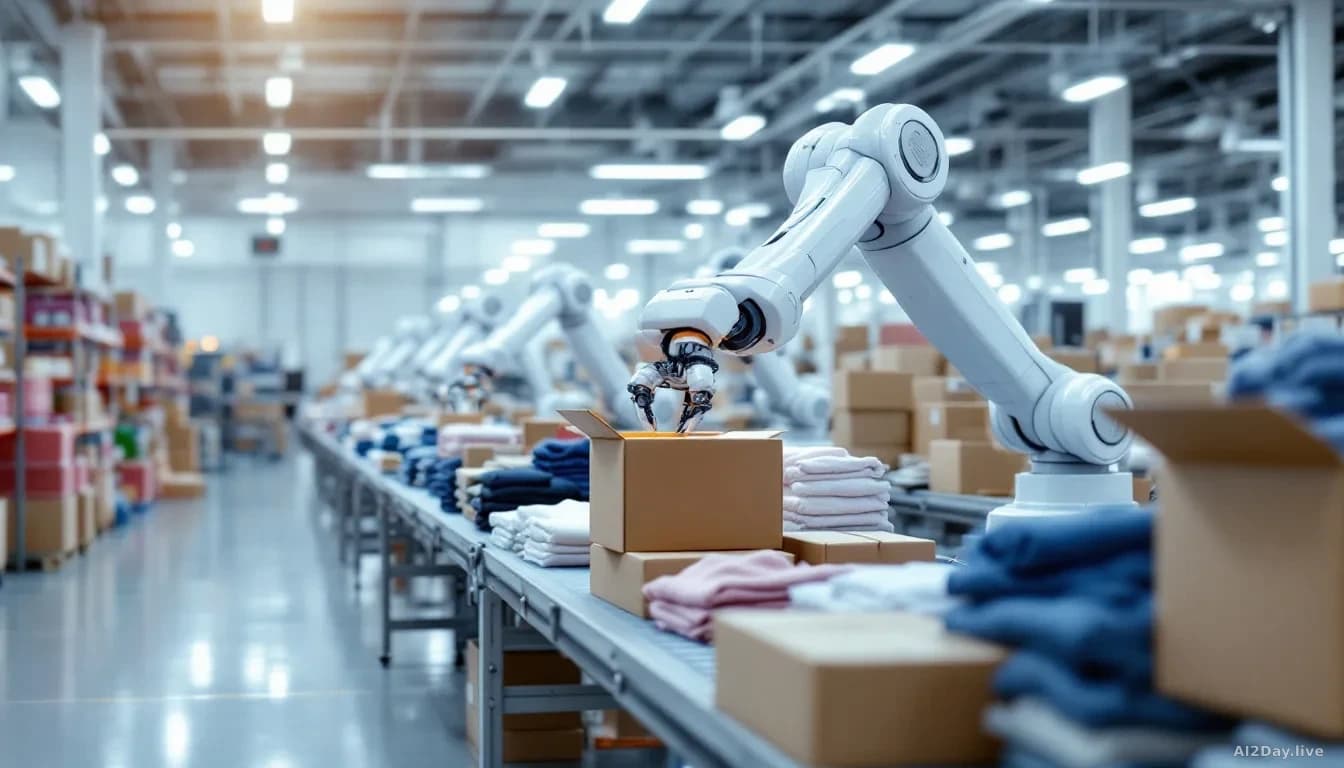
Something has quietly changed on the factory floor. A year ago, the pitch for industrial AI was a smarter dashboard, software that watched your machines and flagged a problem for a person to fix. Now the pitch is an AI that fixes it.
That shift is mostly progress. But it opens a harder question: when the AI acts and something goes wrong, who was in control?
Why this matters to anyone who works with machines
Autonomous industrial AI, software that can adjust a production line or shut down a faulty cell without waiting for a human, moves faster than any operator can track in real time. Speed is the point. Speed is also the trap.
When a system acts in milliseconds, the human watching the screen isn't making decisions. They're reading a log of decisions already made. That's a different job, and it carries different risks. An operator who can't intervene in time isn't really in control, even if the interface says they are.
Our story on AI running power grids, published on 8 October 2026, found the same pattern: AVEVA's chief technologist argued that human guardrails need to come before autonomy, not after. The factories that handle this tension best aren't the ones with the most autonomous AI. They're the ones that drew a deliberate line between decisions the AI owns and decisions a person must sign off on, and drew it before anything went wrong.
MIT Technology Review, which has covered this design problem closely, puts the challenge plainly: autonomy and human oversight aren't opposites, but making them work together requires engineering choices that most deployments skip.
What good design actually looks like
The clearest framework coming out of serious industrial deployments has three layers. First, define which decisions carry enough consequence that a human must always approve them, no matter how fast the AI could act. Second, build the interface so operators understand what the AI is about to do, not just what it already did. Third, make it genuinely easy to override, without penalising the operator later if the AI's choice would have been better.
That third layer is where most systems quietly fail. If data logs every human override and managers review them, operators learn to let the AI run rather than risk looking wrong. The override button exists; nobody presses it.
Nvidia's backing of German industrial AI startups and Mistral's Munich hub for physics-based industrial models both point to how much capital is now chasing the autonomous end of this market. The investment logic is sound, but the governance logic is still catching up.
For workers on the ground, the practical question isn't whether AI will take over routine decisions. It probably will. What matters is whether the system is designed so that a person can catch a bad call before it becomes a bad outcome. Right now, that depends almost entirely on the company doing the deploying, because no cross-industry standard says how that line must be drawn.