Anthropic's Customers Are Spending Nine Times More Year on Year. Its Power Bill Is Catching Up Fast.
The Claude maker files for a Nasdaq IPO with a revenue retention rate that analysts are calling absurd, while research links its compute appetite to billions in public health costs.
Key points
- A peer-reviewed study projects that U.S. Data centers will impose more than $20 billion in annual public health costs by 2028, with the heaviest burden falling on counties where per-household costs reach roughly seven times the national average.
- Anthropic's net revenue retention stood at roughly 900% as of 30 September 2026, according to its IPO prospectus.
- Anthropic is the largest single customer of SpaceX's AI division, committed to spending $3.1 billion per month on compute capacity, much of it from methane-burning turbines at SpaceX's Memphis facilities.
- The Federal Trade Commission has demanded that Anthropic executives testify as part of a consumer-safety probe covering the company and OpenAI.
Anthropists like to say their AI assistant, Claude, starts small. One team, one experiment, a modest contract. Then it spreads. The IPO prospectus Anthropic filed this week tells that story in numbers: net revenue retention came in at around 900% as of 30 September 2026, according to CNBC. For context, Altimeter Capital partner Jamin Ball puts the median publicly traded cloud-software company at 108%. Existing customers are, on average, spending nine times what they spent twelve months earlier.
Austin Allred, founder of AI training firm Gauntlet AI, put it plainly on X: "Anthropic net revenue retention is NINE HUNDRED PERCENT. What a ridiculous stat."
We first reported Anthropic's march toward a stock market debut in our 18 October story on its $16.8 billion quarterly revenue; the 900% retention figure adds the starkest commercial argument yet for why this IPO is happening now.
Why does the power bill matter so much?
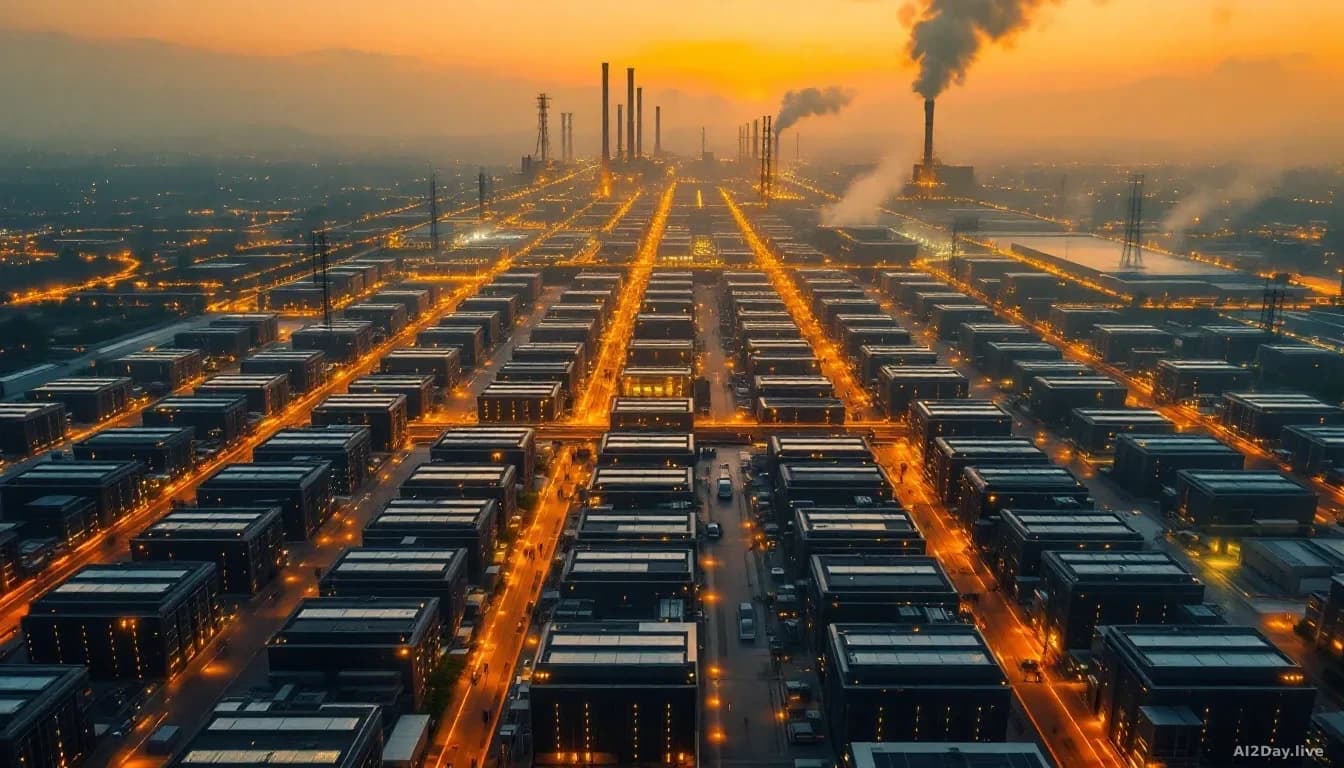
Because compute costs are growing nearly as fast as revenue. Anthropic has committed to spending $3.1 billion per month on raw computing power through SpaceX's AI division, making it that unit's biggest single customer. The capacity comes largely from facilities near Memphis, called Colossus and Colossus 2, powered by methane-burning gas turbines that have already drawn multiple lawsuits over alleged Clean Air Act and noise-pollution violations.
The health picture behind those turbines is sharpening. Research published on arxiv.org by scientists at Caltech and UC Riverside models air-pollutant emissions from U.S. Data centers and estimates the resulting public-health damage. Their central finding: the total annual burden is on track to exceed $20 billion by 2028. Costs aren't spread evenly. In counties closest to the largest facilities, each household bears roughly seven times the national average in health impacts, from respiratory illness to other pollution-related conditions. The authors propose a "health-informed computing framework" to factor neighbourhood-level costs into decisions about where and when to run workloads. Nothing like it exists in standard industry practice.
Anthropic's own filing acknowledges the problem from the other direction: higher average temperatures will push up the power and water needed to cool its servers, raising operating costs over time.
What else is complicating the IPO?
Quite a lot. The Federal Trade Commission, which AI2Day first covered in this context on 3 August 2026, has demanded that Anthropic executives testify in a consumer-safety investigation it's running alongside a parallel probe into OpenAI.
The company's relationship with the Trump administration has also been rough. In June, Anthropic had to disable two advanced models, Claude Fable 5 and Mythos 5, to comply with an export-control directive; they came back online after roughly two weeks of negotiations. In March the Pentagon banned Anthropic outright, the company sued, and a San Francisco federal judge ruled the ban illegal in late August, though litigation continues in Washington, D.C.
There's a thread running through all of this. The 900% retention figure is real. So is the $20 billion health-cost projection. Those two numbers aren't separate stories: one funds the infrastructure that produces the other, and no amount of historic growth rate changes that arithmetic. What to watch is whether the IPO market, already jittery after several high-profile withdrawals, prices in both sides of that equation.