When a Chatbot Writes the Evacuation Order
A county emergency manager used an AI chatbot to generate a hurricane wind graphic that turned out to be meteorologically wrong. That incident points to a genuine tension: AI can write better disaster alerts than most humans, but the humans using it aren't always ready.
Key points
- An Alabama county emergency manager generated a hurricane wind-threat graphic using an AI chatbot; a meteorologist identified it as meteorologically inaccurate, according to Wired.
- Poor disaster communication has contributed to real deaths: a mudslide in Montecito, California, killed 23 people after many residents read a "stay alert" evacuation notice as optional.
- AI startup EM1 has contracts with roughly 100 government agencies and school districts, but none are yet using it to automate live extreme-weather alerts.
- AI2Day first covered emergency management and AI on 10 September 2026, and the safety gap keeps widening.
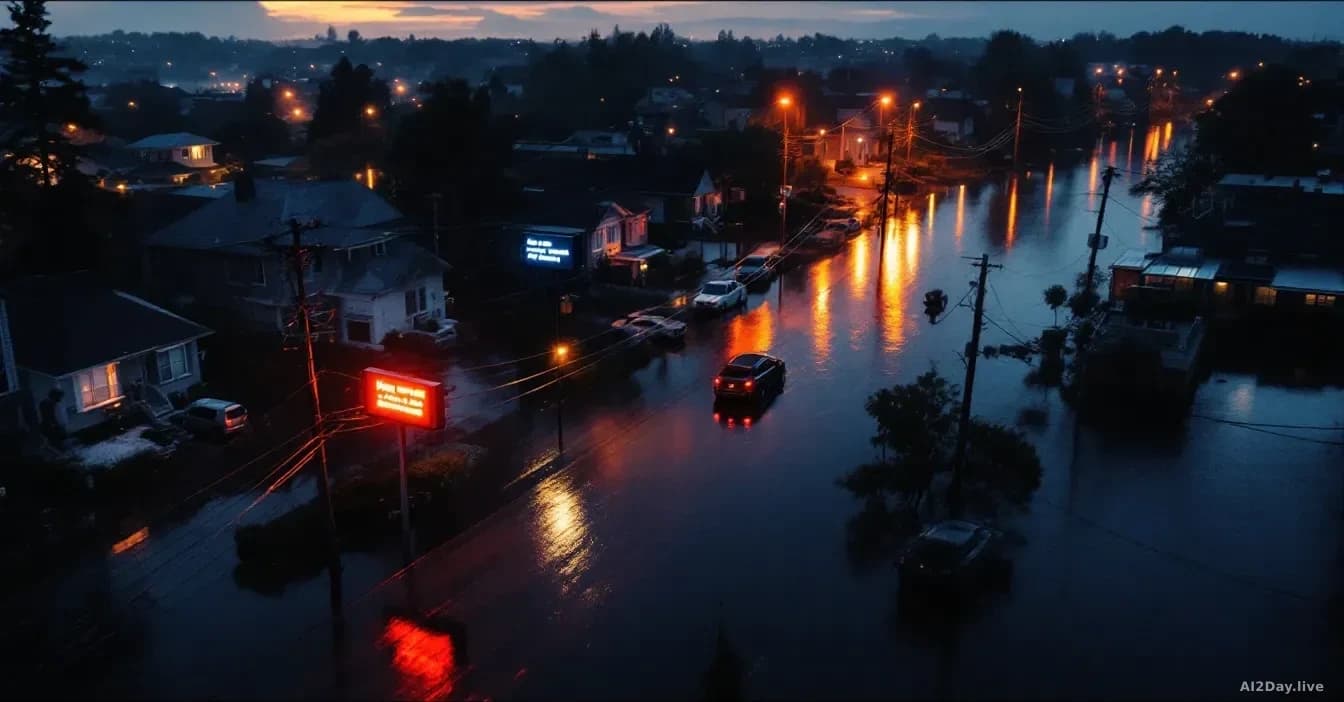
Hurricane Isaias was bearing down on the Gulf Coast when a county emergency manager in Alabama asked an AI chatbot, the kind of software that generates text and images from a typed question, to produce a graphic showing where a "sting jet" of dangerous high winds might hit. He posted it to warn his community. The graphic looked authoritative. It was wrong.
Laura Myers, director of the University of Alabama's Center for Advanced Public Safety, heard about it from a meteorologist who spotted the error. "It did what he wanted it to do," she said, "but it was not meteorologically accurate."
That gap between intent and accuracy is the central problem with AI in emergency management right now.
Why emergency alerts fail in the first place
Most emergency managers are not bad at their jobs. Writing under pressure for a general audience is a different skill entirely, and most of them haven't mastered it.
Jargon creeps in. Critical context gets dropped. In 2016, adjacent California counties issued competing evacuation levels, one voluntary, one mandatory, for the identical wildfire. Australian officials in 2019 told residents to "Watch and Act" ahead of wildfires, a phrase the government later admitted caused "significant confusion."
The consequences can be fatal. Santa Barbara County sent alerts to wildfire evacuation zones in Montecito telling residents to "stay alert to changing conditions and be prepared to leave immediately." Many took that as optional. A mudslide killed 23 people and injured more than 160.
Could AI actually write a better alert?
Yes, and there is early evidence it can. A startup called EM1 built an AI model trained partly on research by Jeannette Sutton, a disaster communication researcher at the University of Albany. When given a real New Mexico county alert, the model rewrote it in seconds.
The original read: "Breeched banks. The water is rising. EVACUATE NOW. McGee Park open for people and pets, RV."
The AI version: "San Juan County: Floodwater is rising near [location]. People in [evacuation area]: LEAVE NOW for higher ground. Do not walk or drive through floodwater. McGee Park is open for people and pets."
Sutton said the rewrite was clearly better. The original misspelled "breached," named no location, identified no evacuation zone, and gave no safety instructions. Four problems, all corrected.
Rob Dale, who runs emergency management in Ingham County, Michigan and previously worked as a meteorologist, puts the case plainly. "If you've only sent one alert in your life, and that was 15 years ago, and you're thinking 'Hey, there's a chemical plume coming my way, the phone's ringing, the radio's blaring, I need help,' the AI is probably gonna do a better job than you are."
EM1 holds contracts with around 100 agencies, but none have switched to automated live alerts yet. The humans still press send.
What happens next?
The Alabama incident shows the risk of deploying AI tools before staff understand their limits. A chatbot trained on general knowledge is not a meteorologist, and the emergency manager had no way to check what it produced.
As AI2Day has reported, chatbots that operate without adequate oversight create real safety risks. Emergency alerts reach everyone, including people with no way to cross-check what they read.
My honest read: the technology probably can improve disaster communication for under-resourced local agencies, and the EM1 rewrite example is genuinely impressive. What's being oversold is the idea that deploying it is simple. Getting there requires training and oversight, which costs money that small county offices rarely have. Watch whether FEMA moves to set guardrails before the next major hurricane season, because right now the only thing standing between a bad AI graphic and a panicked public is one meteorologist's phone call.