#world models
9 stories taggedworld models.

World Models: The AI Technology Teaching Machines to Understand Physics
A new generation of AI systems can simulate gravity, predict collisions, and generate interactive 3D worlds. Here is what world models are, who is building them, and why they matter.
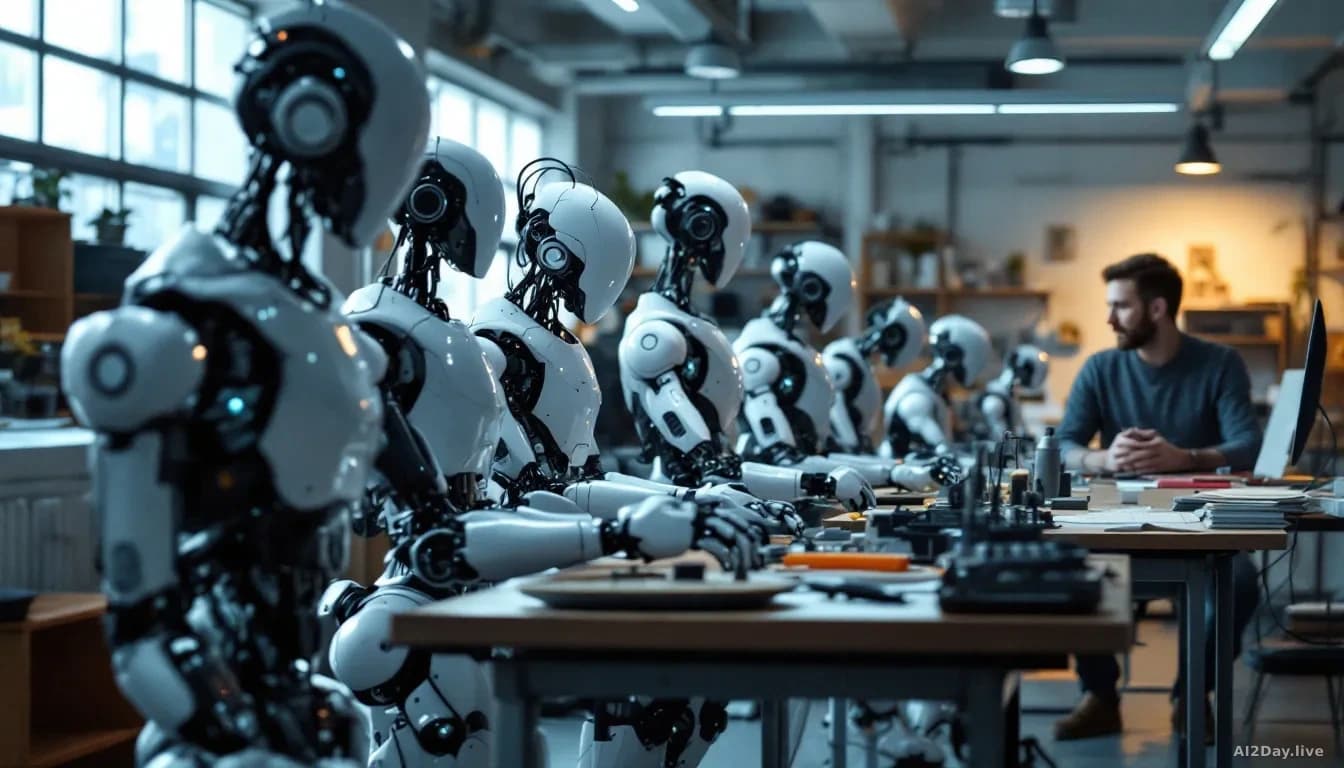
The AI researcher who taught robots to imagine, and just left Google DeepMind to do it full-time
Danijar Hafner spent years training AI agents to plan for situations they have never seen. Now he has a stealth startup, a room full of humanoid robots, and a conviction that the approach is ready for the real world.

Robots Need to Feel Friction to Truly Understand the Physical World
A new model class called VμA puts the physics of grip at the centre of robot thinking, and it starts with a number cameras can't see.

NVIDIA's Cosmos 3 Edge Brings Robot Brains Down to Earth
A new, compact AI model lets robots and factory cameras think for themselves, without needing a data centre nearby.
Nvidia launches a new robot brain and builds a Japanese AI coalition
The chip giant's Cosmos 3 Edge model aims to give robots and cameras a better sense of the physical world. Fujitsu and Hitachi are signing on, alongside Kawasaki Heavy Industries.
AMI Labs' CEO Says 'Superintelligence' Is a Meaningless Word. Here's What He's Building Instead.
Alexandre LeBrun raised over a billion dollars to teach AI how the physical world works. He thinks the buzzwords his rivals love are, at best, unhelpful.

PixVerse Raises $439 Million and Hits $2 Billion Valuation in AI Video Push
The Singapore startup lets users generate 4K video from a single image. Alibaba is already a customer, and 150 million people have signed up.

Beyond Chatbots: World Models Are Teaching AI to Simulate Reality
The next big wave in AI isn't about language. It's about teaching machines to understand how the physical world actually works, and the race is already on.
A Chinese robotics startup wants to build the 'recipe' that gives robots general intelligence
X Square Robot is open-sourcing an AI stack that aims to do for physical robots what large language models did for text. The approach is interesting. The independent evidence is still thin.