Avatar Robotics raises $6.5 million to put human operators inside warehouse robots
The San Francisco startup uses remote workers to control its robots today, then trains AI on what those workers do so the machines can gradually take over.
Key points
- Avatar Robotics closed a $6.5 million seed round in July 2026, led by AlleyCorp.
- The company's robots are remotely controlled by human operators who generate training data for future AI autonomy.
- Avatar says its robots have helped ship more than 900,000 products inside live customer warehouses.
- A pre-seed round led by defy.vc preceded this raise; additional backers include Headline, Henry Ford III, Samuel Udotong, Refashiond, Paul Vogel, and Jack Huffard.
- The funding will go toward bigger robot fleets, more customer sites, and a larger engineering team.
Avatar Robotics, a San Francisco startup founded in 2024, said this week it has raised $6.5 million in a seed financing round. AlleyCorp led the investment, first reported by The Robot Report.
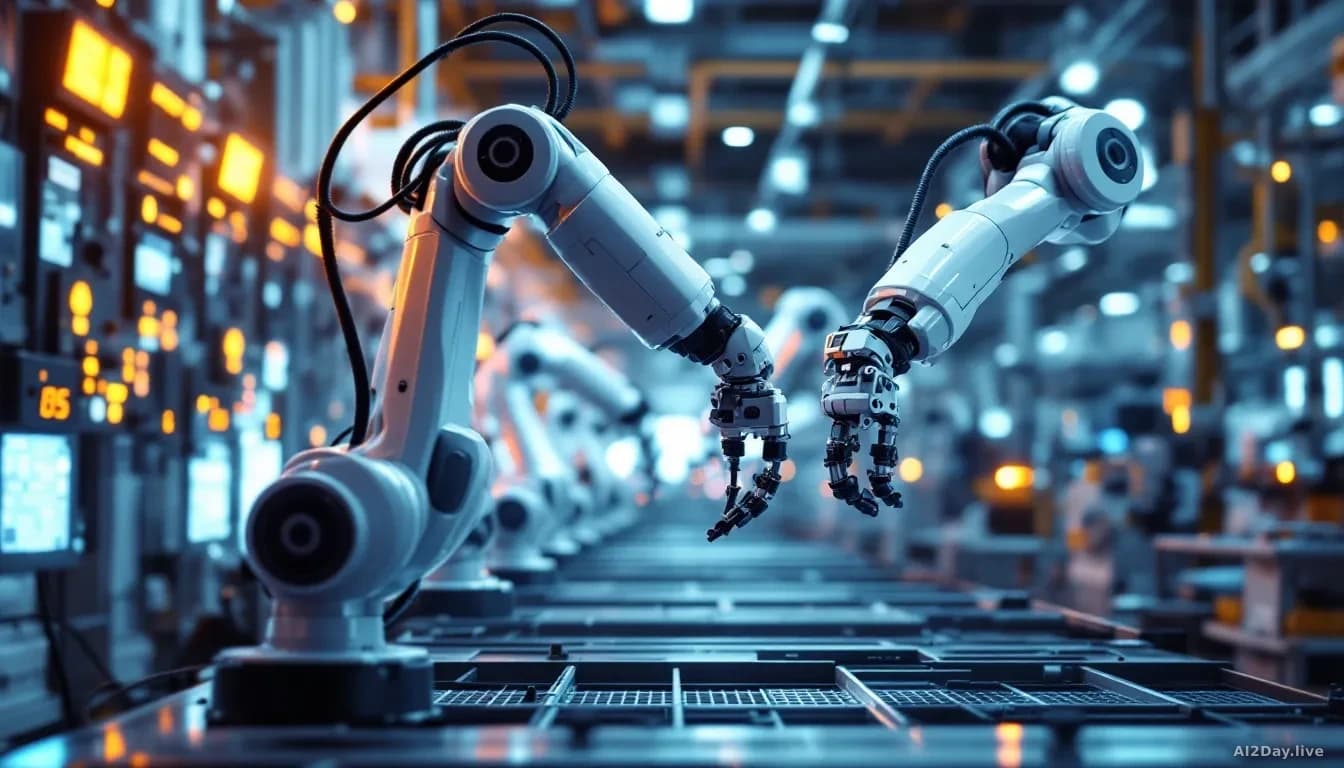
The company builds semi-humanoid robots, meaning machines with two arms that can move around but don't look fully human, for use in warehouse, logistics, and manufacturing settings.
How do these robots actually work?
Avatar's robots aren't fully autonomous yet. A remote human operator controls the robot from elsewhere, telling it what to pick up and where to move, much like piloting a drone.
Every move that operator makes gets recorded. That data feeds into a robotic foundation model, an AI system trained on real-world movement data much like a large language model is trained on text. Over time the AI learns to handle routine tasks on its own, letting one operator supervise several robots at once instead of just one.
Avatar calls this a "human-in-the-loop" model. The human handles what the AI can't, yet.
"Avatar's approach is incredibly clever," said Amy Yin, a partner at defy.vc. "Use remote human operators to bridge the gap today while improving autonomy with every task completed."
It's a strategy we've seen take root quickly: our 27 July report on Enigma found a different startup crowdsourcing human control data through a public interface, also betting that the real prize is the dataset, not the robot.
Why does the industry care about this approach?
Fully autonomous warehouse robots still struggle with tasks a person finds trivial, such as picking an oddly shaped item off a shelf without disturbing everything around it. Human operators handle those edge cases reliably right now, and the data they produce is precisely what AI models need to replicate that skill.
Brannon Jones, principal at AlleyCorp, said Avatar's system is "already delivering meaningful value in real workflows" and performing "at a level competitive with skilled human operators."
Avatar reports that its robots have processed and helped ship more than 900,000 products inside live customer facilities, including work for a global beauty retailer. The company has also begun expanding beyond a pilot phase with a multi-billion-dollar warehouse operator for sorting and picking work.
CEO Colin Webb, an MIT graduate with a background in self-driving vehicles and AI-powered drones, co-founded Avatar with Nenye Anagbogu, also an MIT graduate. The engineering team draws on former staff from Tesla, Apple, Cruise, Intuitive Surgical, and Unity.
What does this mean for warehouse workers?
Avatar frames its robots as a fix for sectors where hiring is hard because jobs are physically demanding and repetitive. The robots don't require warehouses to be rebuilt before deployment, which lowers the bar for companies to try them.
For workers, the picture's honestly mixed. Remote operator roles open up now. Long-term, the whole point is for the AI to need fewer operators per robot.
Common questions
Are these robots replacing warehouse jobs right now?
Not directly. Today, each robot still needs a human operator controlling it remotely. The goal is for AI to gradually take over routine tasks, which would eventually reduce the number of operators needed.
What makes Avatar different from other warehouse robots?
Most warehouse robots either run on pre-programmed software or require expensive facility modifications. Avatar's approach lets human operators handle hard cases immediately, while the data those operators generate trains the AI for greater future autonomy.