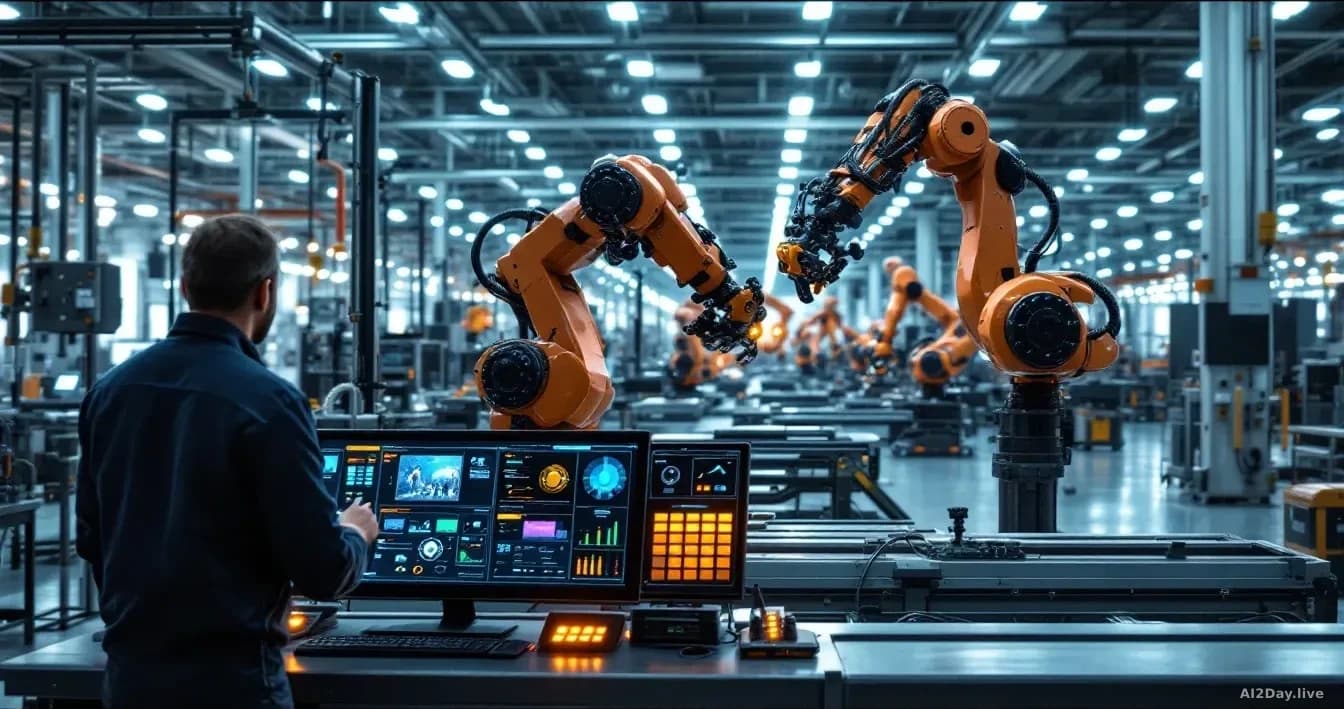
Arm Pulls 80-Plus Companies Into One Robotics Ecosystem and Proposes a Common Rating Scale
Arm's Total Design for Physical AI program and a six-level Robotics Capability Framework aim to fix the fragmentation that has slowed robot deployment for years.
Key points
- Arm's Arm Total Design for Physical AI program now includes more than 80 member companies, spanning chips, sensors, software and cloud services.
- Arm also published a Robotics Capability Framework that defines six levels of robot sophistication, from simple rule-following machines to systems that learn and self-optimise.
- Confirmed members include AWS, Hugging Face, Siemens, NXP, Unitree Robotics, Liquid AI, QNX, Qwen, PlusAI, ECARX and Psyonic.
- The program draws on a similar ecosystem Arm built for cloud computing, adapted for the hardware-heavy world of robots.
Arm Holdings, the Cambridge, UK-based company whose chip designs sit inside virtually every smartphone on the planet, is now placing a large bet on robots.
Two things launched together. Arm Total Design for Physical AI is a formal partnership program pulling more than 80 companies into a shared ecosystem. The Robotics Capability Framework is a proposed industry-wide rating scale for how capable a robot actually is.
Fragmentation is the problem both are trying to solve. Building a warehouse robot today means buying sensors from one supplier, a compute chip from another, a safety software layer from a third, an AI model from a fourth. Getting them to work together is expensive and largely undocumented. Arm wants members to solve that collectively. We've tracked this fragmentation problem across 72 robotics stories in the last 30 days alone, and it comes up in nearly all of them.
What does the ecosystem program actually do?
Arm Total Design for Physical AI connects companies at every layer of a robot's technology stack, from silicon chips to cloud software, so they can test whether their products work together before anyone tries to sell a finished system.
Dermot O'Driscoll, Arm's vice president of go-to-market and customer solutions for physical AI, told The Robot Report the idea came from watching Arm build a similar program for cloud computing. When he moved to the physical AI team in March, he said, "there was no place where companies could come together and either share technology and ideas, or collaborate."
The member list covers the full stack. AWS handles cloud infrastructure. Hugging Face, the open-source AI model platform, covers the AI layer. Siemens and QNX cover industrial software and real-time operating systems, the kind of software that must respond in microseconds regardless of what else is running. NXP supplies microcontrollers. Unitree Robotics, which AI2Day has followed since August, makes physical robot hardware. Liquid AI, Qwen, PlusAI, ECARX and Psyonic fill out the remaining corners of the stack.
What are the six capability levels?
The Robotics Capability Framework is Arm's attempt to do for robots what SAE International's autonomous-driving levels did for cars: give builders and buyers a shared vocabulary.
At level zero sit robots that react to stimuli and follow fixed rules, think an automatic door. At level five, a robot's behaviour evolves continuously as it learns, improving without being explicitly reprogrammed. The four levels in between step through basic sensing, contextual reasoning and beyond.
Arm says the six levels are a starting point. O'Driscoll told The Robot Report: "We're inviting people to come and work with us on this. We think that this is something that's better done as an ecosystem, as a community."
Why does this matter for ordinary people?
For anyone who interacts with robots at work or in daily life, clearer capability labels would mean practical answers to real questions: can this robot work safely alongside people, and what happens when it meets a situation it's never seen before?
As AI2Day noted in our coverage of robot security vulnerabilities earlier this month, incompatible components create not just engineering headaches but safety gaps. A shared foundation makes those gaps easier to find.
The honest caveat: this is a coalition launch, not a finished product. Eighty companies agreeing to collaborate is meaningfully different from eighty companies having built something together. O'Driscoll said the sessions where real technical work happens are scheduled for the coming months. That's the number to watch: not how many logos are on the page, but how many joint integrations ship.