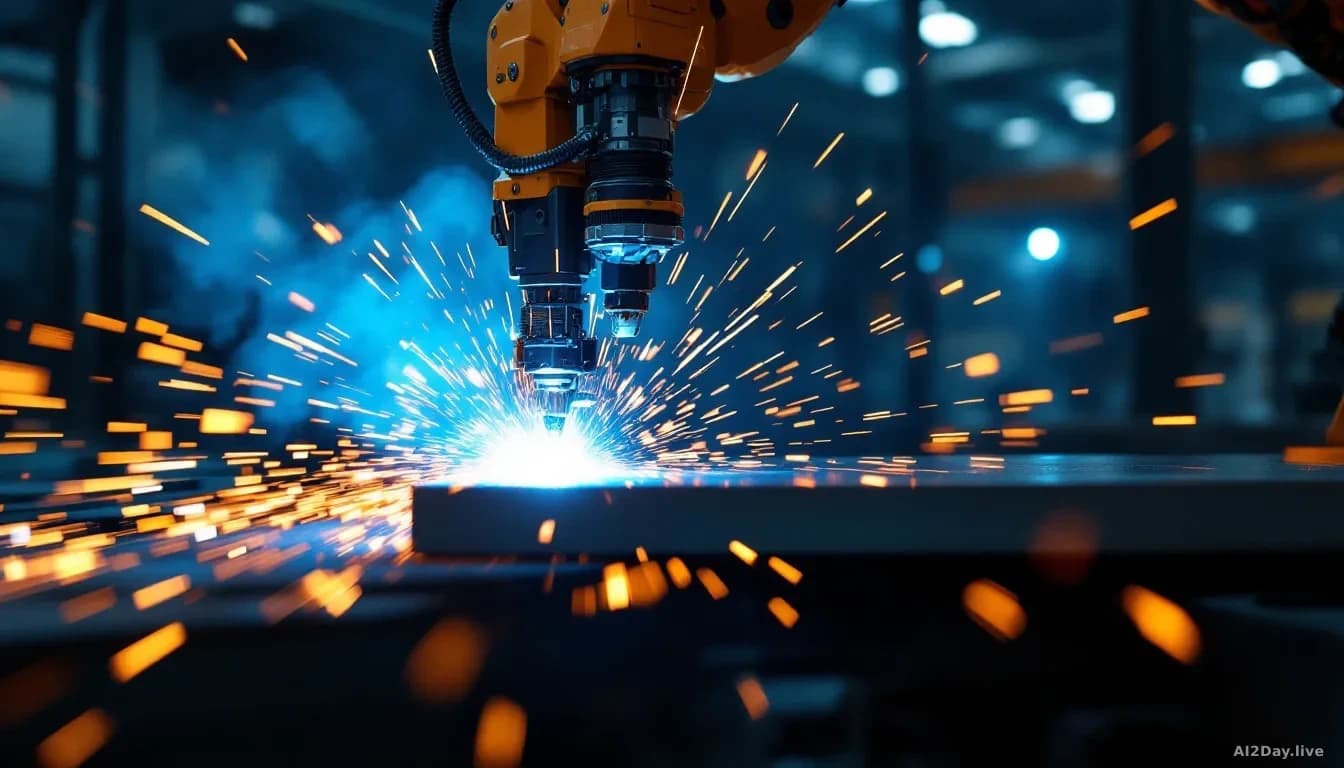
A data-center parts maker replaced all hand welding with 58 robots. Here's what happened.
Tate Inc. says a 12-times jump in per-welder output and an end to costly rework followed its shift to cloud-connected robotic welding across three U.S. factories.
Key points
- Tate Inc. deployed 58 Hirebotics Cobot Welders across facilities in Arkansas, Virginia, and Kentucky starting in September 2023.
- The company reports a 12-times increase in per-welder throughput on critical structural assemblies after the switch.
- Hirebotics' Beacon Pro platform lets workers program and monitor robots from any smartphone or tablet, with no coding required.
- New employees typically needed only 10 to 20 minutes of training before operating the systems.
- Tate has now become one of the first companies to also deploy Hirebotics' newer Cobot Painter, which runs on the same platform.
Tate Inc. no longer hand-welds a single production part. The Columbia, Maryland company, which has supplied structural ceilings and airflow management products for data centers for 120 years, made that call in 2024 when demand from the booming data-center industry outpaced what its manual welding teams could safely deliver.
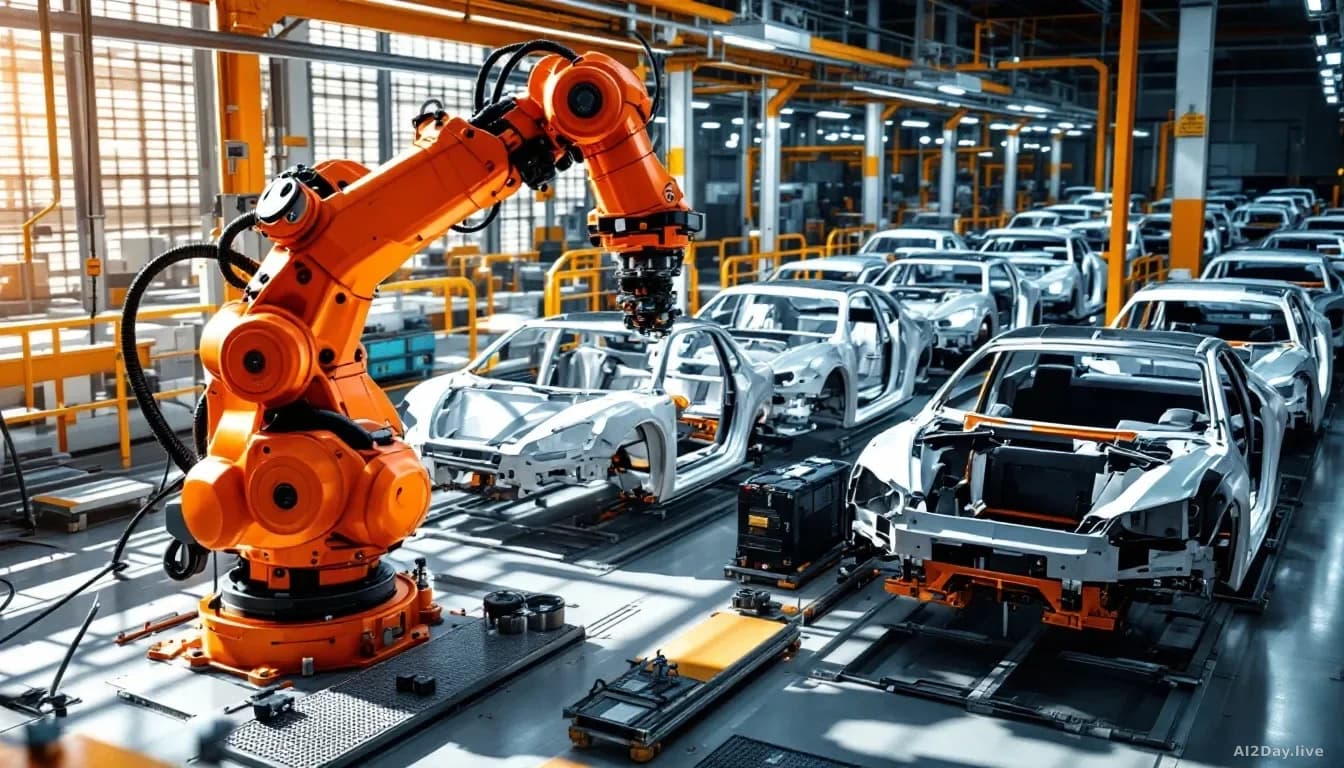
The answer was 58 cobot welders, a cobot being a collaborative robot arm designed to work safely alongside people on a factory floor, supplied by Nashville, Tennessee-based Hirebotics LLC. First reported by The Robot Report, the full deployment spans Tate factories in Arkansas, Virginia, and Kentucky.
Why did Tate pick Hirebotics over the other eight companies it looked at?
Speed of proof mattered most. When Tate brought actual parts to Hirebotics, the supplier completed live welds within 30 minutes of Tate's team walking through the door. Tate's staff were also able to programme the robots themselves before the Hirebotics team left that same day.
The control software, called Beacon Pro, is a no-code platform, meaning workers issue instructions through a plain visual interface on a phone or tablet rather than writing any programming language. Certified programmers set the exact torch angles, heat levels, and travel speeds once; floor operators then run those settings repeatedly without having to adjust anything.
Training new operators took 10 to 20 minutes on average. "The majority of users are surprised at how quickly they can become operational with the robot," said Daniel Adams, director of sales at Hirebotics.
What did the numbers look like after two years?
Tate reports a 12-times increase in per-welder throughput on its most critical structural assemblies. The company also says the cobots eliminated the expensive rework that crept in when different human welders produced slightly inconsistent results.
All three factories now share weld programmes and settings in real time over the cloud, so a specification dialled in at the Arkansas plant applies automatically in Virginia and Kentucky. "No production components are hand-welded anymore," Adams said.
At the Arkansas facility, Tate developed a workflow where the cobots handle the precision pre-assembly step, called tacking, before parts move on to larger industrial robots further down the line. This keeps the whole production line moving at a steady pace rather than creating bottlenecks.
What happens next?
Tate is already expanding beyond welding. The company is among the first to adopt Hirebotics' Cobot Painter, a robotic painting system that runs on the same Beacon Pro platform and uses the same operator roles, so workers trained on the welders need little extra learning to use it.
For manufacturers watching from the sidelines, the practical takeaway is straightforward: Tate expanded its certified-welder headcount at the same time as it added robots, rather than cutting staff. The cobots handled volume and consistency; people handled programming, oversight, and the more complex judgement calls.
Common questions
Do the robots replace welders or work alongside them?
At Tate, both happened at once. The company grew its team of certified welders while adding the robots, using automation to handle repetitive high-volume work and freeing skilled staff for programming and quality oversight.
How hard is it to programme a cobot welder?
With Hirebotics' Beacon Pro software, Tate workers operated the robots after roughly 10 to 20 minutes of training. The platform uses a visual interface on a phone or tablet, so no coding background is needed.