Nvidia's Bet on AI Financing Hits Its First Real Test
The chipmaker has quietly become one of the biggest financial backers of the AI building boom. Now, with key partners losing value fast and credit costs rising, that bet is starting to look expensive.
Key points
- Nvidia had $36 billion in off-balance-sheet backstop guarantees for neocloud companies as of its July 2026 quarterly filing, plus a separate guarantee of up to $105 billion for an OpenAI data centre in Ohio.
- Shares in CoreWeave, Nebius and IREN, three neoclouds Nvidia holds stakes in, fell at least 30% in October 2026.
- CoreWeave carries roughly $51.6 billion in total debt, and the cost of insuring against a CoreWeave default topped 11% this month.
- Nvidia generated $70 billion in free cash flow in the first half of 2026, giving it a financial cushion no direct competitor can match.
- Nvidia's own stock is down 7.6% in October 2026, on pace for its worst monthly performance since November 2025.
Nvidia built its fortune selling the specialised chips, called GPUs (graphics processing units), that AI systems need to think and learn. What's less well understood is what Nvidia did next: it started writing cheques.
Over the past two years, CEO Jensen Huang has turned Nvidia into something closer to a bank than a hardware company. The company takes equity stakes in AI startups, guarantees loans so customers can borrow more cheaply, and signs data-centre leases that it then hands off to third parties. Its portfolio of investments was worth $99 billion as of the second quarter of 2026.
The strategy makes commercial sense. A hospital equipment maker that also finances hospital construction sells a lot more equipment. Nvidia's revenue hit $216 billion in its latest fiscal year, up roughly eightfold since OpenAI launched ChatGPT in late 2022.
But October 2026 is testing the model.
What is actually at risk here?
The clearest danger sits with the neoclouds, a shorthand for companies that rent out Nvidia hardware to AI developers rather than building their own chips. CoreWeave, Nebius and IREN are all burning cash, and all three lost at least 30% of their stock market value this month.
Nvidia's biggest exposure is CoreWeave. Its commitment there includes equity and a pledge to buy up to $6.3 billion of CoreWeave's computing capacity if no other customer steps in. CoreWeave carries roughly $51.6 billion in total debt. The cost of insuring against a CoreWeave default, measured by a financial instrument called a credit default swap, soared past 11% this month, a sign that bond markets are pricing in real stress.
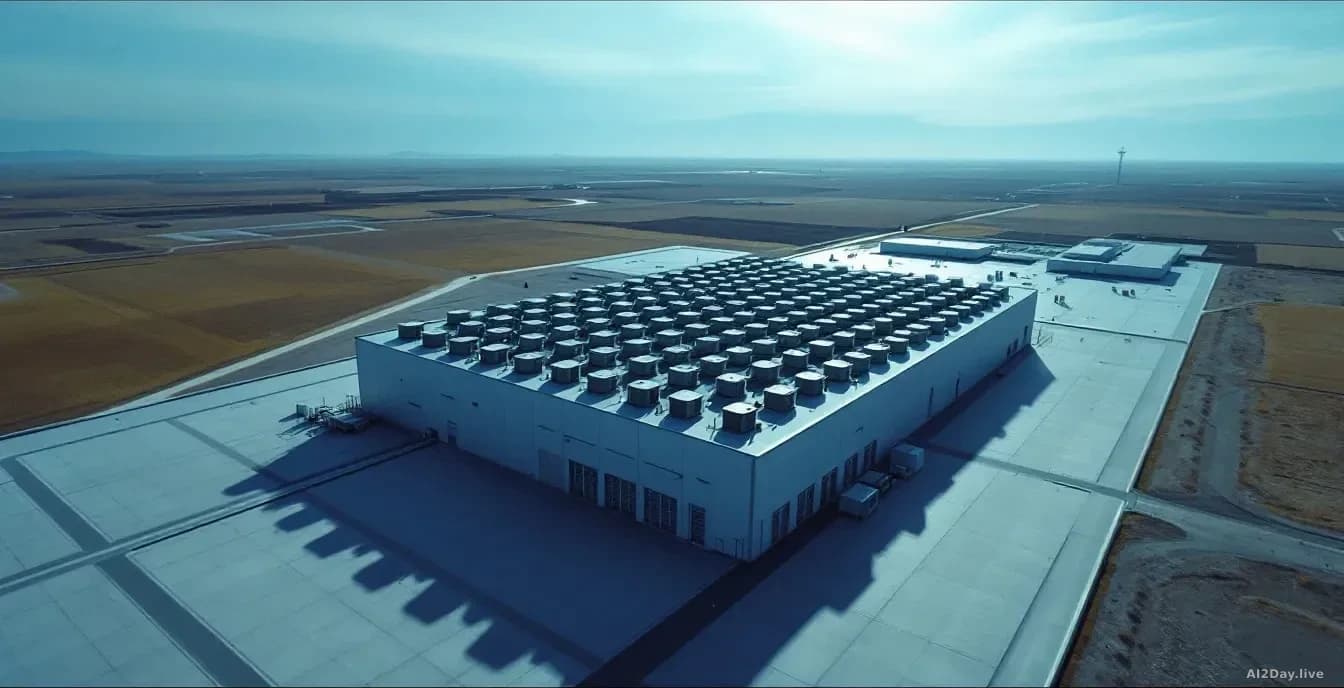
Then there is Ohio. Nvidia has guaranteed up to $105 billion for OpenAI's planned data centre in Pike County, a facility that could become the largest in the world and must use Nvidia hardware for at least 20 years. If OpenAI misses payments or faces insolvency, Nvidia can take over the lease, find a new tenant, or ask the landlord to sell the building, covering any shortfall up to that $105 billion ceiling.
First reported by CNBC Tech, the total picture of Nvidia's off-balance-sheet commitments stretches past $500 billion over the coming years, with most maturing by fiscal 2029.
Nvidia is also an investor in Firmus, an Australian AI cloud provider that abruptly withdrew its IPO plans this month. We covered that withdrawal on 12 October in "Firmus Pulled Its $30 Billion Australian IPO Because Investors Would Not Pay the Price".
Should ordinary people care about this?
Directly, not yet. None of these guarantees require Nvidia to pay unless partners actually default, and the company generated $70 billion in free cash flow in the first half of 2026. AMD, its closest chip rival, managed just over $4 billion in the same period.
What matters is the price and availability of AI computing over the next few years. Neoclouds are the companies that rent AI computing to startups and businesses that can't afford to build their own. If several fail at once, affordable AI computing tightens and costs for anyone using AI tools could rise. Our 30 September story on AI's rising debt costs flagged exactly this squeeze coming for smaller players.
Huang told CNBC this week that demand for neoclouds is "off the charts" and that what's missing is working capital to fund growth. He described Nvidia's hardware as "rentable, fungible and durable," language aimed at persuading pension funds and asset managers to treat GPU clusters the way they treat office buildings or toll roads.
Whether that pitch lands before credit conditions worsen is the thing to watch. The chips are still selling. Who ends up holding the bill if the buildings that house them go dark is a question October 2026 has made impossible to ignore.