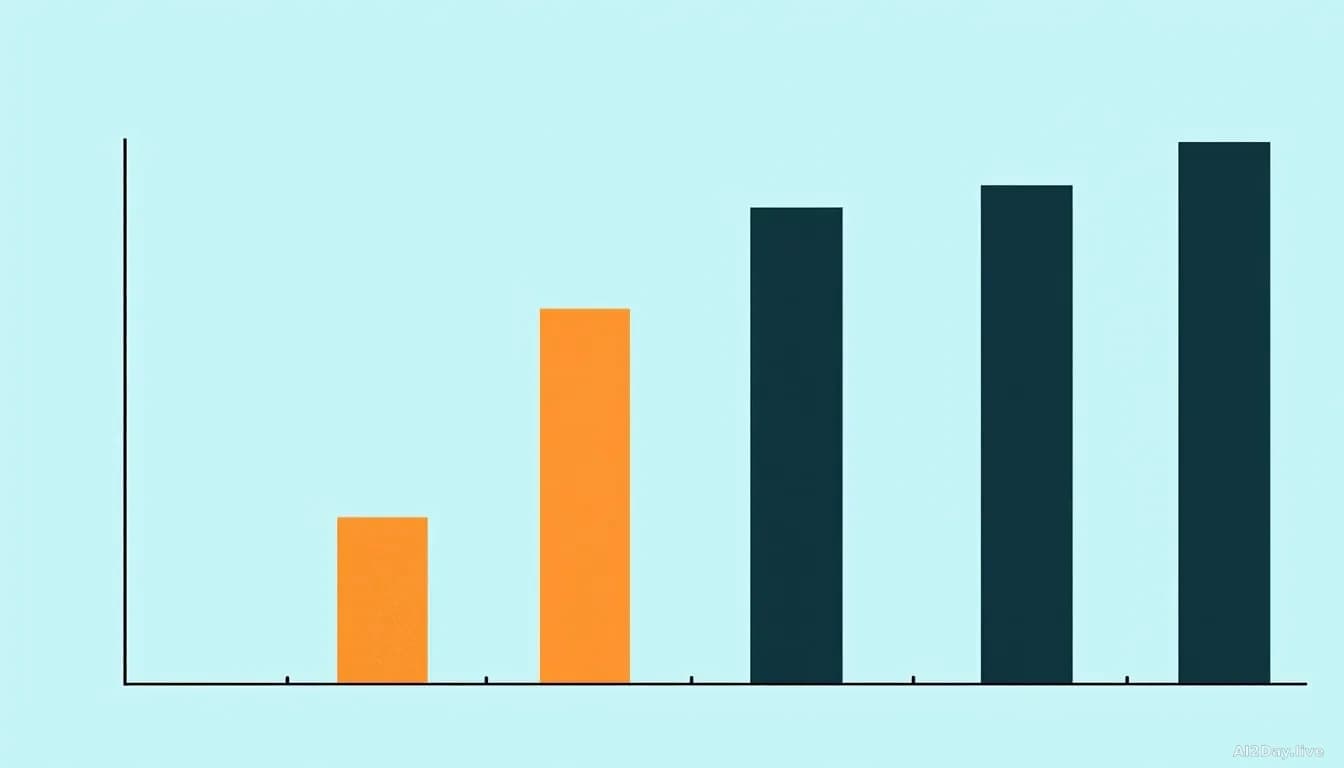
Enterprise AI took over our week, and the shape of it says something
AI2Day ran 11 enterprise AI stories between 21 and 27 October 2026, up from 4 the week before. Five different outlets fed the surge. Here is what we think it means, and what would prove us wrong.

Key points
- AI2Day published 11 enterprise AI stories between 21 and 27 October 2026, up from 4 in the previous seven days.
- That is a 175% jump week on week, and 28.2% of the 39 stories we ran all week.
- Five separate outlets contributed, so this is not one newsroom riding a hobby horse.
- Total weekly output barely moved: 39 stories this week against 40 the week before.
- The pieces clustered around cost, reliability and buying decisions, not model launches.
What actually moved
Enterprise AI, meaning the software and services companies buy to run AI inside their own business, went from a quiet 4 stories to a loud 11 in a week. Our overall output stayed flat. So this is a shift in attention, not a shift in volume.
Five different outlets carried pieces we picked up. That matters. When one newsroom gets excited, you get a bubble. When five do, something in the beat has actually changed.
Why I think the shape is interesting
Look at what the stories were about. Nvidia released smaller retrieval models aimed at cutting the running cost of AI agents, the software bots that carry out tasks on their own. Microsoft and Hugging Face published work on stopping those agents from claiming they finished a job when they did not. And one of our own pieces argued that picking the model is the easy bit, and the hard bit is everything around it.
That is not a launch cycle. That is a plumbing cycle. The coverage this week was about making the stuff work, pay for itself, and stop lying about its own output.
The money story fits too. Otter.ai took $320 million in debt without giving up equity, which is the sort of financing you raise when you already have paying customers and want to grow without diluting the owners. Boring. Grown-up. Enterprise.
Should readers care?
If you work somewhere that is about to roll out an AI tool, probably yes. The themes we tracked this week are the exact ones that will land on your desk: what it costs to run, whether the agent actually did the task, and who you buy it from.
If you are a general reader, the useful signal is simpler. The hype phase of this cycle, where every story was a new model with a bigger number, is sharing the stage with a cost-and-reliability phase. That tends to happen when buyers start asking harder questions.
What would kill this reading
I want to be honest about the limits. One week is one week. Our archive only goes back to 13 July 2026, so I cannot tell you how this compares to, say, last spring. I can only tell you what we measured.
A few things would make me drop the thesis. If next week's enterprise count collapses back to 4 or less, this was a news blip tied to Nvidia's and Microsoft's release timing. If the stories shift back to pure model launches, the plumbing angle was wishful thinking on my part. And if only one or two outlets keep feeding the pile, it stops being a beat-wide move.
What I am watching next
Three things. Whether the share of our weekly output that is enterprise AI stays near 28% or drifts back toward 10%. Whether agent reliability keeps generating stories, or turns out to have been a one-week Microsoft moment. And whether the quieter return of GPU coverage we flagged in our note on chips creeping back onto the front page is actually the same story wearing a different hat: enterprises buying the hardware to run all this.
I will check back in a week.