Kazakhstan Is Building One of Central Asia's Largest AI Computing Networks
Kazakhtelecom has already switched on hundreds of Nvidia's most powerful chips, with plans to install thousands more by next year, turning a country most people associate with oil into a serious AI infrastructure story.
Key points
- Kazakhtelecom has already deployed 400 Nvidia H200 and 480 Nvidia B300 GPUs (specialised chips that do the heavy number-crunching AI needs) across data centres in Astana and Almaty.
- The company plans to add more than 1,000 GPUs at Data Center Valley next year, plus more than 1,000 Nvidia Vera Rubin GPUs in the Ekibastuz region.
- Ride-hailing app inDrive and autonomous-vehicle company Pony.ai announced a collaboration to test robotaxi services in Astana, running on Nvidia AI infrastructure.
- AI2Day first covered Pony.ai on 17 August 2026 and has now published 11 robotaxi stories in the past 90 days.
Kazakhstan just made one of the most concrete AI infrastructure commitments to come out of Central Asia, and it's moving faster than most observers expected.
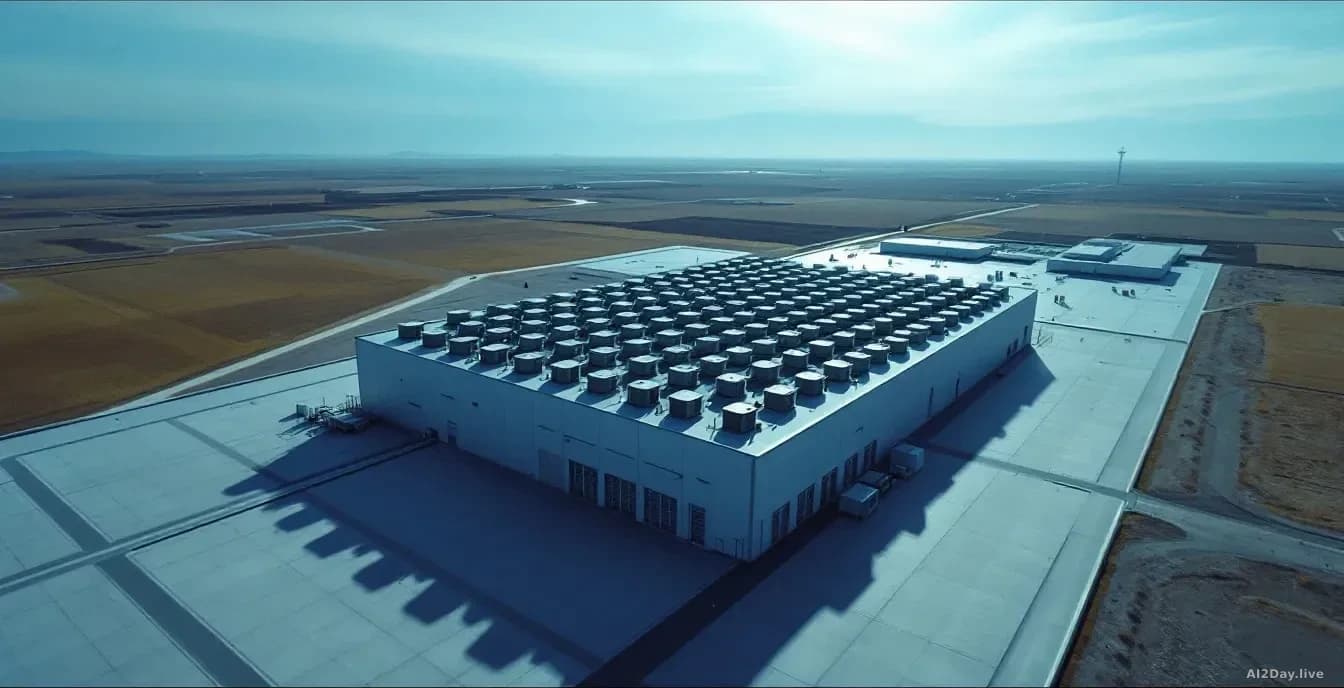
Kazakhtelecom, the country's dominant telecoms operator, confirmed it has already switched on 400 Nvidia H200 GPUs and 480 Nvidia B300 GPUs across facilities in the capital Astana and the commercial hub Almaty. Those chips aren't sitting idle. Enterprises, developers and institutions can already use that capacity to build and run AI applications.
Next year the scale jumps sharply. The company plans to bring more than 1,000 GPUs online at a facility called Data Center Valley, and separately deploy more than 1,000 Nvidia Vera Rubin GPUs (Nvidia's newest generation of AI chips) in the Ekibastuz region in northern Kazakhstan. That second cluster alone would put Kazakhstan ahead of many European countries in raw AI computing power per national operator.
What does this mean for ordinary Kazakhstanis?
More local computing capacity means Kazakh developers and companies can train and run AI software without routing data through servers in Europe or abroad, which cuts costs and keeps sensitive data inside the country's borders.
The clearest near-term example is in transport. Ride-hailing app inDrive, which operates across Central Asia and beyond, announced a collaboration with Pony.ai, a self-driving car company, to explore robotaxi services in Astana. The plan is to assess whether Pony.ai's seventh-generation autonomous vehicles could appear inside the inDrive app, supported by Nvidia's Hyperion sensor platform and its Halos safety system, software that monitors an autonomous vehicle's decisions in real time and intervenes if something goes wrong. No launch date has been set, and the companies described it as a feasibility study.
The announcements were made at Nvidia's GTC Berlin event, as reported by NVIDIA, where chief executive Jensen Huang delivered a keynote covering the company's European and Central Asian expansion plans.
How does this fit what Nvidia has been doing lately?
It fits a clear pattern. AI2Day has covered the Vera Rubin GPU line in 10 stories since July, tracing the same strategy Nvidia is running elsewhere: seed large national computing clusters that generate lasting demand for its chips and platforms.
The honest read is that GPU counts are the easy part. Kazakhstan's real test will be whether the universities, startups and industries plugged into this infrastructure can build things people actually use. The robotaxi collaboration is the first concrete example of a local application being designed around new capacity rather than just announced alongside it. As our 22 October story on enterprise AI costs found, picking the infrastructure is simple; running it efficiently is where the hard work begins.
| Asset | Count | Location | Timeline |
|---|---|---|---|
| Nvidia H200 GPUs | 400 | Astana and Almaty | Already live |
| Nvidia B300 GPUs | 480 | Astana and Almaty | Already live |
| New GPUs, Data Center Valley | 1,000+ | Astana area | 2027 planned |
| Nvidia Vera Rubin GPUs | 1,000+ | Ekibastuz region | 2027 planned |
Common questions
What is a GPU and why does it matter for AI?
A GPU (graphics processing unit) is a chip originally built to render video-game graphics. The same parallel maths it uses for graphics is exactly what AI software needs, so Nvidia's GPUs became the standard hardware for training and running AI models.
Will this affect prices or services for ordinary people in Kazakhstan?
More local AI capacity generally means faster, cheaper AI-powered apps because companies pay less to rent computing time abroad. Whether consumers feel that depends on whether local businesses pass the savings on.