Warehouse Robots Are Getting Smarter. Here Is What Is Driving the Boom.
Two new market forecasts show the autonomous mobile robot industry doubling or tripling by 2030, pushed by labour costs and better AI-powered navigation.
Key points
- The global autonomous mobile robot market was worth nearly $5 billion in 2024 and is forecast to reach $14 billion by 2030, according to Interact Analysis.
- ABI Research projects the broader mobile robot market will grow from $33 billion in 2026 to $68.9 billion by 2030, a compound annual growth rate of 20.2 percent.
- AMRs, autonomous mobile robots that move through warehouses and factories without fixed tracks or wires, account for roughly half that total, ABI Research says.
- Computer vision, sensor fusion, and machine learning are the main technologies behind recent jumps in robot capability.
- Fleet management software is making it easier to run large numbers of these robots alongside a company's existing business systems.
The robots rolling through warehouses and factory floors are getting smarter, more precise, and considerably more numerous.
Two fresh forecasts show the autonomous mobile robot industry on track to roughly double or triple within six years. Interact Analysis puts the global AMR market at nearly $5 billion in 2024, rising to $14 billion by 2030. ABI Research, looking at the wider mobile robot category, sees growth from $33 billion in 2026 to $68.9 billion by 2030.
What is actually driving this growth?
Labour costs and staff shortages are the biggest push factors. Companies that can't find enough warehouse workers, or find them too expensive, are turning to machines that run around the clock.
But cost alone doesn't explain the renewed enthusiasm. The robots themselves have become meaningfully more capable.
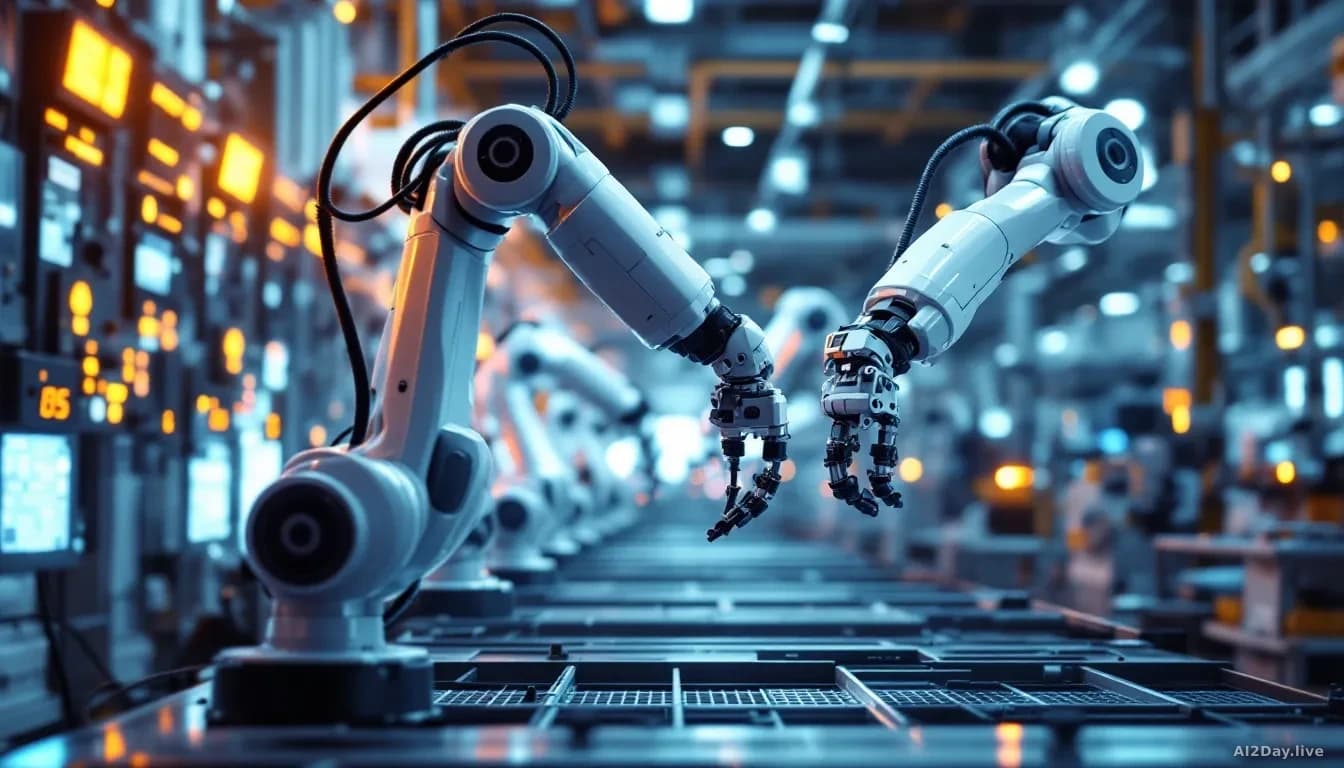
Much of that improvement comes from technologies working in concert. Computer vision, essentially giving the robot a camera-based understanding of its surroundings, lets it read shelves and spot obstacles in real time. Sensor fusion combines data from cameras and laser sensors so the machine builds a more complete picture of the space around it. Machine learning, the process by which software improves through experience, helps the robot make better decisions as it accumulates time on the floor.
The result is a machine that can pick items with greater precision, work safely alongside human colleagues, and flag problems before they become accidents.
What does this mean for ordinary workers and businesses?
For warehouse employees, the short answer is more change. These systems aren't limited to giant logistics centres. The Robot Report notes that companies including Hyster-Yale and Attabotics are pushing AMRs into manufacturing and pharmaceuticals, sectors that have historically relied almost entirely on human labour. Our 5 August story "The Robot That Can Move Is Useless If It Cannot See" explored why perception, not motion, is still the hardest part of making any of this work reliably.
For business owners considering the technology, suppliers say automated forklifts slot into existing workflows with relatively little disruption. More ambitious installations, such as automated storage and retrieval systems (dense, software-controlled shelving grids that can stack inventory far higher than a person can reach), deliver greater space savings but require real infrastructure investment upfront.
Fleet management software is quietly becoming the glue holding all of this together. Running dozens of robots at once demands coordination software that can talk to a company's existing inventory and ordering tools. Getting different brands of robot to share information remains an open problem, though orchestration vendors and standards developers are working on it.
Should you worry about this?
If your employer is considering an AMR rollout, ask about the integration plan: which software will manage the fleet, and how it will connect to the tools your team already uses. That gap is where real-world deployments most often go wrong.
Workers in warehousing and manufacturing should watch for pilot programmes, small-scale tests of one or two robots in a single area. They tend to signal broader ambition. The pace of that ambition, not the technology itself, is what's worth tracking.