The Dutch Navy Is Testing Crewless Warships Run by AI
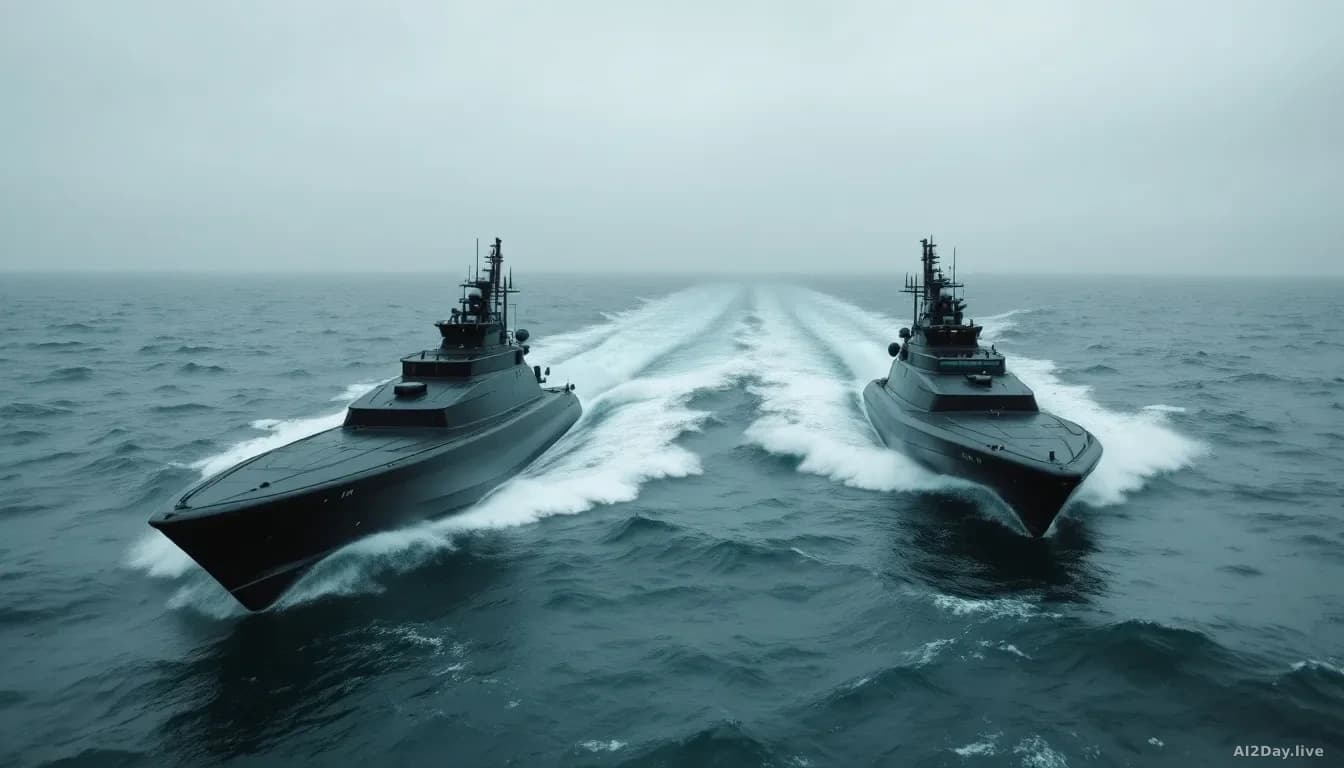
Two unmanned patrol vessels are circling target ships off the Dutch coast. No sailors onboard. A computer decides where they go.
Key points
- The Royal Netherlands Navy is running a five-week live exercise off Den Helder testing AI-controlled unmanned surface vessels in 2025.
- Two vessels, Defender 1 and Defender 2, patrol around target ships with no crew onboard, guided entirely by computer systems.
- Captain Sjoerd Feenstra, head of the navy's unmanned-systems expertise centre, is leading the trial.
- The stated goal is to remove sailors from situations the navy considers too dangerous for humans.
Two black vessels cut through the North Sea. No crew. No one at the wheel. Just sensors, cameras, and a computer system deciding where to go next.
Defender 1 and Defender 2 are unmanned surface vessels, boats that operate without any human onboard, and they are currently circling target ships in live exercises off the coast of Den Helder in the northern Netherlands. The Guardian reported the details of the five-week trial.
Captain Sjoerd Feenstra leads the Royal Netherlands Navy's expertise centre for unmanned systems. He describes the mission plainly: keep sailors out of danger zones.
That is the honest pitch for this technology. Not spectacle. Risk reduction.
What does this mean for the sailors who would normally do this work?
For now, it means they stay onshore. The computer watches. The human monitors from a distance.
The Defenders act as scouts, the eyes and ears of a fleet, tracking a target vessel from both sides at a safe standoff distance. Traditionally, that job puts a crew in harm's way. An unmanned vessel can take that risk instead.
This is not science fiction, but it is also not a finished product. A five-week test off a domestic coastline, however impressive it looks, is still a controlled exercise. The navy is probing limits, not declaring victory.
Trials like this rarely translate directly into frontline capability without years of further development, regulatory approval, and integration with existing fleet doctrine, the rules and habits that govern how a navy actually fights.
The broader trend is real, though. Militaries across Europe and beyond are investing in unmanned systems on land, in the air, and at sea. The Ukraine conflict accelerated that interest sharply, with drone boats used in live combat conditions for the first time at scale.
The Netherlands is moving deliberately. Feenstra's team is testing what these vessels can do autonomously, without a human giving each instruction, and where they still need a person in the loop.
For ordinary citizens, the practical implication is straightforward: navies are beginning to treat some dangerous patrol tasks the way factories treated repetitive assembly work. A machine takes the hazardous shift. The human steps back.
Whether that makes maritime conflict safer overall, or simply changes who bears the risk, is a question the technology cannot answer on its own.