US Military Used Explosive Drone Boats in Combat for the First Time
On the night of July 12, three unmanned sea drones destroyed an Iranian submarine and a naval maintenance facility. America had never used this kind of weapon in a real attack before.
Key points
- On July 12, 2026, US Central Command deployed three one-way attack surface drones, unmanned boats loaded with explosives that steer themselves into a target and detonate, against Iranian military assets.
- The strikes hit a Ghadir-class midget submarine (a small, short-range submarine designed for coastal patrols) and a ship maintenance facility at Iran's Bandar Abbas Naval Base.
- US Central Command confirmed this was the first time American forces had ever used sea drones in live combat.
- Iran and Houthi forces in Yemen had demonstrated similar weapons nearly a decade earlier, making the US a late but now active user of the technology.
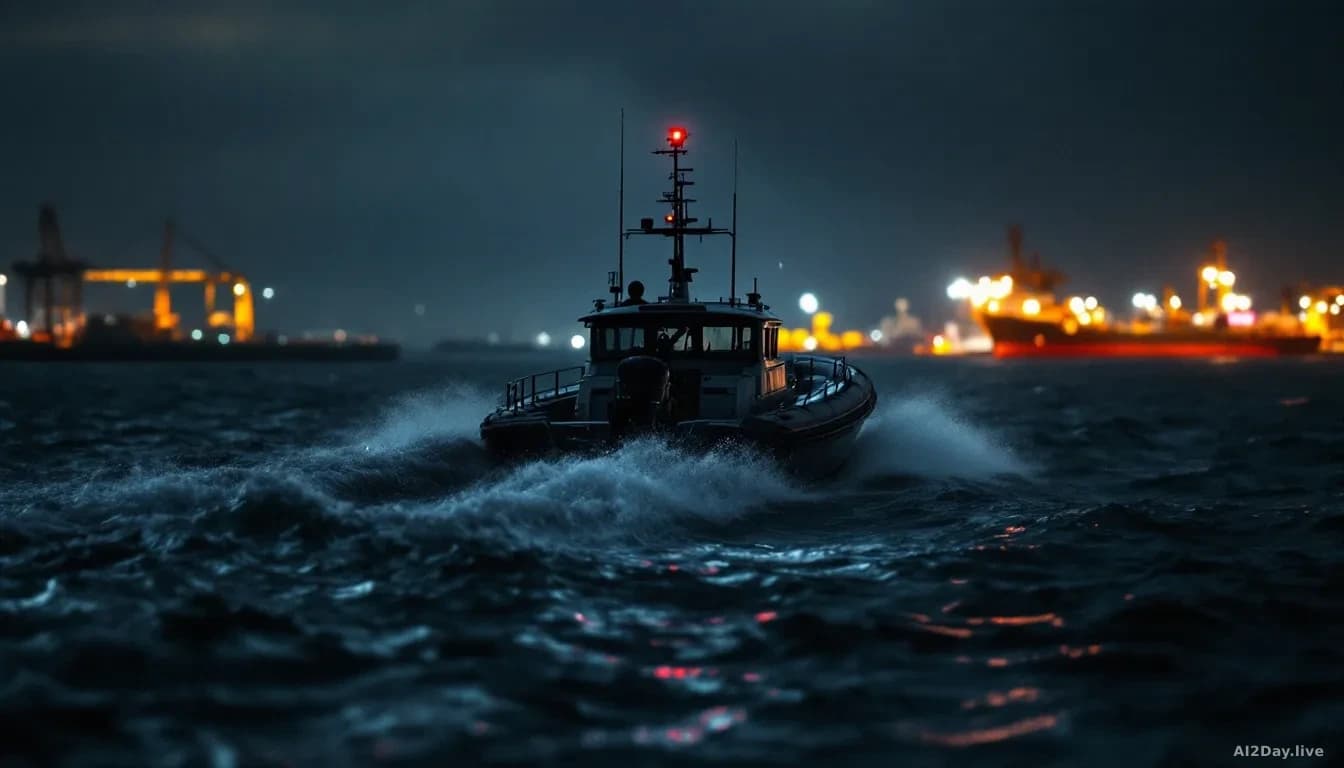
Three small boats, loaded with explosives and carrying no crew, crossed the water toward Iran's Bandar Abbas Naval Base on the night of July 12. They didn't turn back.
US Central Command, the American military command overseeing operations across the Middle East, confirmed the attack in a public post and released video footage of the explosions. It called the strikes the "first time American forces have employed sea drones in combat operations." These are one-way weapons: they approach a target, then explode on contact, functioning like a naval kamikaze aircraft.
One target was a Ghadir-class midget submarine, a small, short-range vessel Iran uses for coastal operations. It wasn't in the water. It was suspended above the dock by a gantry, a large overhead crane frame used for maintenance, when the drone hit it. The second target was the maintenance facility itself.
According to USNI News, a news service run by the nonprofit US Naval Institute, the drones made a "low-speed, uncontested approach" to both targets. Nothing intercepted them.
Iran and Houthi forces in Yemen had been fielding similar explosive drone boats for close to a decade, using them against Red Sea shipping with real effect. The US watched all of it. Now it's crossed into the same territory. The day before this strike, we covered Ondas paying $875.8 million for drone maker DZYNE, a deal oriented around AI-guided military systems, which gives some sense of where defence investment was already pointing.
What does this mean for people outside the military?
For most readers the effect is indirect. Bandar Abbas sits at the entrance to the Strait of Hormuz, the narrow channel through which a substantial share of the world's oil supply moves. Any escalation there tends to reach fuel prices eventually, so what happens in that strait doesn't stay in that strait.
The cost calculus is what matters here long-term. A crewed naval operation in a defended harbour carries enormous risk to personnel. A small autonomous boat costs a fraction of a destroyer mission and puts no sailors in danger. That arithmetic will shape military decisions well beyond this single strike.
The weapon proved itself. It'll be used again.



