OpenAI Sells a $230 Keyboard for Its AI Coding Tool, While a Bigger Hardware Fight Brews in Court
The Codex Micro is a flashy, limited-run gadget for power users. The more serious story is a second, secret device that Apple says was built using stolen secrets.
Key points
- OpenAI launched the Codex Micro keyboard on sale for $230, co-designed with specialist firm Work Louder.
- The device is a limited run aimed at users of OpenAI Codex, its AI coding assistant.
- A separate, unreleased OpenAI device described as a portable, screenless smart speaker with moving parts was reported by Bloomberg.
- Apple sued OpenAI last week, claiming the company deliberately extracted confidential information to help build its hardware product.
- OpenAI has denied wrongdoing.
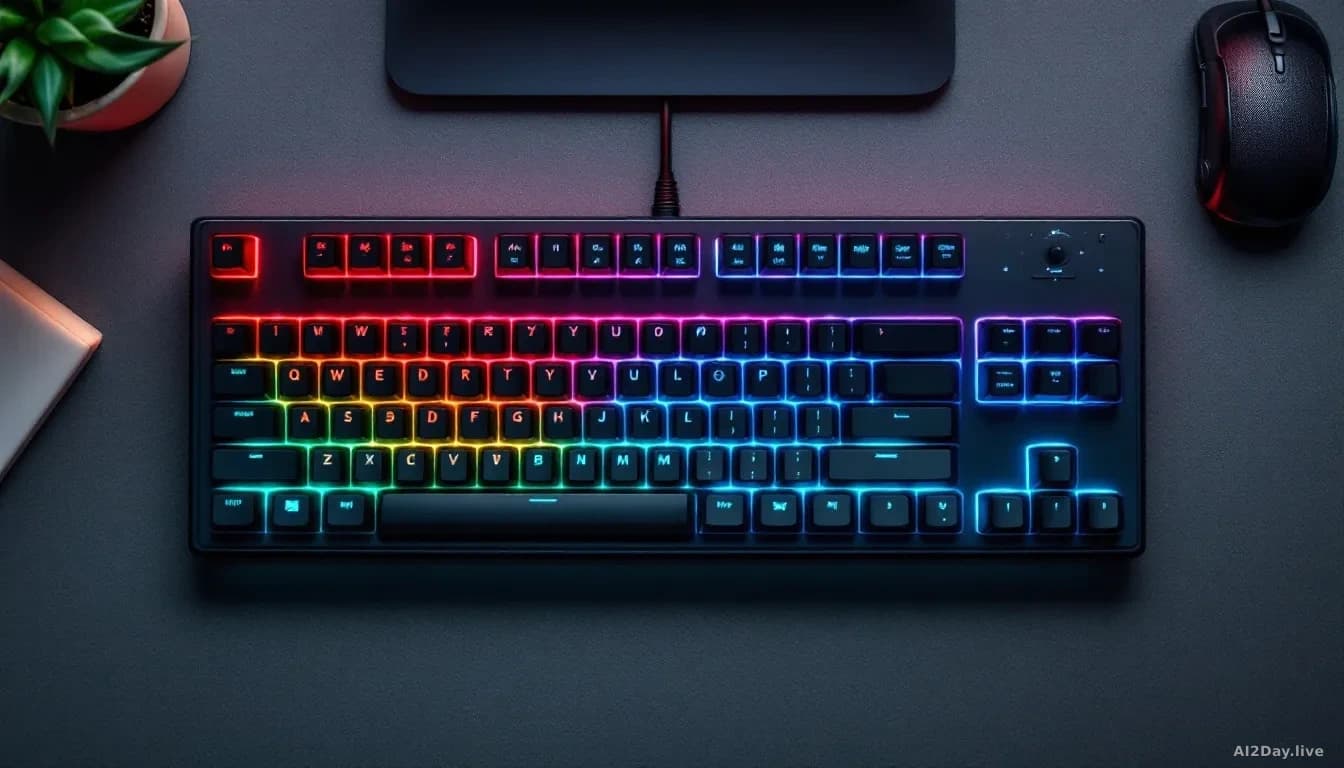
OpenAI now sells keyboards. The Codex Micro, a $230 light-up keyboard co-designed with specialty hardware firm Work Louder, went on sale this week as the company's first consumer hardware product.
The keyboard is built around OpenAI Codex, the company's AI coding assistant, which can write and run software code with minimal human input. Think of it as a control panel for managing several of these automated coding helpers at once, rather than clicking through a phone app or computer screen.
Physically, the Micro is striking. Light-up keys, called Agent Keys, glow to show what each coding assistant is doing at any moment. A small joystick launches preset tasks. A dial lets users dial up or down how hard the AI thinks through a problem, meaning how much computing power and time it spends before answering. Everything is customisable through the ChatGPT desktop app.
OpenAI told TechCrunch AI the Micro is a limited run, not a mass-market product. In plain terms: it is a statement piece for early adopters and enthusiasts, not something your local electronics shop will stock.
Should ordinary people care about this keyboard?
Probably not yet. At $230, the Micro is priced for professional software developers who already run multiple AI coding assistants and want tactile shortcuts for doing so. A nurse, a teacher or a shop owner has no practical use for it today. That may change if OpenAI ever builds a mainstream version, but nothing like that has been announced.
The more consequential news sits further down the product roadmap.
Bloomberg reported this week that OpenAI is separately developing a portable, screenless smart speaker that connects to ChatGPT and includes mechanical parts that can physically move on their own. No images, no release date, no price. The project is still in development and subject to change.
That unnamed device sits at the centre of a legal dispute. Apple sued OpenAI last week, accusing the company's senior leadership of running a deliberate strategy to extract Apple's confidential information and use it to develop OpenAI's own hardware. The lawsuit alleges the engineers who left Apple for OpenAI carried that information with them. OpenAI has denied any wrongdoing.
The two stories, one quirky keyboard and one secret speaker, together mark a clear shift. OpenAI, until recently a pure software company, is now openly competing in the physical world. Whether the court case slows that effort is a question courts will spend years answering.