America's Humanoid Robot Moment: Agility Robotics CEO Lays Out a Six-Point Plan
Peggy Johnson wants federal policy to catch up with the factory floor. Here's what she's asking for, and why it matters for American workers.
Key points
- Agility Robotics CEO Peggy Johnson published six policy recommendations in 2025 aimed at keeping the United States competitive in humanoid robotics.
- China produces 90% of the world's permanent magnets used inside robot motors, a supply-chain concentration that McKinsey has documented.
- China announced a goal in 2023 to mass-produce humanoid robots by 2025, backed by a full national strategy.
- Johnson argues that without deliberate U.S. Action, the domestic industrial base supporting robotics could weaken, with consequences for national security.
- Cost is the single biggest barrier stopping small manufacturers from adopting humanoid robots today.
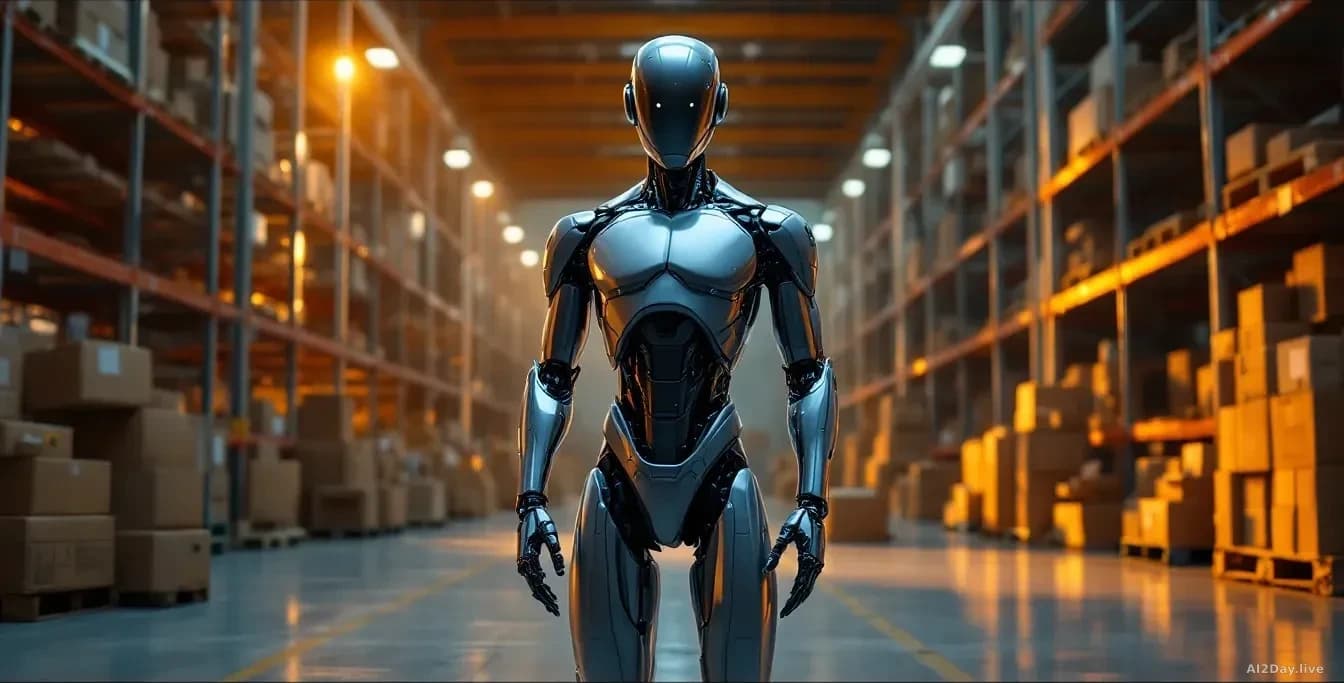
Humanoid robots, machines built roughly in the shape of a human body so they can work in spaces designed for people, are no longer a lab curiosity. They're lifting boxes in warehouses and walking factory floors right now. Agility Robotics has been pushing this shift harder than most, and it thinks the pace will only quicken.
But CEO Peggy Johnson is worried the United States isn't ready for what comes next. In a recent video, she laid out six things she wants policymakers to do. Her concern is blunt: China has a plan, and the U.S. Doesn't.
The supply chain problem is urgent. Robot builders must import certain critical components because American factories don't yet make enough of them. Permanent magnets, small but powerful magnets inside the motors that move a robot's joints, are the clearest example. China accounts for 90% of global production capacity, according to McKinsey. Johnson wants policymakers to fund domestic production before that supply becomes a pressure point.
China announced in 2023 that it aimed to mass-produce humanoid robots by 2025, with goals covering a full innovation system and key component supply. Johnson wants the U.S. To build something comparable across federal agencies and private industry. She warned, as reported by The Robot Report, that falling behind isn't just a business problem: weakening the domestic industrial base carries national security implications. That concern mirrors what we reported on 13 July 2026, when Chinese robotics firm AI² Robotics raised $735 million at a $2.8 billion valuation, signalling how aggressively Chinese firms are capitalising.
What does this mean for ordinary workers?
Johnson isn't asking policymakers to ignore the people already in factories. She specifically calls for training pipelines, apprenticeships, and technical-college partnerships, so workers gain skills to maintain and operate alongside robots rather than simply losing ground to them. Research she cited shows robots more often complement human workers than displace them, though our earlier story found that AI is pushing older workers out of jobs earlier than expected, a tension Johnson's training proposals don't fully resolve.
Her remaining three recommendations are practical. She wants voluntary, industry-led safety standards from bodies like ISO, NIST and ASTM to keep innovation moving faster than regulation can slow it. She wants targeted financing tools and early-adopter programmes to bring small and mid-sized manufacturers into reach. And she wants clear procurement pathways so logistics and defence agencies can buy non-weaponised humanoid robots without drowning in red tape.
The price barrier is real. A humanoid robot today costs far more than the annual wage of the worker it might assist, which is why only large companies can experiment. Johnson's financing push is aimed directly at that gap.
Congress hasn't moved yet. The machines, though, aren't waiting.