Talking to Your Phone Could Replace the Customer Feedback Form
A startup called Voicebox wants you to scan a QR code and say whatever you think, out loud, in about 20 seconds. Voice dictation has finally got good enough to make that work.
Key points
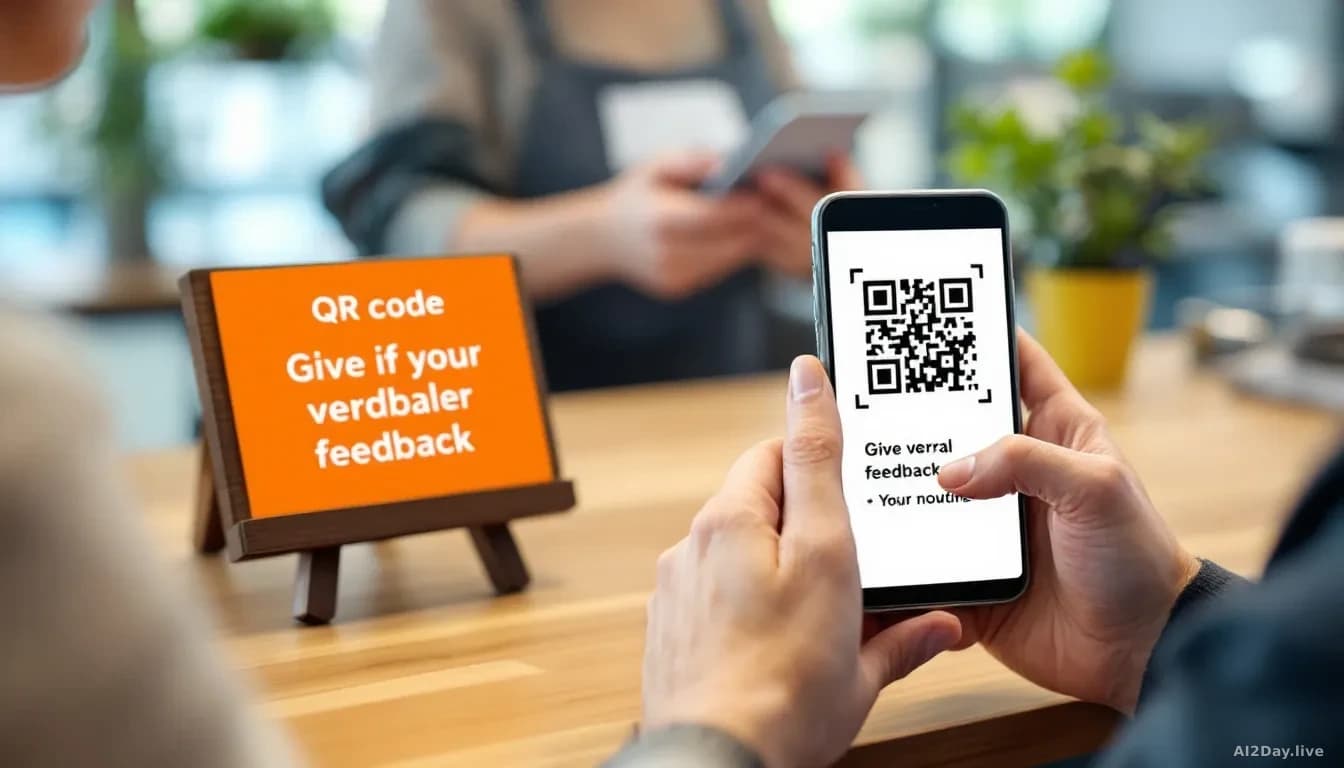
- Voicebox, a startup led by CEO Karan Gupta, lets shoppers and travellers leave spoken feedback by scanning a QR code or tapping an NFC chip, a small wireless tag embedded in a sign or sticker.
- The company has partnered with airport terminals to collect real-time opinions on things like bathroom cleanliness and gate signage.
- Author Lena Dunham used Voicebox at a San Francisco event for her book Famesick in 2025, collecting emotional spoken responses from attendees.
- Voicebox recently launched a public directory, letting anyone leave a voice review for any listed business, similar in spirit to Google Maps reviews.
- Gupta says voice transcription reached a quality threshold in the last two years, making the product finally practical.
Most of us never fill in the customer feedback survey. It sits in an email, we mean to get to it, and we don't. Voicebox is betting that speaking is a different story.
The startup, led by CEO Karan Gupta, asks customers to do one thing: scan a QR code or tap their phone to an NFC chip posted somewhere in a shop or venue, then talk for as long as they like. Twenty seconds is usually enough. The spoken words get automatically converted to text and land in a dashboard the business can read, complete with a sentiment score that flags whether the feedback is positive or negative.
"In the last two years, we hit a tipping point," Gupta told Wired AI. "Voice could now be accurate. It could be fast."
He's right that the technology has moved fast. Dictation tools such as Wispr and Granola, which listens continuously during meetings and generates notes, have made voice-to-text sharp enough that some writers now draft by speaking rather than typing. We looked at a similar bet on ambient voice when we covered Relay's AI microphone on 27 August. Gupta's previous company, an app called Alice, also used voice for secure transcription, so he has watched that accuracy curve rise up close.
What does this mean for ordinary shoppers and travellers?
For customers, the pitch is simple: share a thought on your way out the door, no hold music, no login, no star-rating grid. Businesses get a potential fire hose of raw, unfiltered opinion that written forms rarely produce.
The airport partnership is the clearest picture of this in action. A traveller spots a QR code near a gate and says "the bathrooms on level two are a mess." That message arrives in an operations dashboard before the flight boards.
Gupta also sees uses well beyond shops and terminals. Earlier this year, Dunham posted a Voicebox QR code during her Famesick book event in San Francisco. Attendees recorded personal messages about how they connected with her medical journey. That is a long way from a complaint box outside a supermarket.
Is this just Yelp with a microphone?
Not quite, though the gap is narrowing. Voicebox recently launched what it calls a directory, a public layer where anyone can leave a spoken review for a listed business and, in future versions of the product, hear what others have said. Gupta wants people to whisper a quick take about a haircut on the walk back to their car, or warn future visitors about a hospital car park that is impossible to navigate.
One honest caveat worth keeping in mind: the voices you hear from any public review platform tend to belong to people with strong feelings. The quietly satisfied customer rarely reaches for the microphone. Spoken reviews will carry the same skew as written ones.
Still, the friction really is lower. If you've ever abandoned a feedback form halfway through, that is the gap Voicebox is trying to close.
Takeaway: Next time a business asks for feedback, look for a QR code. A 20-second spoken comment costs less of your time than a two-minute form, and it is far more likely to reach someone who can actually act on it.