Inside Shanghai's Robot Carnival: China's Push to Make Humanoids Everyday
Families queued, children cheered robot duels, and a humanoid performed drunken boxing. A day at a Shanghai robotics showcase reveals how China is betting on machines that walk, fold laundry, and brew coffee.
Key points
- China produced nearly 90% of the more than 13,000 humanoid robots delivered worldwide last year.
- Embodied AI, putting artificial intelligence into physical moving machines, is a stated priority in China's current five-year national plan.
- Humanoid robots performed publicly in multiple Chinese cities on the same weekend, including bipedal robots running a half-marathon in Beijing.
- High prices, short battery life, and safety concerns around heavy two-legged machines remain real barriers to wider use.
On a public holiday on the outskirts of Shanghai, an 11-year-old boy can't stop showing strangers his new robotic dog. His mother just bought it at a robotics carnival hosted by a research and development hub that houses over 100 companies. The dog is attempting a handstand. Delighted, the boy holds it up for anyone nearby to see.
Why is China hosting robot shows for the public?
China wants robots to feel ordinary. The country has made embodied AI, wiring artificial intelligence into physical machines that move through the real world, a central piece of its latest five-year national plan.
The carnival format is deliberate. Families watch remote-controlled robots fire water beads at each other in a makeshift ring. Volunteers teach children to guide a four-legged robot up a flight of stairs. Yang Duan, a product manager at DexForce, stands near a humanoid brewing coffee and says these machines "can free people from physical work and mundane chores." A few booths away, robotic arms attempt to fold a basket of T-shirts. Getting ordinary people comfortable with robots in person is a precondition for getting them accepted at work or at home.
What does China's lead actually look like?
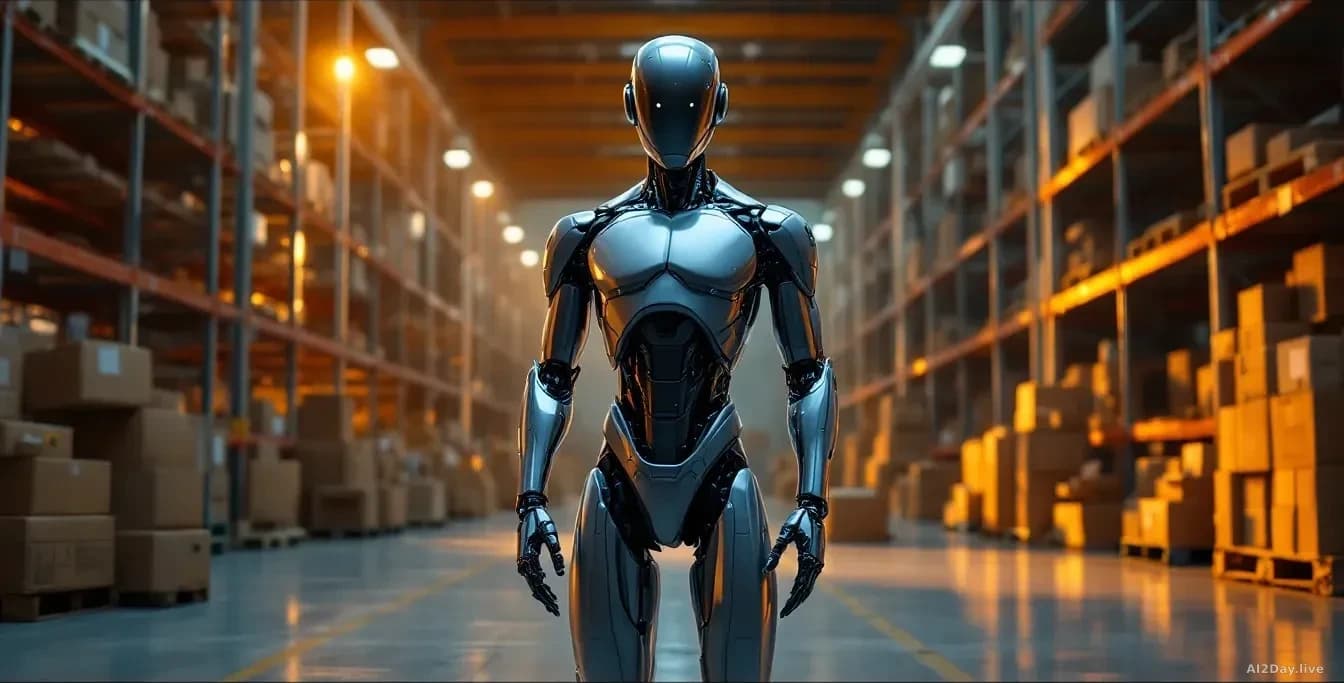
Nearly 90% of the more than 13,000 humanoid robots, machines with two arms and two legs built roughly in the shape of a human body, delivered globally last year were made in China, as MIT Technology Review reported. Chinese firms are competing on design and capability too, not just volume. On the same weekend as the Shanghai carnival, humanoids performed for crowds in shopping malls and tourist sites across several other Chinese cities. In Beijing, bipedal robots ran a half-marathon.
Back in Shanghai's main tent, a humanoid in a glittery top performs drunken boxing, a traditional martial arts style. Another does a front flip. A row of small robotic lions waits nearby. The crowd chants for more.
Our reporting on 24 August found XPeng's robotics arm Dogotix valued at over $6 billion and targeting 1,000 humanoids a month on factory floors by 2027, which puts the carnival's optimism in a broader commercial context.
Should ordinary people expect to see robots like this soon?
Not quite yet. Humanoid robots are heavy and balance on two legs, which creates genuine safety risks. Batteries run out quickly. Prices remain high. Many roboticists still question whether the human body shape is actually the right design for most tasks. And as we noted on 15 August, poor voice interaction alone could be enough to stall wide adoption.
What the carnival circuit shows is confidence, not a finished product. The technology is real, government-backed, and improving fast. Whether humanoids become fixtures in homes and workplaces, or remain spectacular show acts, depends on engineering problems that public enthusiasm cannot solve.
For now, the robot flips. The crowd chants. A boy holds up his robotic dog and grins.