XPeng's robot unit Dogotix raises $900 million and aims to put 1,000 humanoids a month on factory floors by 2027
The Chinese electric vehicle maker's robotics arm is now valued at over $6 billion and plans to start shipping its IRON humanoid robot to retail stores and industrial sites next year.
Key points
- XPeng's robotics unit Dogotix raised more than $900 million in its first funding round, reaching a post-deal valuation of over $6.3 billion.
- Dogotix plans to produce 1,000 units of its IRON humanoid robot per month by the end of 2026, with commercial deliveries starting in 2027.
- IDG Capital led the round; Alibaba and Tencent joined as strategic investors.
- Investors have poured more than $8.7 billion into humanoid robotics companies so far this year, with two-thirds going to Chinese firms.
- XPeng says the raise sets a record for a single private financing round in China's embodied AI sector, meaning companies that put AI models into physical machines.
A robot that can walk into a warehouse and get to work is no longer science fiction. It's, increasingly, a funding priority.
XPeng Motors, the Chinese electric vehicle company, announced this week that Dogotix, its humanoid robotics subsidiary, closed a funding round worth more than $900 million. Its pre-money valuation stood at $5 billion before the deal, rising to more than $6.3 billion after it, making Dogotix one of the most valuable robotics startups in the world.
What is the IRON robot, and who would use it?
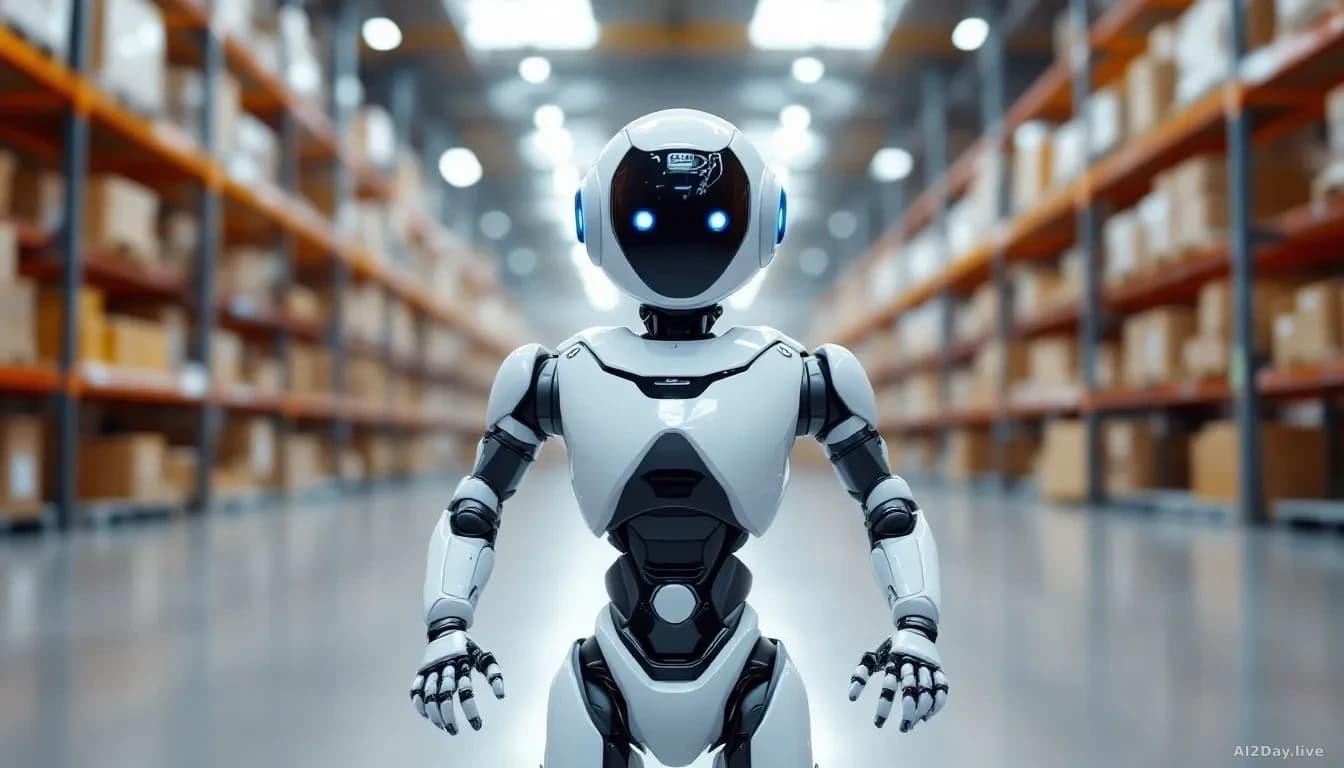
The IRON is a humanoid robot: a machine built roughly in the shape of a person, with arms, legs, and the ability to move through ordinary spaces. Dogotix is targeting two main customers: retail stores and industrial campuses such as factories and warehouses.
The company plans to build 1,000 IRON units a month by the end of 2026. Commercial deliveries, meaning paying customers actually receiving machines, are set to begin in 2027. Dogotix also makes four-legged and tracked robots for uses including home security, logistics, power-line inspection.
For now, the IRON hasn't been shown completing fully autonomous tasks in a public, uncontrolled setting. That matters: many robot demos use a human operator sending instructions remotely, a technique called teleoperation, and full independence in messy real-world environments remains genuinely hard. Our 22 August piece on the hidden workforce behind physical AI found that scaling past a handful of machines is as much an HR problem as an engineering one, which puts Dogotix's 1,000-units-a-month target in sharper relief.
Where does the money come from?
IDG Capital led the round. Strategic investors, meaning companies that invest partly for business partnership rather than purely for financial return, include Alibaba and Tencent. Gaorong Ventures also participated, as reported by Reuters.
XPeng will retain Dogotix as a subsidiary. He Xiaopeng, XPeng's CEO, will also serve as CEO of Dogotix.
How does this fit the wider humanoid boom?
The numbers across the industry are striking. Here's how recent major funding rounds compare:
| Company | Deal type | Amount |
|---|---|---|
| NEURA Robotics | Series C | up to $1.4 billion |
| Apptronik | Series A | $935 million |
| Dogotix (XPeng) | Initial round | over $900 million |
| Unitree Robotics | IPO | $906 million |
| Agility Robotics | SPAC deal | $620 million |
Investors have committed more than $8.7 billion to humanoid robotics companies in 2025 alone, according to data firm Dealroom. Two-thirds of that total went to Chinese firms.
XPeng isn't the only automaker in this space. Hyundai is testing Boston Dynamics' Atlas robot. Tesla is scaling production of its Optimus humanoid. BMW has deployed Figure AI's Figure 03 robot at one of its plants.
Big valuations don't guarantee smooth sailing. Unitree Robotics saw its stock climb roughly 460% after its public listing, then fall 44% from that peak. Dogotix itself reported losses in both 2024 and 2025. The gap between a funded prototype and a profitable, reliable product is wide.
Common questions
Will these robots take jobs in shops and warehouses?
That depends entirely on whether they can do the work reliably and cheaply enough to justify the cost. Dogotix hasn't published a price per unit or a comparison with current labour costs, so workers and employers alike have time to watch how early deployments perform before drawing conclusions.
When could ordinary people encounter one of these robots?
Commercial deliveries are planned for 2027, with the first targets being industrial and retail sites, not homes. Most people would encounter the IRON at a warehouse or a large store before they'd see one anywhere else.



