Holiday Robotics raises $105 million to put its FRIDAY robot to work on factory floors
The Seoul-based startup says its wheeled humanoid can handle repetitive industrial tasks safely alongside people, and it has the funding to prove it.
Key points
- Holiday Robotics raised $105 million in Series A funding in May 2025.
- Its FRIDAY robot uses wheels instead of legs and dedicates 40 of its 64 degrees of freedom (the number of independent ways a joint can move) to its hands.
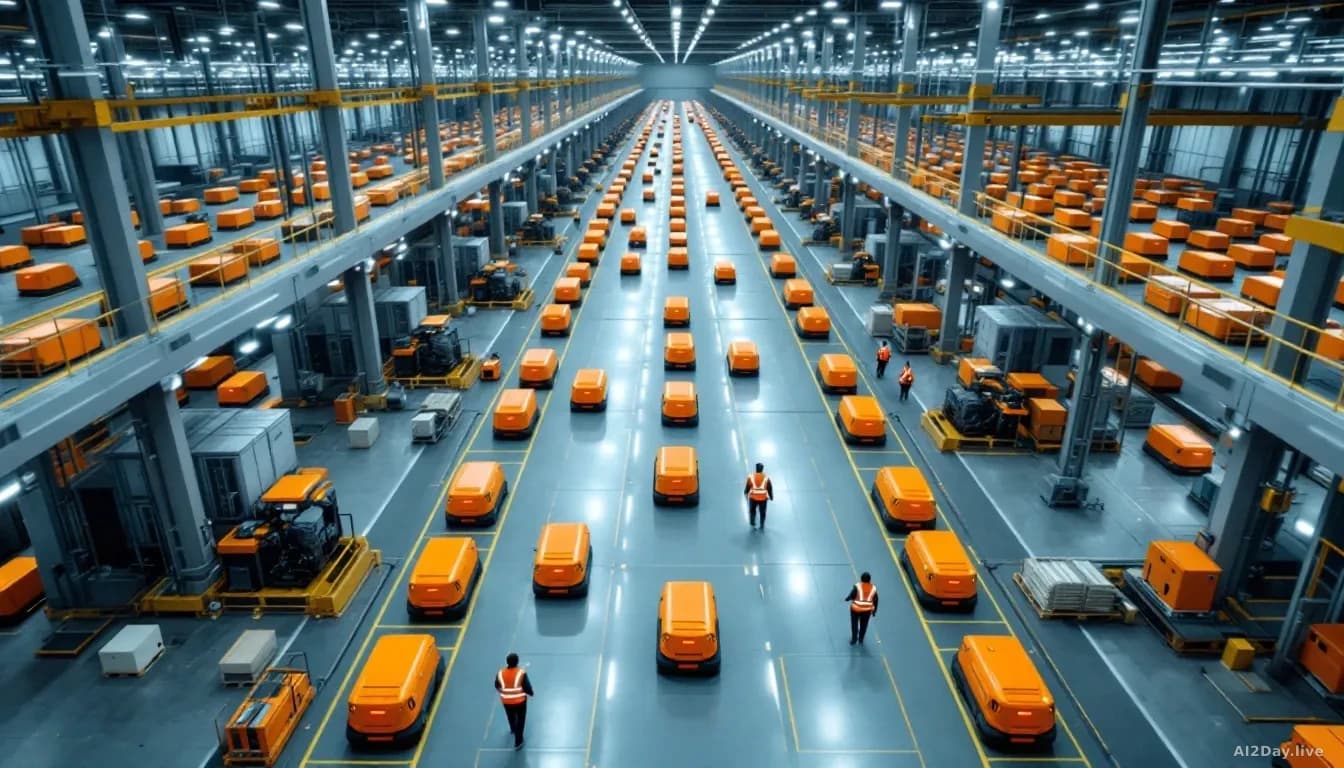
- The company is targeting automotive, semiconductor, and logistics factory environments.
- FRIDAY carries hot-swappable batteries so it can stay active across a full work shift without stopping to recharge.
A Seoul-based robotics startup called Holiday Robotics just closed a $105 million Series A round, and it has one target in mind: the factory floor.
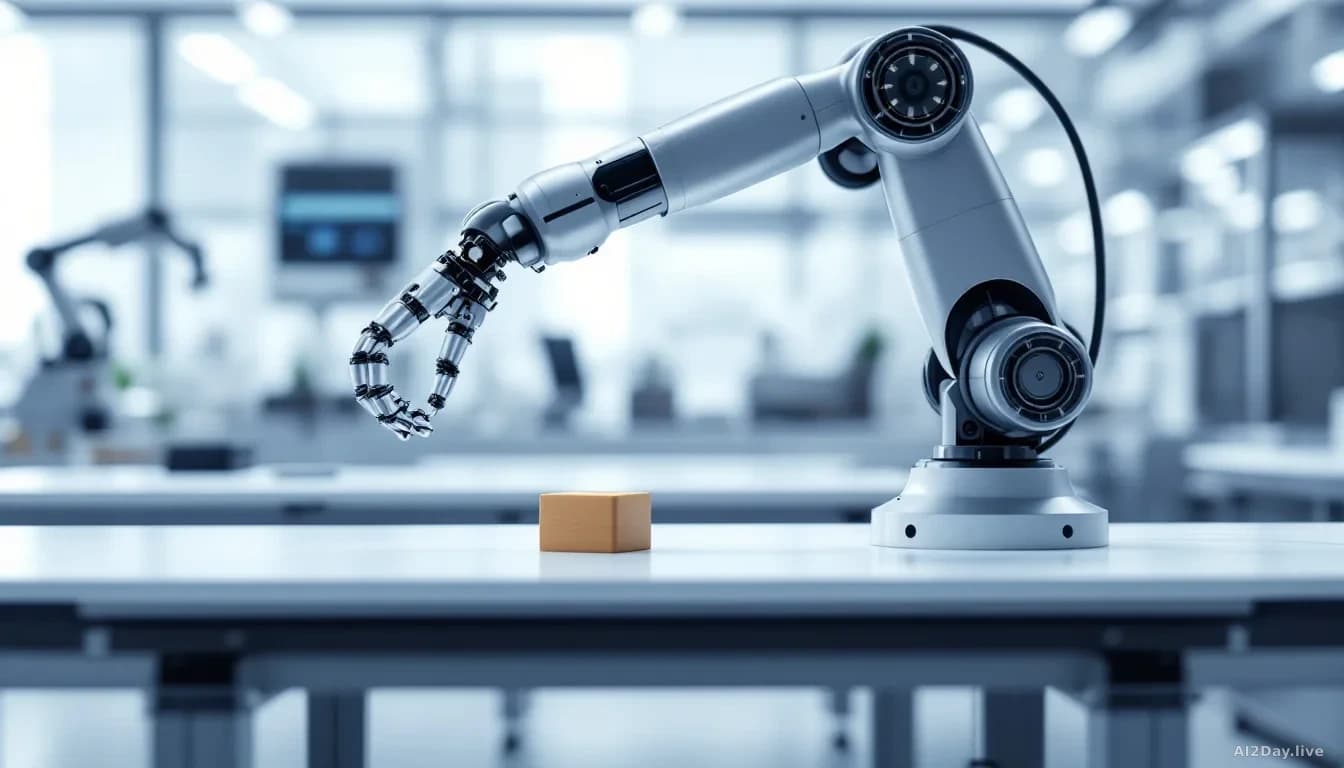
Its robot is called FRIDAY. Unlike the humanoid robots you've probably seen doing backflips in viral videos, FRIDAY rolls on wheels rather than walking on legs. The upper body handles the actual work, with arms designed for dexterous manipulation, meaning the ability to grip, place, and adjust objects with precision.
Why wheels instead of legs?
Walking is impressive in a demo but expensive in a real factory. Holiday Robotics is making a deliberate bet that reliability matters more than novelty.
Real factories are crowded and unforgiving. Timing has to be exact. If something goes wrong, the robot has to recover without shutting down the whole line. Holiday Robotics puts it plainly: the robot needs to fit the environment as it already exists, not the other way around.
FRIDAY runs on hot-swappable batteries, meaning workers can swap a flat battery for a charged one in seconds, keeping the robot moving across an entire shift. It uses 360-degree cameras and lidar sensors (the same radar-like technology self-driving cars use to map their surroundings) to avoid blind spots and work safely near people.
What makes the hands special?
Holiday Robotics says the hands are the whole point. FRIDAY has 64 degrees of freedom in total, and 40 of them are in its hands alone.
Picture screwing a bolt into an awkward angle, adjusting for a slightly slippery surface, doing that thousands of times without error. That's the kind of task FRIDAY is built for. Its hands include tactile sensing, which lets the robot feel contact the way a fingertip does, and force-aware control, so it doesn't crush a component by pressing too hard.
The robot also uses a software approach Holiday calls vision-language-skill (VLS). A vision-language model, the type of AI that can look at a picture and describe what it sees, helps FRIDAY interpret a task. Skills built and validated individually are then combined to carry out complex jobs. Think of it like assembling a recipe from separate techniques rather than memorising a single dish.
To harden those skills before they reach a live factory, Holiday runs a simulation environment called Holiday Sim where robots can be tested and broken safely. A separate system called the Holiday Lab turns real-world failures and demonstrations into reusable skills. A deployment platform called OASys then sends proven skills back out to physical robots in the field.
We noted on 13 July 2026 that AI² Robotics made a $735 million bet on wheeled factory robots over walking ones; Holiday Robotics is arriving at the same conclusion from Seoul, with a narrower initial focus.
According to The Robot Report, Holiday is currently running private proofs of concept with industrial partners in automotive, semiconductor, and logistics settings. The $105 million will go toward growing research and engineering teams in South Korea and the United States, building out manufacturing capacity, and continuing full-stack development of FRIDAY.
Holiday isn't claiming FRIDAY can do every job. It's starting narrow and specific, and that's usually how useful automation actually arrives. The hands-first engineering philosophy is the real story here: if the dexterity holds up under factory conditions, the wheels become almost beside the point.