How TK Elevator Gave 25,000 Technicians an AI Briefing Before Every Job
An agentic app built on Microsoft Foundry and Azure OpenAI now briefs TK Elevator technicians before they enter a building, and debriefs them after they leave.
Key points
- AI agents now assist TK Elevator's 25,000 service technicians globally.
- The system draws on a decade of connected-equipment data held in Microsoft Azure.
- Technicians receive pre-job briefings and give spoken post-job debriefs, with no writing required.
- TKE's 1.4 million units carry 1.5 billion passengers a day, so uptime is the core business pressure.
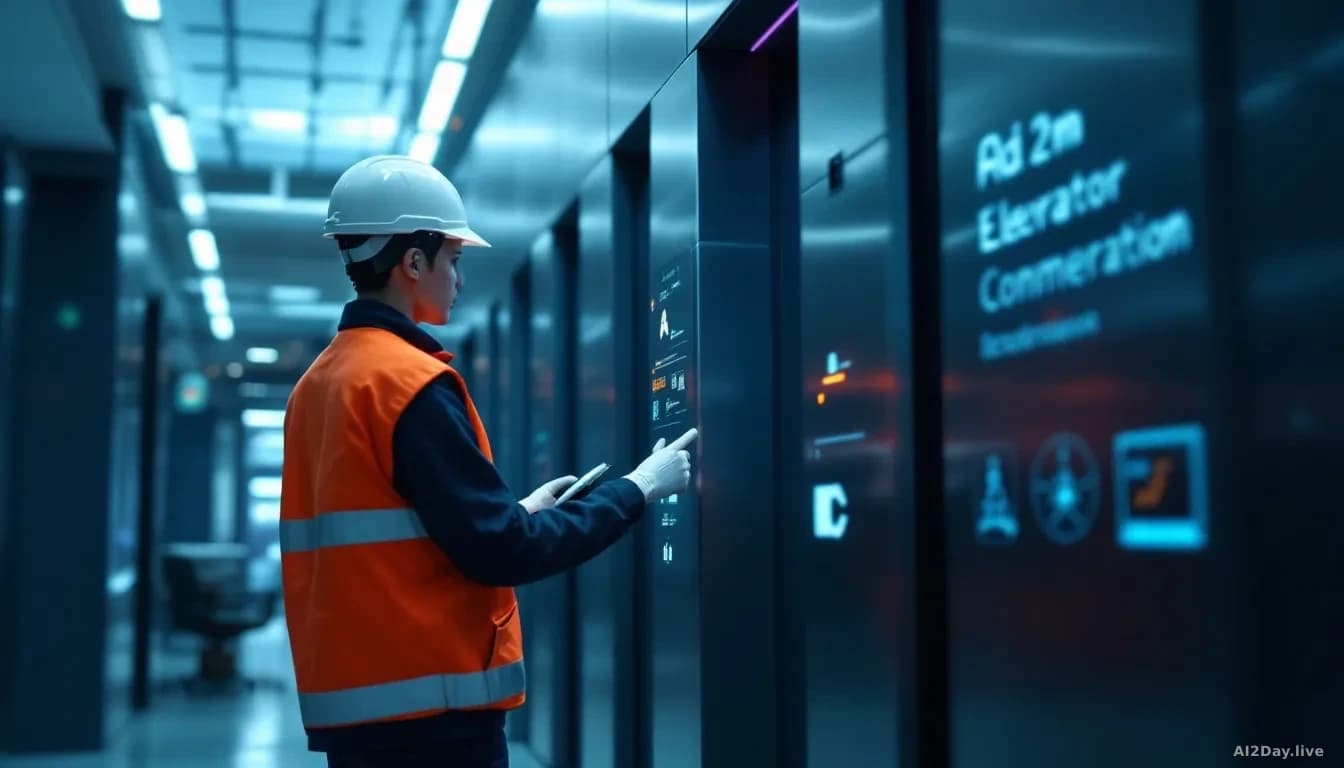
Service technicians at TK Elevator, a Düsseldorf-based manufacturer and servicer of elevators and escalators, are using AI agents to cut the time spent hunting for information on the job. The agents, built with Microsoft Foundry and Azure OpenAI, brief each technician through a phone or tablet before they enter a building: which elevator, which floor, what the issue is, which tools to bring.
Torben Teichmann, a TKE service technician, describes the shift plainly. "I love AI," he told Microsoft. "The best is it's information I need now. I'm the boss at the job site and the AI is my buddy that gives advice."
After the work is done, a voice agent asks Teichmann about what he found. He answers in his own words. The agent records his answers, asks follow-up questions if detail is thin, and adds the debrief to a shared record that colleagues across Germany and elsewhere can draw on later. No writing in the car required.
TKE started connecting its units to the cloud roughly a decade ago, using sensors and digital controllers to feed a central data platform built on Microsoft Azure. That structured data covered equipment behaviour well. What it couldn't touch was the knowledge locked in technical manuals and handwritten service notes. Generative AI changed that.
"Everything we did before was on structured data," says Christian Jung, TKE's head of digital data and AI foundation. "We were not able to use data from unstructured sources."
Generative AI lets TKE extract and cross-reference those unstructured sources now, so the same model of escalator in two different buildings can carry its own distinct service history into every technician's briefing.
What does this mean for technicians?
The practical effect is fewer wasted trips. In the old workflow, a technician might discover mid-job that they'd left a needed tool in the car, or spend time tracking down a handwritten notebook. The AI removes both problems. It also shifts documentation from a chore done in a parked car to a spoken exchange that takes minutes. For the 25,000 technicians TKE employs, that's a compounding time saving across 1.4 million units.
The pattern isn't unique to maintenance. We reported on 15 October how Bar-Ilan University's AI study agent produced a similar effect for students: less time hunting for information, more time on the actual task.
How does this fit into the bigger picture?
Microsoft is the infrastructure layer here, and that concentration carries its own risk. Our 4 October story on how JadePuffer tore through Azure accounts in seven minutes is worth keeping in mind: agents that can read a decade of proprietary service data also represent a target worth protecting.
The honest read on this deployment is that the AI is doing something narrow and useful rather than something transformative. It's a retrieval and transcription tool dressed in agentic clothing. That's not a criticism; retrieval and transcription were genuinely painful problems for field technicians. But the bigger test will be whether the debriefs TKE is now collecting actually improve predictive maintenance over the next few years, or whether the data sits in the platform and doesn't change how decisions get made.
Common questions
How are AI agents enhancing efficiency?
They give technicians the right information before a job starts and capture observations afterward without requiring any writing.
What is the role of data in these AI systems?
TKE's agents combine a decade of sensor readings with technical documents and past service notes, sources that structured databases couldn't search together before generative AI.
Are there security concerns with AI agents?
Any system that holds years of operational data on critical infrastructure is a target. Microsoft has documented how quickly a compromised credential can expose an Azure environment.