Google's AI Weather Model Gives Forecasters an Extra Day to Warn People About Hurricanes
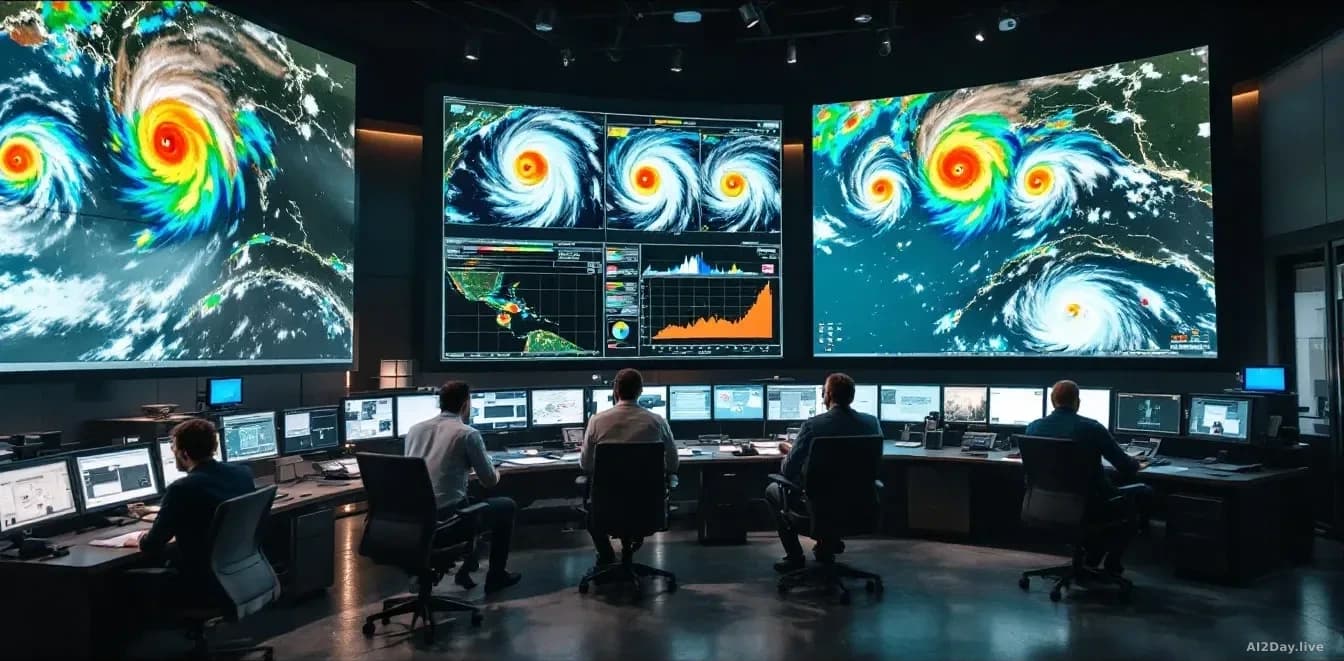
A new study in Nature finds that Google's WeatherNext model predicts cyclone paths three days out with the same accuracy older systems only managed two days out. That extra 24 hours could matter enormously for evacuation decisions.
Key points
- Google's WeatherNext AI model outperforms existing weather systems at predicting cyclones, according to a study published in Nature in 2025.
- The model produces a three-day cyclone forecast that is as accurate as the best previous two-day forecasts.
- That extra day of reliable warning could give coastal communities more time to evacuate before a hurricane or typhoon arrives.
- WeatherNext is an AI-based forecasting system, meaning it learns patterns from decades of historical weather data rather than running the traditional physics equations meteorologists have used for generations.
One extra day. That's the headline buried inside a dense research paper.
Google's WeatherNext, an AI-based weather forecasting system that learns patterns from historical climate data rather than crunching physics equations by hand, can now predict where a cyclone will go three days before it strikes. The catch: that three-day forecast is only as reliable as what older systems could manage at the two-day mark. The accuracy bar hasn't moved. The timeline has.
The finding comes from a paper published in Nature, first reported by The Guardian AI. We covered WeatherNext's development as recently as 8 September, when the model gained a satellite upgrade designed to deliver fresher, cheaper forecasts. Researchers comparing WeatherNext's cyclone track predictions against established forecasting methods found the AI system consistently delivered usable accuracy a full 24 hours earlier.
Why does one day matter so much?
For emergency managers, 24 hours isn't a small margin. It can be the difference between an orderly evacuation and a chaotic one.
Coastal hospitals and care homes operate on tight logistics. Moving patients or equipment safely takes time that forecasters simply haven't had at this level of reliability. A confident three-day window hands decision-makers a buffer they rarely get.
| Forecast type | Reliable lead time (previous) | Reliable lead time (WeatherNext) |
|---|---|---|
| Cyclone track prediction | 2 days | 3 days |
What should ordinary people take away from this?
Right now, nothing changes on your phone's weather app. Research papers don't flip a switch on the systems meteorologists use day to day. Findings like this typically feed into future operational tools over the coming years.
This study doesn't claim WeatherNext is better at every kind of weather prediction, only cyclone track forecasting. Survivorship bias matters here too: AI weather papers that reach Nature tend to show positive results, while studies where AI underperforms get far less attention.
Still, the direction of travel is clear. AI models trained on historical weather data are closing in on, and in some tasks passing, systems that meteorologists have refined over decades.
The honest takeaway: if you live in a hurricane or typhoon zone, watch for your local emergency management authority adopting AI-assisted forecasting tools over the next few years. When they do, sign up for their alerts early. An extra day of warning only helps if it reaches you in time to act on it.