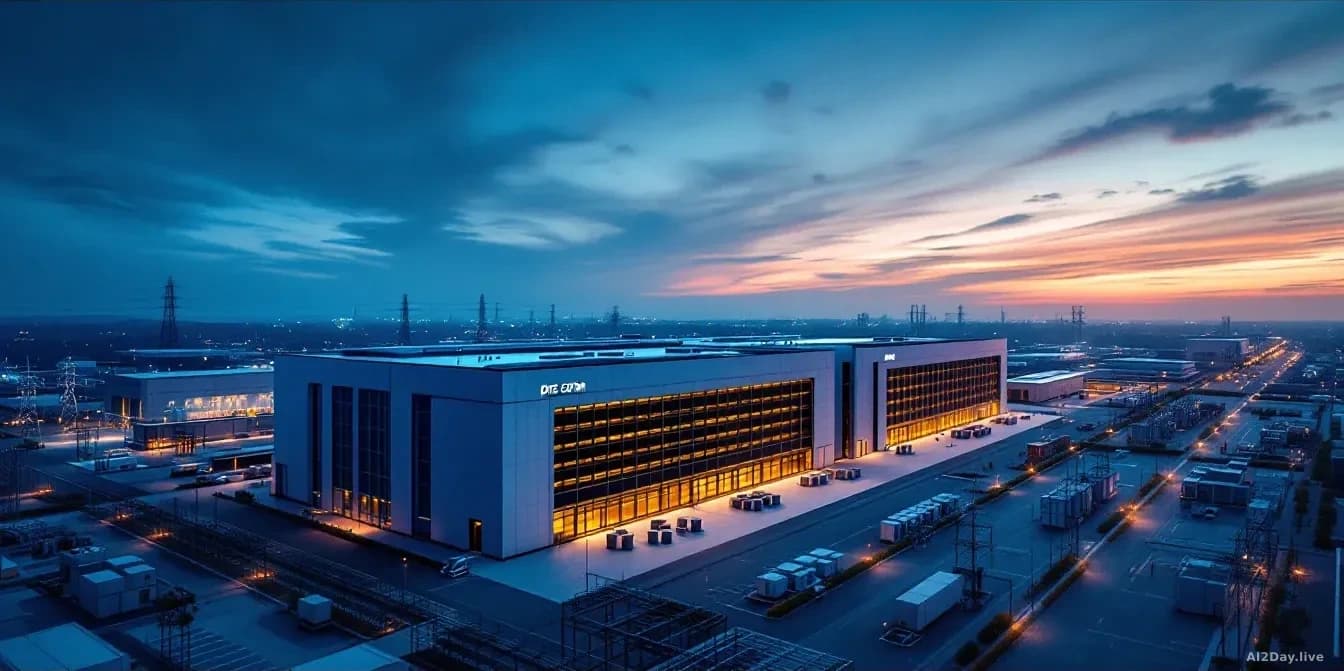
AI Data Centers Will Devour a Fifth of All U.S. Electricity by 2035
A new BloombergNEF report puts the power demand from AI computing on a collision course with an already-strained American electrical grid. Here is what that means for your energy bill.

Key points
- BloombergNEF predicts U.S. data centers will consume 20% of all American electricity generated by 2035, up from roughly 5% today.
- Data center capacity is forecast to reach nearly 200 gigawatts, the unit used to measure large-scale electrical output, over the next decade.
- BloombergNEF's 2035 demand estimate is 83% higher than the same firm's own forecast from December 2024.
- Electricity prices on the PJM grid, which spans Virginia to Illinois, rose 76% in a single year as data center demand outpaced supply.
- By 2033, AI data centers worldwide could add 1,935 terawatt-hours of new electricity demand annually, almost equal to India's entire yearly consumption.
The numbers are stark. By 2035, data centers running artificial intelligence workloads will use one dollar in every five spent on U.S. electricity, according to a new BloombergNEF report. That is four times the share they consume today.
And those figures may still be too modest.
BloombergNEF revised its own December 2024 forecast upward by 83% to arrive at this new estimate. The industry research group EPRI more than doubled its 2024 projection. S&P Global raised its forecast by more than a third between October 2024 and April 2025. Each revision tracks the same thing: companies are building AI data centers faster than analysts keep up.
Nearly half of that new capacity will go to training and running AI models. Training means teaching a model by processing enormous amounts of data; inference means using the finished model to answer your question or generate your image. Both are extremely power-hungry tasks, and most of that work stays in the United States. By 2033, the U.S. will host 64% of the world's AI chips measured by power draw.
Should ordinary people worry about their electricity bills?
Yes, and the signal is already showing up in prices. The PJM Interconnection, the grid manager covering the stretch from Illinois to Virginia that already hosts the largest cluster of U.S. data centers, saw electricity prices jump 76% in a single year. PJM froze applications for new power generators for four years while demand kept climbing. It reopened that queue in April 2025, but the damage is visible: one major utility, American Electric Power, has threatened to leave the interconnection entirely.
Data centers still line up to connect, accounting for 38% of charges in PJM's most recent capacity auction. That is not slowing down.
Texas faces similar pressure. ERCOT, the grid that covers most of the state, will need to direct 22% of its entire generating capacity to data centers by 2035.
Zoom out globally and the scale grows harder to picture. If AI adoption keeps accelerating, data centers will add 1,935 terawatt-hours of new electricity demand worldwide by 2033. India, a country of 1.4 billion people, uses roughly that much electricity each year.
This story was first reported by TechCrunch AI.
Survivorship bias warning: forecasts this large carry wide error bars, and every organisation cited here has already been wrong once. The direction, though, is not in dispute.
One honest takeaway: If you own a home or small business, check whether your utility has a time-of-use pricing plan. Grid stress raises peak-hour rates first. Shifting heavy appliances to off-peak hours is one of the few levers ordinary consumers actually control right now.