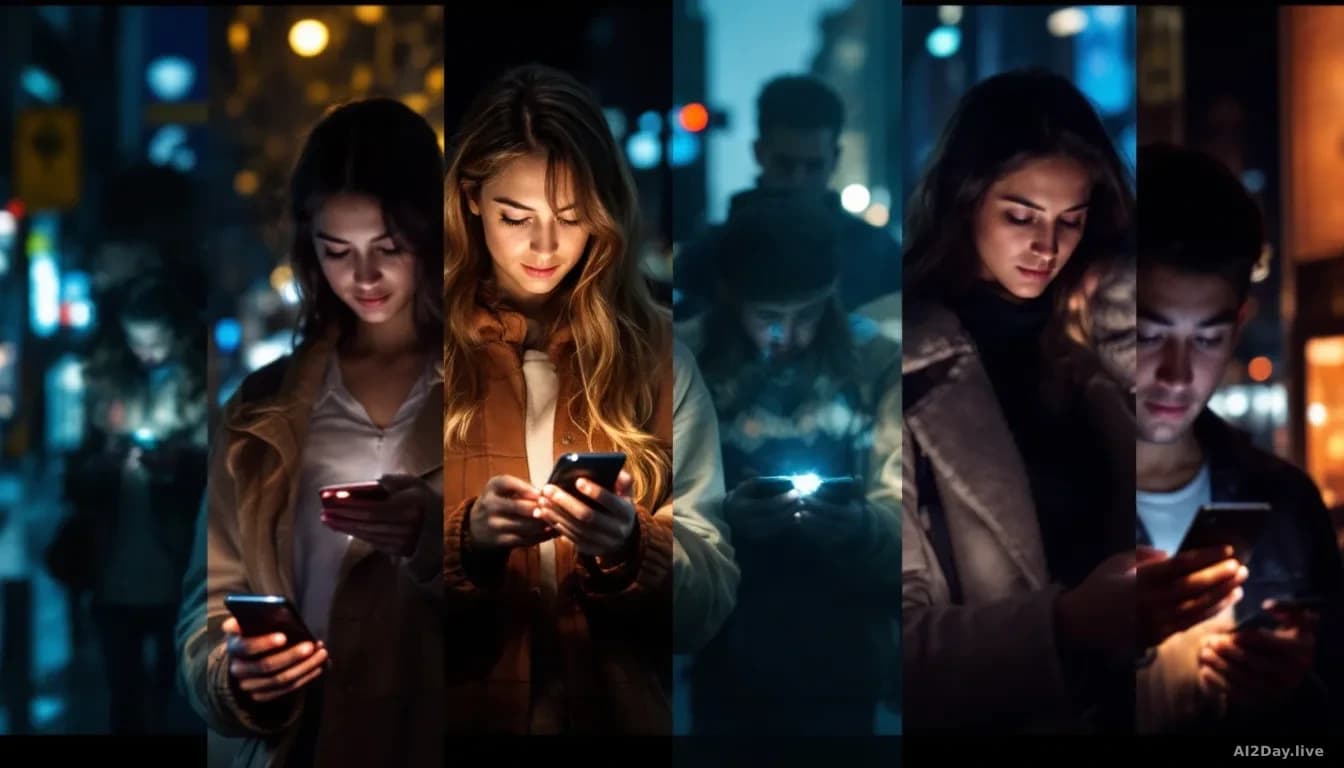
AI is making our screen time more solitary. People are pushing back.
A growing number of writers and researchers argue that as AI fills our feeds with personalised, automated content, something ordinary and important is slipping away: the experience of watching, reading, or listening to the same thing at the same time as strangers.
Key points
- Shared cultural experiences, such as watching a film in a packed cinema, are increasingly rare as AI-driven platforms serve each person a personalised feed.
- Opinion writers and social researchers, including a columnist at The Guardian, argue this shift is narrowing the common references people use to connect with one another.
- The trend is not about technology being bad in general, but about one specific function: automated personalisation that replaces shared stories with individual ones.
- No regulation or single product announcement drives this story; it is a cultural argument gathering momentum.
Christopher Nolan's The Odyssey is still drawing full houses months into its run. One writer's account of watching it, choc-top in hand, surrounded by strangers falling quiet together, became a small argument for something large.
That argument: the experience of sharing the same cultural moment with people you've never met is genuinely worth protecting. And AI-powered personalisation, the technology that decides which videos and music each person sees based on their individual habits, is quietly eating away at it.
What does AI personalisation actually do?
Every major streaming service and social feed now uses recommendation algorithms, software that watches what you click, how long you pause, and what you skip, then serves you more of the same. It's designed to keep you engaged. Two people in the same household can spend an evening on the same platform and encounter almost nothing in common.
This isn't a flaw. It's the product working as designed.
When everyone's feed diverges, fewer people share a reference point. The cultural shorthand that lets a nurse and a shop owner bond over the same film or news story becomes harder to find. We first looked at how platforms are doubling down on this logic when Google announced a chatbot panel to let you shape your own Discover feed in plain English on 20 August.
Should ordinary people care?
Yes, and not in an abstract way. Shared stories are one of the quieter mechanisms through which communities hold together. They give strangers a conversation starter. They help people feel they're living through the same moment, even when their daily lives look nothing alike.
Researchers who study social cohesion, the glue that holds neighbourhoods and workplaces together, have flagged personalisation as one of several forces fraying that glue. Our August story on whether modern abundance has quietly killed our capacity for enjoyment found academics making a closely related case.
None of this means deleting your streaming apps. It does mean the choice to go to a cinema or attend a live event is doing more social work than it might appear.
What happens next?
Right now this is a cultural conversation, not a policy fight. No regulator has proposed rules on feed personalisation. Platforms haven't announced changes.
But the conversation is getting louder. Academics, technologists who helped build these systems, and working journalists are now making the case publicly that full personalisation carries a cost users never agreed to pay. NYU cyber-ethnographer Ruby Thelot argued in August that the internet has already splintered into isolated bubbles where viral moments rack up millions of views without ever touching real culture.
The simplest response available today is also the oldest: go somewhere with other people and experience something together.
Common questions
Is AI personalisation illegal or being banned anywhere?
No. Recommendation algorithms are legal everywhere and face no current ban. Some regulators in the European Union are examining algorithmic transparency, meaning platforms may eventually have to explain how their systems work, but no restrictions on personalisation itself are in force.
Can I turn off personalisation on streaming services?
Most platforms offer limited controls, such as clearing your watch history or choosing a genre manually, but full opt-out is rarely available. Browsing in a private or incognito window sometimes resets recommendations to a generic default.
Does going to the cinema actually make a difference?
For the individual experience, yes. A cinema shows every audience member the same film at the same time, which is precisely what a personalised feed can't replicate. Whether that scales into broader social change depends on how many people make the same choice.