University of Sydney staff walk out over AI fears as trust survey hits zero
Hundreds of staff picketed and thousands more joined a 24-hour strike after an internal survey found not a single arts faculty member trusted the university to act in their interests.
Key points
- Thousands of University of Sydney staff joined a 24-hour strike on Wednesday, citing concerns about artificial intelligence use in the workplace.
- A faculty survey found 0% of arts and social sciences staff trusted the university to act in the best interests of staff, students and the broader community.
- The strike was organised by the relevant campus union after negotiations over AI protections stalled.
- Picket lines formed across the university as staff demanded clearer rules on how AI can be used in their roles.
The number is hard to ignore. Zero percent. Not a rounding error, not a statistical blip. In a survey of arts and social sciences staff at the University of Sydney, not one respondent agreed with the statement: "I trust the University of Sydney to act in the best interests of staff, students and the broader community."
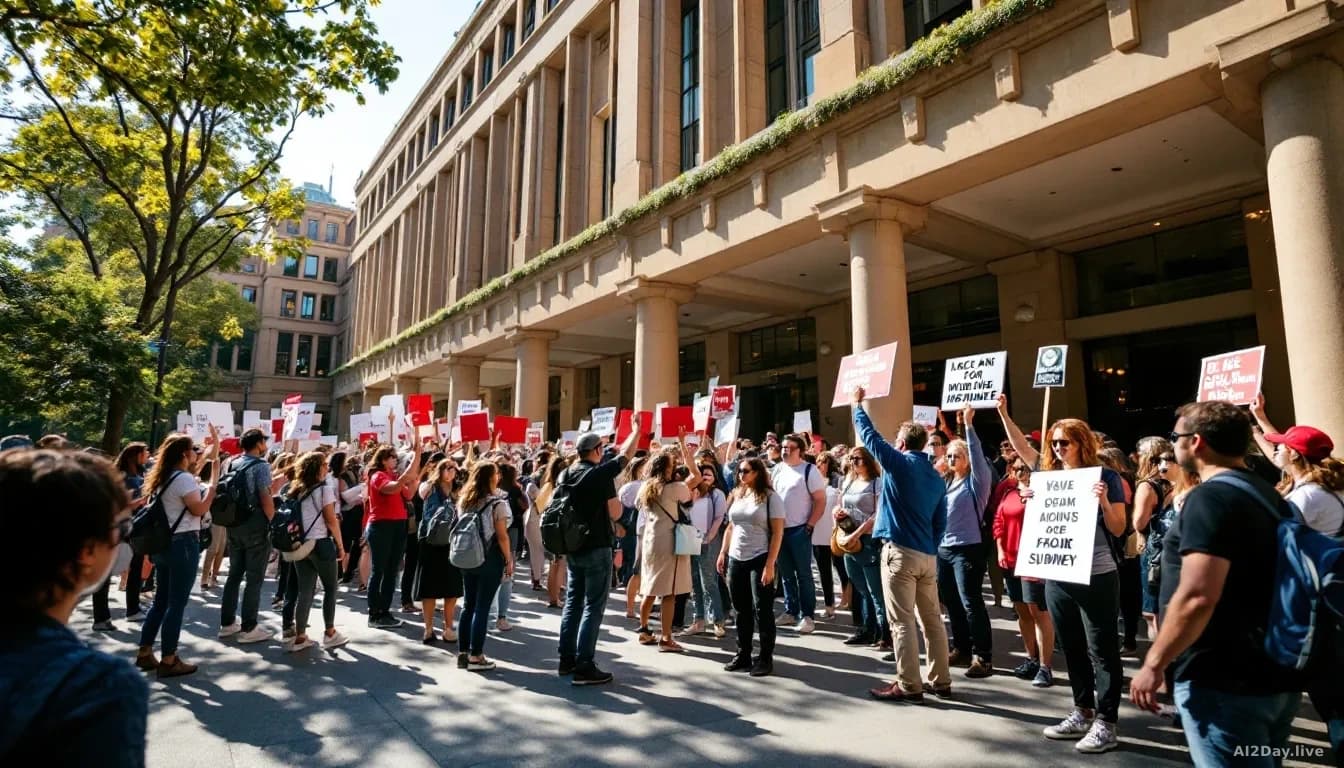
That survey landed in staff inboxes the same week their union agreed to a 24-hour strike, a coordinated work stoppage designed to pressure management. Hundreds lined picket lines on Wednesday. Thousands more joined them across the university.
What are staff actually worried about?
The core demand is protection from AI. Staff want clear rules on how artificial intelligence tools can be used at work, and a guarantee that AI won't quietly replace jobs or monitor employees without consent.
This isn't abstract anxiety. Universities are already experimenting with AI to mark essays and screen job applicants. We covered a sharp version of this dynamic on 1 September, when Macquarie University swapped in-person psychology lectures for an AI chatbot, provoking the same question that's driving the Sydney walkout: what are students actually paying for? For a lecturer or a support worker, the concern is concrete. Could a machine judge their performance, without anyone telling them?
The Guardian AI, which first reported the depth of the survey findings, noted the zero-trust result as particularly striking even by the standards of a heated industrial dispute.
What does this mean for students?
A 24-hour strike disrupts tutorials and office hours for the day it runs. Students mid-semester will notice cancelled classes and delayed feedback.
Longer term, if universities push ahead with AI tools without staff buy-in, the quality of human contact students pay for could quietly erode. A chatbot answering questions at 2 a.m. Is useful. A chatbot replacing the academic who knows your name is a different proposition.
What happens next?
Negotiations between the union and university management continue. The strike's a pressure tactic, not an endpoint. Staff will return to work, but the dispute over AI governance, meaning the rules placed on how AI is used, remains unresolved.
Other Australian universities are watching. Several face similar demands, and a settlement in Sydney would set a reference point for those talks.
My read: the zero-trust figure is the real story here. Unions routinely overstate grievances in a dispute, but you can't spin a number that's already at the floor.