Two ex-Meta researchers want warehouse robots to finally understand what they're looking at
Perceptron's Isaac 0.5 is an open-weight vision model built to help industrial robots handle complex, multi-step tasks on their own. The startup raised $21 million and is targeting factories, warehouses and logistics hubs.
Key points
- Perceptron, founded in November 2024 by two former Meta AI researchers, launched its latest vision model, Isaac 0.5, this week.
- The model is open-weight, meaning anyone can inspect its internal settings and training materials.
- Perceptron raised $21 million in a funding round led by Bessemer Venture Partners.
- Isaac 0.5 was trained on one million hours of video to teach it how to understand real-world environments.
- Target markets include manufacturing, logistics, warehousing, security and media.
Sorting a box sounds simple. For a robot, it is not.
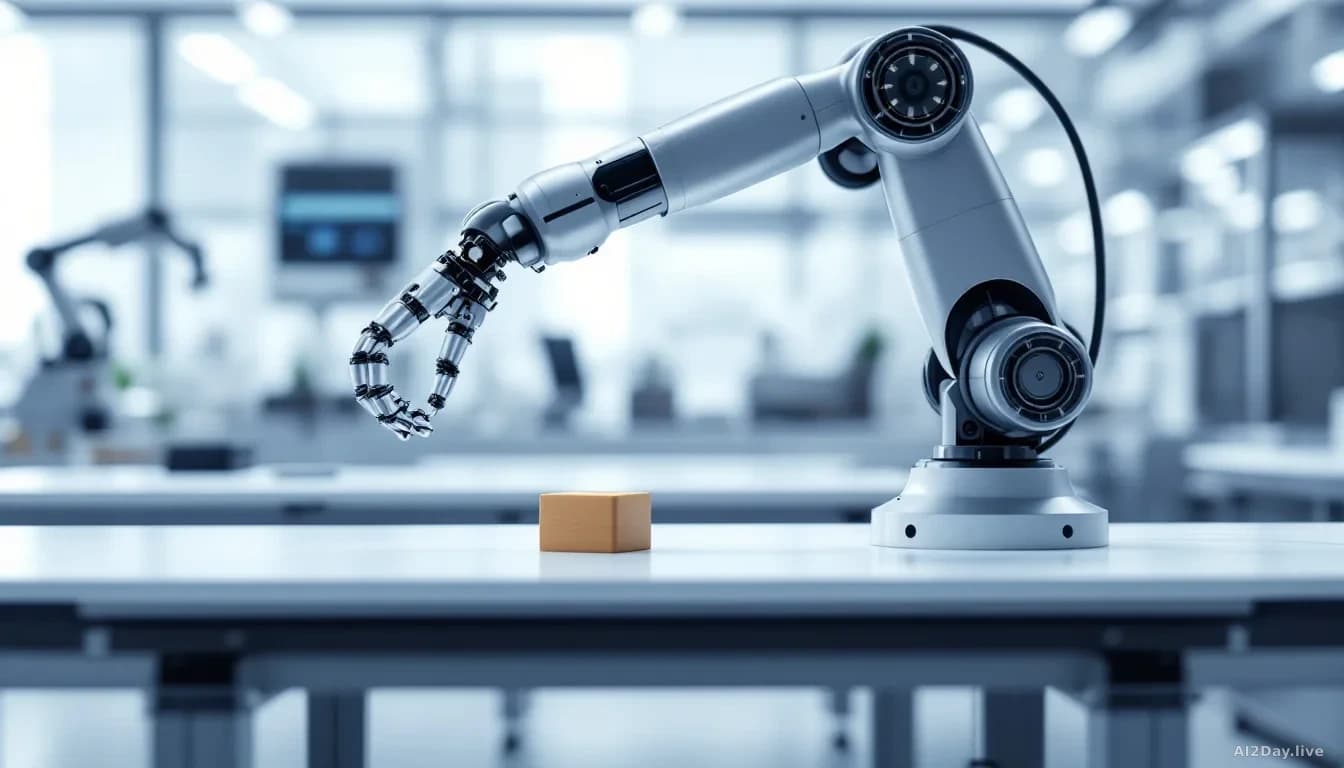
Before a warehouse machine can move a single package, it has to read the label, figure out where every box sits in three-dimensional space, decide which one to pick up first, and plan the whole sequence in order. Companies typically stitch together several separate software programs to cover each step. Perceptron, founded in November 2024, says its new model does all of it in one.
What exactly did Perceptron release?
The company launched Isaac 0.5 this week: a vision model, meaning software that interprets what a camera sees and turns it into decisions a machine can act on. Unlike many existing tools built for one fixed job, Isaac 0.5 is designed to be general-purpose, adapting to different environments and tasks without being reprogrammed from scratch.
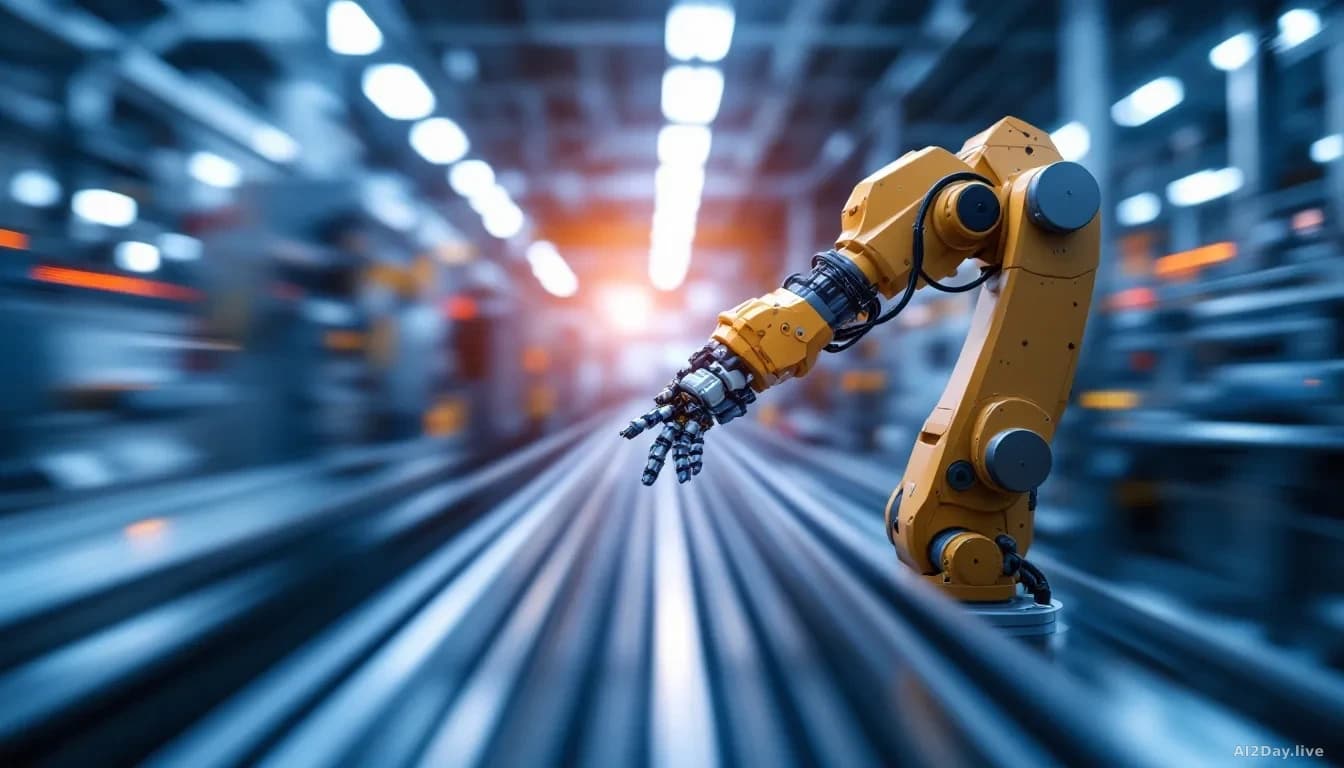
It runs on vision-guided robots, machines that use cameras rather than fixed sensors to find their way around. Isaac 0.5 is released as an open-weight model, so its internal numerical settings and training materials are publicly available for researchers and companies to inspect and build on.
Who built it, and who is paying for it?
Perceptron was co-founded by Armen Aghajanyan and Akshat Shrivastava, both formerly of Meta's Fundamental AI Research division, the team inside Meta dedicated to long-term AI science. The company recently closed a $21 million funding round led by Bessemer Venture Partners. We first covered Perceptron on 26 August 2026.
How did the model learn to understand the physical world?
Training a model like this requires enormous amounts of video. Perceptron fed Isaac 0.5 on one million hours of general video to teach it to recognise different settings and objects. It also used ego video, footage shot from a person's point of view through a wearable camera like a GoPro, which shows the model how a human physically moves through a task. A third source was UMI video, recordings of repetitive human actions used to teach AI the mechanics of movement.
Perceptron hasn't disclosed where that footage came from. Co-founder Shrivastava said the company built internal datasets measured in petabytes (one petabyte is roughly a million gigabytes) covering images, video and recorded robot movements.
What does this mean for workers and businesses?
For companies running warehouses or factories, software like this could reduce the number of separate systems needed to keep a robot fleet running. Workers in those spaces already know that capable automation reshapes which jobs exist and which don't. This release doesn't change that picture overnight, but it points in a clear direction. Our earlier look at humanoid robots in warehouses found that safety and integration costs remain the biggest barriers to scale, and those questions apply here too.
Perceptron says it plans to sell to vendors across manufacturing, logistics, security and media and entertainment, so the technology could turn up in products across several industries over the coming years.
Common questions
Is Isaac 0.5 a finished product companies can deploy right now?
Perceptron's actively marketing the model to vendors, but widespread deployment in real warehouses will take time as buyers test and integrate it into their existing systems.
What does open-weight mean for safety?
Open-weight models let outside researchers check for flaws or biases in the software, which is generally seen as a plus. It also means anyone can adapt the model without Perceptron's approval, which raises separate questions about how it might be used.
Reporter's note: The real test here isn't whether Isaac 0.5 works in a demo. It's whether the training data holds up across the messy, unpredictable conditions of an actual warehouse floor. Watch for independent benchmarks.