Samsung and TSMC sign up for ASML's $400 million chipmaking machine as AI demand grows
The world's two biggest chipmakers have committed to using ASML's most advanced chip-printing tool, a sign that demand for the complex chips powering AI is only heading one way.
Key points
- Samsung plans to use ASML's High NA EUV machines to produce memory chips from 2028, with wider adoption from 2030.
- TSMC expects its use of High NA EUV machines to grow, driven by the complex chip designs that AI applications require.
- Each High NA EUV machine costs around $400 million, making it one of the most expensive pieces of industrial equipment on earth.
- Intel was already a customer; Samsung and TSMC now join it, giving ASML three of the world's most important chipmakers on its books.
- ASML plans to expand its total EUV production capacity by roughly 30% by 2027.
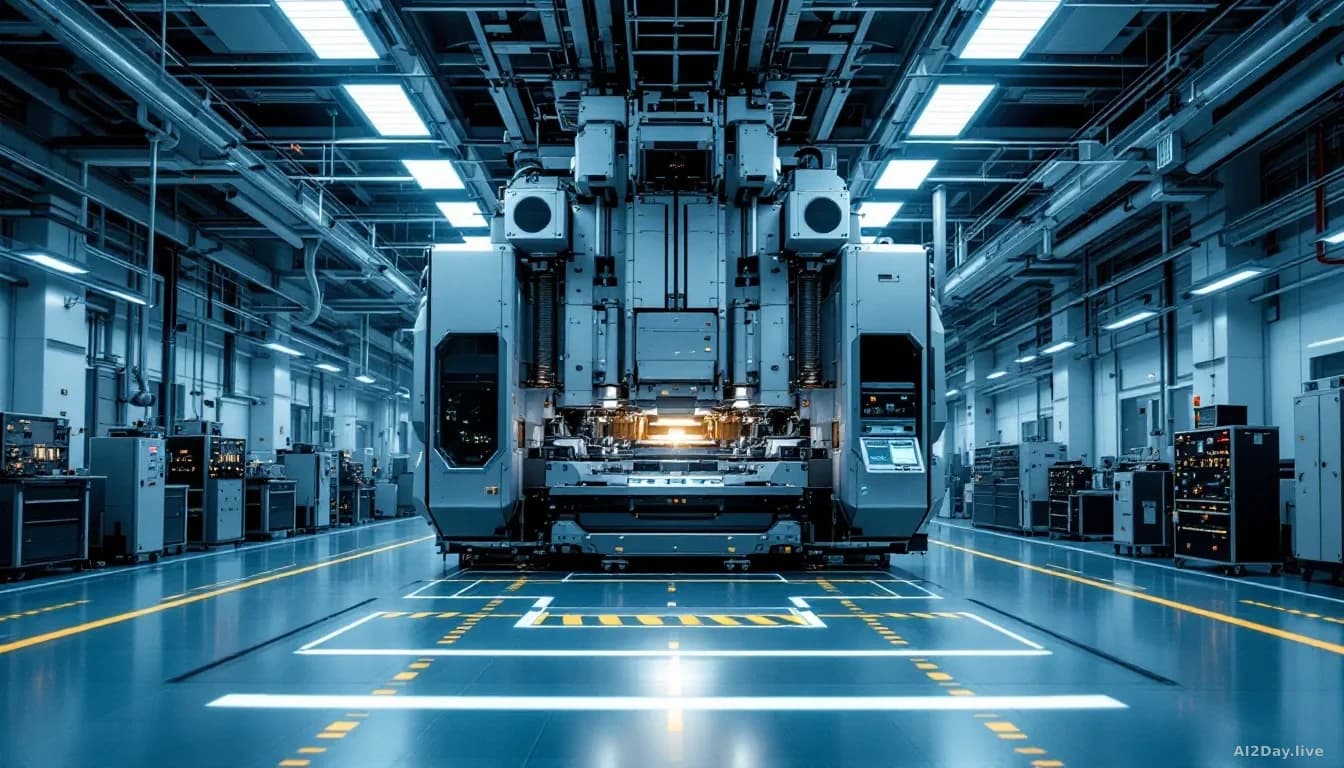
If you've ever wondered what it actually takes to make the chips inside your phone or an AI data centre, the answer starts with a machine the size of a double-decker bus that costs $400 million. ASML, the Dutch company that builds these tools, just got two very big customers.
Samsung and TSMC, the world's two largest chipmakers, have both committed to using ASML's High NA EUV machine. EUV stands for extreme ultraviolet lithography: the process of using bursts of very short-wavelength light to print tiny circuit patterns onto silicon wafers, the round discs that chips are cut from. The High NA version prints patterns that are smaller and more detailed than its predecessor, which matters because smaller patterns mean more powerful, efficient chips.
What does this mean for AI?
More complex AI needs more powerful chips, and more powerful chips need finer printing. TSMC said it expects demand for these machines to grow, "driven primarily by the increasingly complex transistor architectures required for AI applications." Transistors are the microscopic on-off switches that make a chip work; packing more of them in requires ever-finer tools.
Samsung's plans are concrete. DRAM production using High NA machines starts in 2028, with broader adoption by 2030. The aim is to extend what Samsung calls its "DRAM scaling roadmap" while making the process more efficient. We covered the wider crunch on AI chip supply on 30 August, when Nvidia admitted demand was already running ahead of what it could ship.
| Company | Planned use | Timeline |
|---|---|---|
| Samsung | DRAM memory production | From 2028, wider from 2030 |
| TSMC | Advanced AI chips | Adoption rising now |
| Intel | Advanced chip manufacturing | Confirmed July 2024 |
Intel was already using the technology, as ASML confirmed in July. Samsung and TSMC joining gives ASML a roster that covers almost the entire top tier of global chip production.
Should investors care?
Barclays, the bank, said in a note reported by CNBC Tech that the announcements "should provide more visibility on adoption which has been a key debate," calling the news "a positive." ASML's Amsterdam-listed shares have climbed roughly 120% over the past year, and analysts see High NA uptake as central to whether that run continues. Shares were flat to slightly lower on Tuesday morning. That's the market saying the news was welcome but not surprising.
ASML hasn't given a specific forecast for how many machines it will sell, but has said it'll expand total EUV capacity by about 30% by 2027. Barclays noted the company faces a decision about whether to go further, adding: "Demand is clearly strong."
Samsung and TSMC will also join ASML in a separate project to develop larger photomasks. A photomask is the stencil that holds the circuit pattern before the light prints it onto the wafer. The current standard is a 6-inch mask; the new initiative targets a 12-inch format, which ASML says would improve productivity and lower costs per chip.
For ordinary consumers, none of this shows up on a price tag tomorrow. It's the long plumbing work that determines whether the next generation of AI chips, and the devices they eventually reach, arrive on time.
Common questions
Why does one chipmaking machine cost $400 million?
ASML is the only company in the world that makes EUV lithography machines, giving it a monopoly on the most advanced chip-printing technology. Each machine is extraordinarily complex, which explains the price.
Will this affect the price of phones or laptops?
Not directly or soon. These machines produce chips that take years to reach consumer products. Lower chipmaking costs down the line could eventually mean better-value devices, but that's a 2030s story at the earliest.