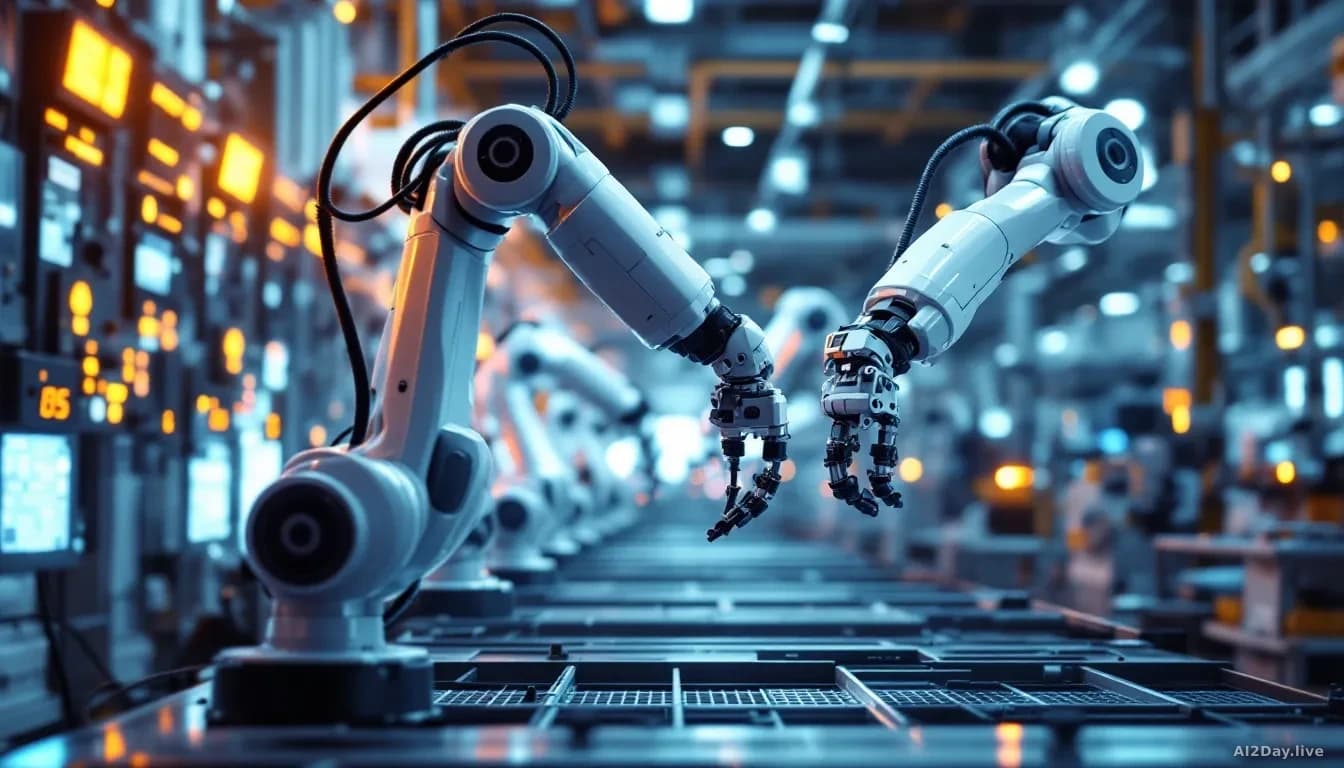
Robots, brain control, and a US import ban: the biggest robotics stories of July 2026
From a $7,999 home helper that folds laundry to a US government order blocking certain foreign robots, here is what moved the needle in robotics last month.
Key points
- The US Federal Communications Commission restricted imports of certain foreign-made humanoid and mobile robots in July 2026, citing national security risks.
- Weave Robotics launched Isaac 1, a wheeled home robot priced at $7,999 (or $449 per month), designed to fold laundry and tidy rooms.
- BrainCo demonstrated a system where a person wearing an EEG headset directed a robotic arm using only their thoughts.
- Shenzhen-based AI² Robotics raised $735 million at a valuation above $2.8 billion USD in July 2026.
- Apptronik opened a dedicated robot training facility in Austin, Texas and unveiled its updated Apollo 2 humanoid robot.
July 2026 was a crowded month for robotics, and The Robot Report's ten most-read stories show exactly why. Money moved, machines shipped, and Washington drew a hard line.
What did the US government actually do?
A policy move that could reshape who builds your next robot led the month. The Federal Communications Commission, the US agency that regulates communications technology, announced that a White House-convened interagency body had determined that certain humanoid and mobile robots made abroad "pose unacceptable risks to the national security of the United States." Imports of those products are now restricted.
We'd been watching the underlying tension build: our 27 July story "Brain waves and borrowed muscles" found that the real bottleneck in physical AI isn't smarter software, it's raw training data, which is precisely what makes foreign robot fleets a harder policy problem than foreign chips.
What new robots actually shipped?
Weave Robotics introduced Isaac 1, a wheeled home robot built to fold laundry, make beds, put away toys and tidy up. The price is $7,999 outright or $449 a month. That puts it closer to a mid-tier appliance than a luxury purchase, and AI2Day has tracked Weave Robotics since 17 July 2026.
Apptronik launched Apollo 2, its updated humanoid, and opened Robot Park in Austin, Texas. Robot Park is a dedicated facility for collecting real-world data and training robots to handle unpredictable situations.
Walden Robotics emerged from stealth with $300 million in funding at a $1.1 billion valuation. The company says its robots learn continuously while performing actual work.
Who raised the most money?
| Company | Amount raised | Valuation | Month |
|---|---|---|---|
| AI² Robotics | $735 million | $2.8 billion USD | July 2026 |
| Walden Robotics | $300 million | $1.1 billion | July 2026 |
| Humanoid (London) | Series A (undisclosed) | Not disclosed | July 2026 |
AI² Robotics, based in Shenzhen, led on raw figures. Its fresh financing pushed its valuation past 50 billion RMB, which converts to roughly $2.8 billion in US dollars.
What was the most surprising demo?
BrainCo's brain-computer interface demo at the 2026 World Artificial Intelligence Conference stopped people mid-scroll. A brain-computer interface, or BCI, reads electrical signals from the brain and converts them into machine commands. Someone wearing a lightweight EEG headset thought about grabbing a cap. A robotic arm reached out and did it.
No button, no voice prompt. Just a thought.
Controlled demos are still a long way from your living room. But if you've followed how quickly robot dexterity has improved, as we covered across three Google DeepMind stories on 30 July, the BrainCo clip doesn't feel as far-fetched as it should.