Meet the Microduck: Hugging Face's New Tiny Robot Has One Eye, Rollerskates, and Its Own Voice
Pollen Robotics, the robotics arm of AI company Hugging Face, is taking preorders for a 10-inch bipedal robot that picks up socks, follows a laser pointer, and makes sounds unlike any other robot on the shelf.

Key points
- Pollen Robotics, owned by AI platform Hugging Face, has the Microduck on preorder for $399.
- The one-eyed, two-legged robot stands just under 10 inches tall and ships in cream, graphite, lavender or sky blue.
- Shipping is expected before Christmas 2026.
- The Microduck's software is open-source, meaning anyone can view and retrain it to perform new tasks.
- Each unit generates a unique voice the first time it powers on and keeps that voice permanently.
Hugging Face, best known as a sharing platform for AI models (think GitHub but for artificial intelligence), has a robotics division called Pollen Robotics. Last week, Pollen Robotics unveiled its second consumer robot: the Microduck.
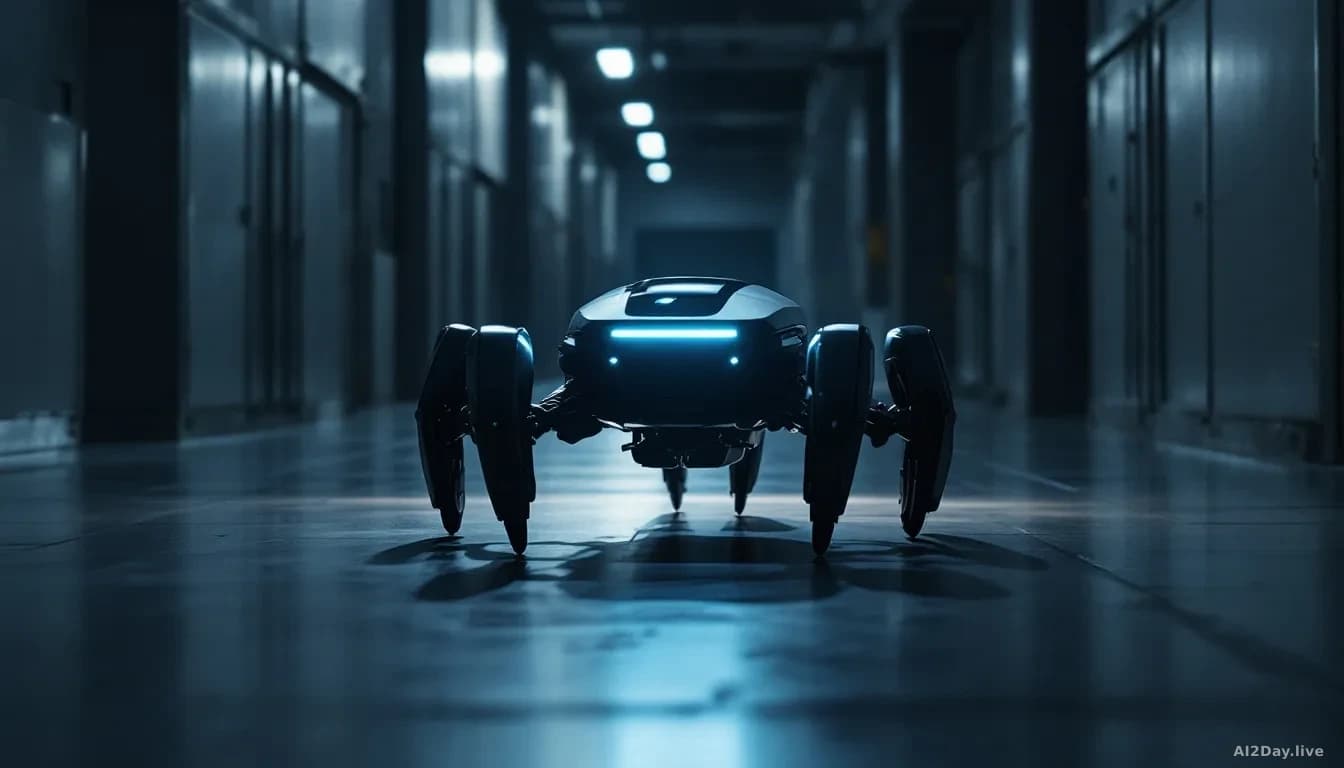
It's small. Standing just under 10 inches, it's roughly the height of a large coffee mug, with one wide camera eye, articulated legs, a movable head and neck, and optional rollerskates.
What can it actually do?
More than you'd expect from something this size. Video demos show the Microduck picking up dropped socks and markers, kicking a ball, and skating around on tiny wheels. It tracks a laser pointer autonomously using onboard sensors, or a person can take direct control with a standard game controller.
Inside the shell sits a Rockchip RK3566 processor, a camera, motion sensors and LiDAR (a laser-based distance sensor, the same technology self-driving cars use to map their surroundings). Together these let the robot build a rough picture of what's around it.
The Microduck also sings. Pollen Robotics says it "communicates through weird little sounds, closer to a creature than an assistant." Every unit generates its own audio identity the first time it wakes up, tied permanently to that individual robot. No two Microducks should sound alike. Our 15 August story on why voice interaction could be the thing that stops robots being widely accepted is worth reading alongside this, because the Microduck's approach, creature sounds rather than conversation, is a deliberate sidestep of that problem.
Who is this actually for?
Primarily hobbyists and curious tinkerers. The software is open-source, meaning the underlying code is published publicly and free to change. That mirrors the earlier Reachy Mini robot, which attracted a community of users who retrained it beyond what Pollen Robotics ever programmed.
At $399, it's a hobbyist price rather than a toy price. The preorder page is live now, first reported by The Verge AI, with shipping expected before Christmas 2026. That's a long wait. Treat the date as a target, not a guarantee.
| Detail | Specification |
|---|---|
| Height | Just under 10 inches |
| Price | $399 |
| Colours | Cream, graphite, lavender, sky blue |
| Processor | Rockchip RK3566 |
| Sensors | Camera, motion sensors, LiDAR |
| Expected shipping | Before Christmas 2026 |
Common questions
Do I need to know how to code to use it?
No coding is required out of the box. The Microduck works with a game controller, and the laser-pointer tracking runs automatically. Coding skills only matter if you want to retrain it or build new behaviours.
What does open-source software mean for buyers?
It means the robot's code is publicly available and free to change. If the community finds a bug or wants a new feature, anyone can add it. It also means Pollen Robotics can't quietly disable features through a software update without users noticing.