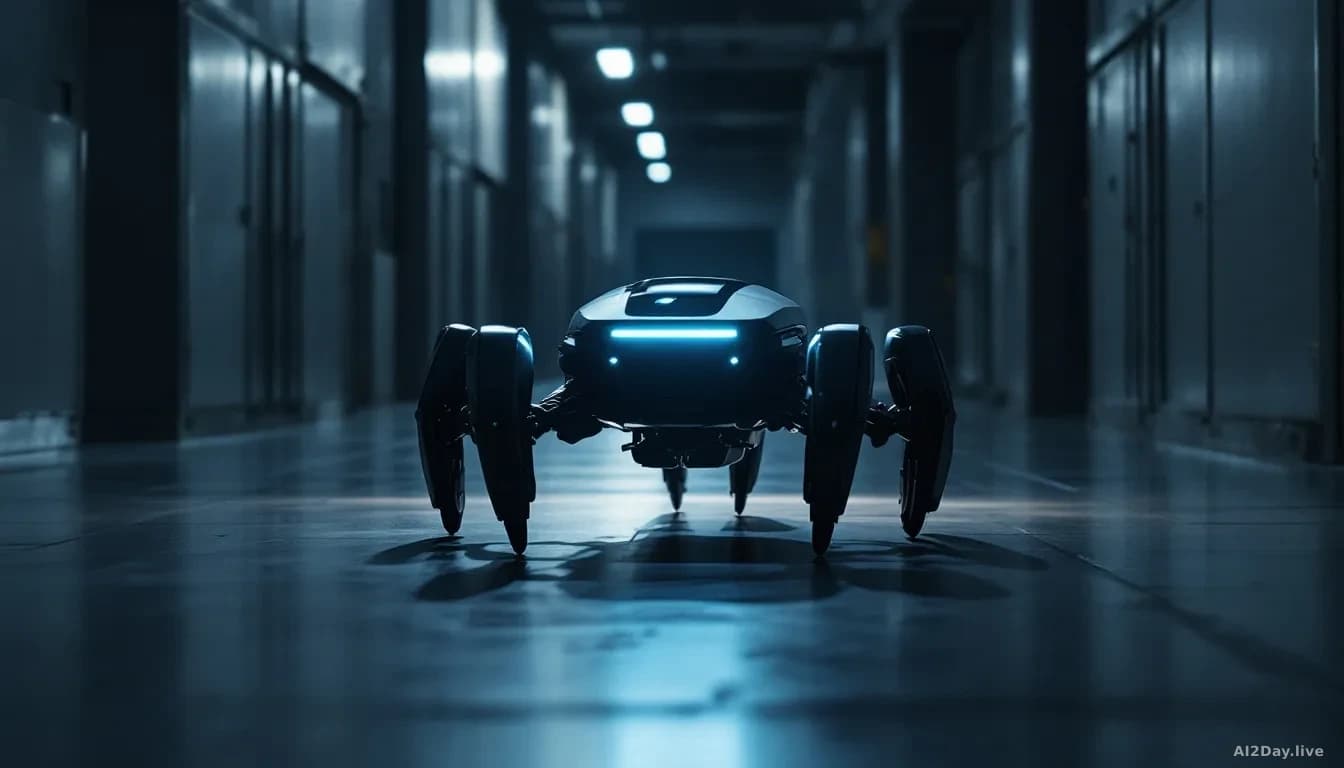
Meet Moxi 2.0: The Hospital Robot That Learns on the Job
Diligent Robotics is rolling out its upgraded delivery robot to U.S. hospitals. It thinks faster, runs longer, and gets smarter with every shift.

Key points
- Diligent Robotics began rolling out Moxi 2.0 to U.S. Hospitals in 2026, after first revealing the robot in October 2025.
- Moxi 2.0 perceives its surroundings 10 to 15 times faster than the original, thanks to upgraded onboard computing chips.
- The robot runs for up to 9 hours on a single charge and charges 30% faster than before.
- Serve Robotics, a sidewalk delivery company, acquired Diligent in January 2026 for $29 million.
- Children's Hospital Los Angeles says its Moxi robots have completed more than 40,000 deliveries, saving staff over 16,000 hours of transport work.
Nurses spend a surprising chunk of their shifts walking. Fetching supplies, ferrying medication, pushing carts between floors. Necessary work, but not the work they trained for. Moxi, a delivery robot from Austin-based Diligent Robotics, has been handling those runs in more than 25 U.S. Hospitals for five years. Now there's a meaningfully smarter version on the way.
Moxi 2.0 started reaching health systems this year, with early deployments at Endeavor Health Edward Hospital, Providence Saint John's Health Center, and Children's Hospital Los Angeles.
What is actually new here?
The biggest change is how fast it thinks. Moxi 2.0 uses upgraded NVIDIA-powered computing hardware that reads and processes its environment 10 to 15 times faster than the original robot. That matters in a busy hospital corridor, where a door swings open, a bed rolls out, and visitors round the corner all at once.
The earlier Moxi moved cautiously to stay safe in those moments. Andrea Thomaz, the company's CEO, says the new version reasons about that chaos in real time and keeps moving with more confidence.
Here's a quick look at the headline upgrades:
| Feature | Moxi 2.0 |
|---|---|
| Perception speed | 10 to 15x faster than gen 1 |
| Max runtime per charge | Up to 9 hours |
| Charging speed | 30% faster |
| Daily operating hours | Up to 18 hours |
| Onboard compute increase | 10x |
| Deliveries at CHLA to date | 40,000+ |
Diligent also redesigned the robot's storage drawers and handles based on feedback from nurses and pharmacy teams, so staff can grab what they need without wrestling with the machine.
What is a "learning flywheel" and why does it matter?
Every time any Moxi robot encounters a tricky situation in any hospital, that experience feeds into a central AI model, a kind of shared brain for the whole fleet. The model gets better, and the next software update lifts every robot along with it. Diligent calls this its "learning flywheel."
The company built that cloud system with Amazon Web Services and trained the underlying model using Amazon SageMaker HyperPod, a platform for large-scale AI training. T-Mobile for Business helps keep Moxi connected across hospital buildings, which are notoriously patchy for wireless signals. All safety decisions run directly on the robot, so it completes a delivery even if the Wi-Fi drops.
What does this mean for hospital staff?
For nurses, the pitch is simple: less time pushing carts, more time with patients. Omkar Kulkarni, Chief Innovation and Transformation Officer at Children's Hospital Los Angeles, put a real number on it. His team's Moxi robots have logged more than 40,000 deliveries, representing over 16,000 hours of transport work that staff didn't have to do. The hospital has since grown its fleet from two robots to three, and Kulkarni noted utilisation rose more than 10% in the second quarter alone.
Moxi 2.0 also requires no building work or IT overhauls to install, which removes one of the usual objections hospitals raise about new technology. We covered a similar frictionless pitch on 6 August when we looked at Robin, a small robot already operating in around 30 healthcare facilities without infrastructure changes.
Diligent, which first spoke about Moxi 2.0 to The Robot Report, is now taking orders from health systems wanting to add the platform.
Common questions
Does Moxi replace nurses?
No. Moxi handles logistics: moving supplies and equipment between locations. Clinical care stays entirely with human staff, and that's by design.
Is the robot safe around patients and visitors?
All safety and navigation decisions run directly on the robot, not through a remote server, so Moxi keeps working and keeps avoiding people even if the hospital network goes down.
Who owns Diligent Robotics now?
Serve Robotics, a company that makes sidewalk delivery robots, acquired Diligent in January 2026 for $29 million. Diligent continues to operate its hospital business under that parent company.