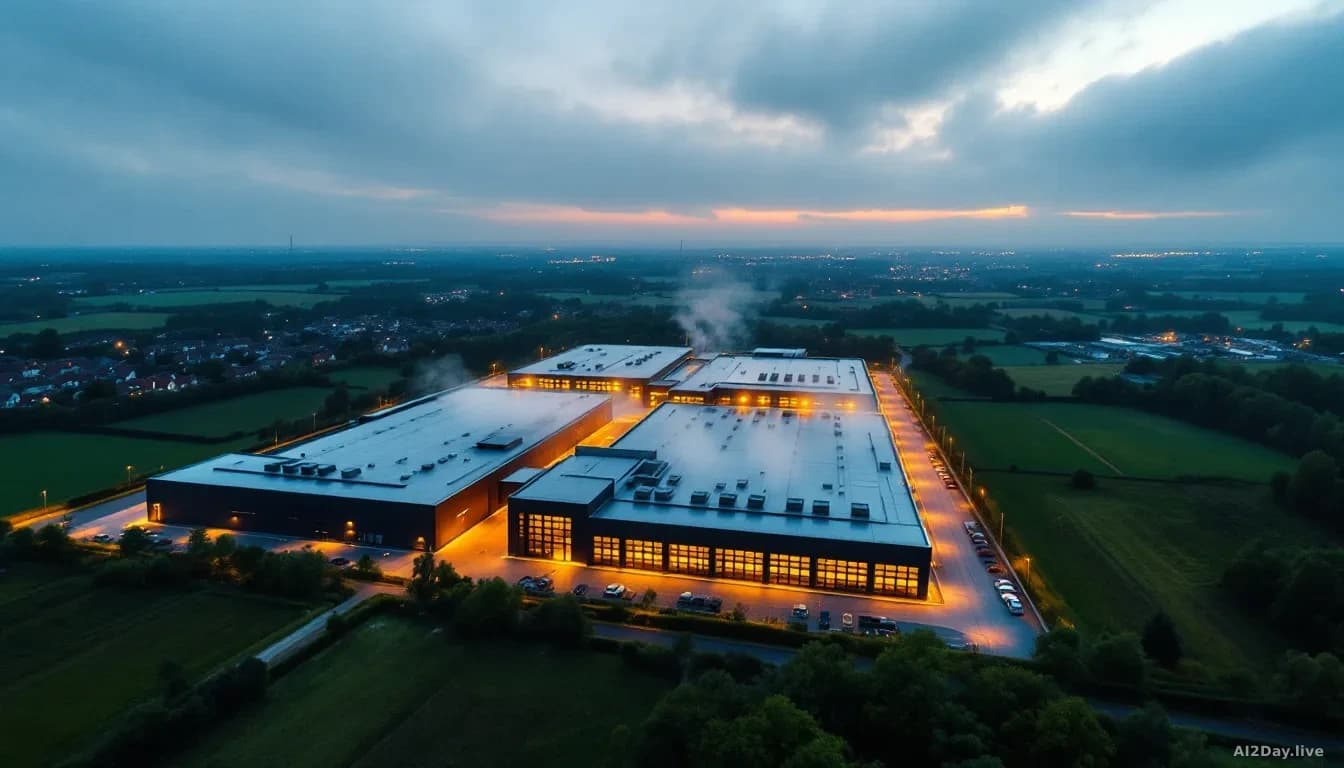
Living next to a data centre: what UK residents are actually experiencing
Across Britain, roughly 450 large data centres hum away on industrial estates and at the edges of towns. The people living alongside them are starting to speak up.

Key points
- The UK has approximately 450 large data centres operating as of 2025.
- Residents near these sites have raised concerns about noise, pollution, and land use.
- Data centres power everyday cloud services like email and video streaming, as well as AI tools.
- A growing debate surrounds the "heat island effect," where facilities raise local temperatures.
A data centre is a giant warehouse packed with computers. Those computers store your emails, run your streaming services, and now increasingly power AI tools like chatbots and image generators. The UK currently hosts around 450 large facilities, and they're growing fast.
For most people, data centres are invisible infrastructure. You never see them; you just benefit from them. Living nearby is a different story.
Residents close to these sites share a consistent set of complaints. Cooling systems that stop all those computers from overheating run day and night, producing a low mechanical hum that neighbours say never stops. There's also the "heat island effect," a term for what happens when a building pumps out enough heat to measurably warm surrounding streets and gardens.
Land use is another flashpoint. Data centres need large, flat plots, often in areas communities had hoped would become housing or green space. Once built, they tend to stay for decades. Backup diesel generators, kept on standby for power cuts, can run during testing and emit fumes, sometimes near residential streets.
Water consumption adds a less visible pressure. On 21 July 2026 we reported that Britain's water trade body warned the government's AI growth plan has a critical flaw: cooling a server farm drinks enormous quantities of water, and supply can't keep pace.
The Guardian AI flagged the scale of community concern in the UK. The conversation it sparked points to a planning gap: decision-makers don't always hear from the people who will live alongside these buildings.
Why should ordinary people care about this?
Because where these buildings go will shape neighbourhoods for a generation. AI needs enormous computing power, and that power has to sit somewhere physical. Demand for data centre space is rising sharply across Europe as businesses and governments adopt AI tools.
If you live near an existing data centre, or near a site earmarked for one, your local planning authority is the first place to look. Planning applications are public, and residents have a legal right to comment.
If noise or emissions are already a problem, your council's environmental health team can investigate. A dated log of when issues occur, what they're like, and how long they last gives investigators something concrete to work with.
The harder question is how Britain balances its appetite for AI services against the wellbeing of communities hosting the hardware. Nobody's answered that yet.