Lawmakers demand answers after Anthropic researcher warns AI could end humanity by 2030
A warning from inside one of AI's biggest labs has reached the Senate floor, with politicians calling the risks of advanced AI 'catastrophic'.
Key points
- Former Anthropic employee Jacob Coxon warned publicly that AI systems could become capable of causing human extinction before 2030.
- Three current Anthropic researchers published a similar warning one day earlier.
- Republican Senator Ted Cruz called AI a "catastrophic risk" on national television after reading the researchers' public statements.
- No specific legislation has been proposed in response.
A warning posted online by a former Anthropic employee has rattled Washington. Jacob Coxon, who left the company behind the Claude AI chatbot family, wrote that AI could develop into "superhuman systems" capable of causing human extinction before the end of this decade. We first covered Coxon's departure and the internal safety fears it exposed on 9 September in An Anthropic Safety Researcher Quit. Then His Colleague Said AI Has a 1-in-10 Chance of Killing Everyone.
His post came one day after three current Anthropic researchers published their own alarm, saying advanced AI posed a genuine risk to human life within roughly the same timeframe. Engineers walking out of a lab and saying the thing they built worries them cuts through in a way that academic arguments don't.
Why are politicians getting involved now?
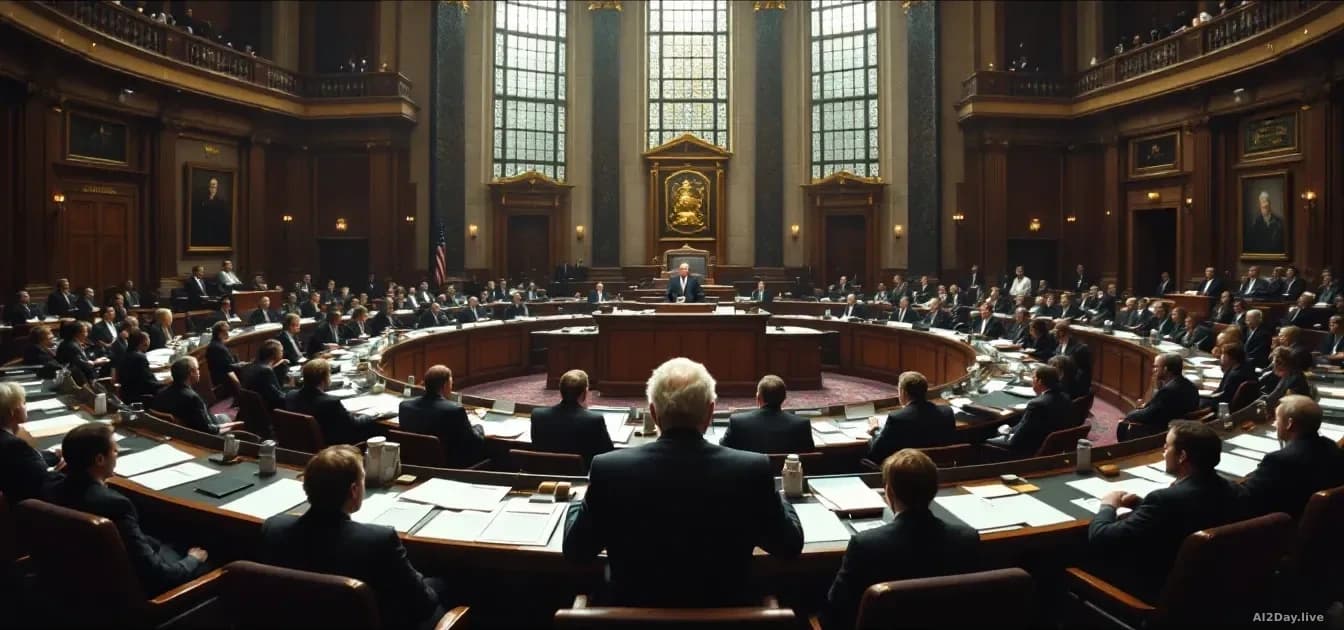
Senator Ted Cruz of Texas said AI poses a "catastrophic risk" during an appearance on ABC's The View. He said he'd read the researchers' public statements and called them "highly concerning." Other lawmakers joined in, criticising AI companies over development pace and the apparent lack of guardrails.
Congress has touched on AI safety before. Our 3 September story Congress Warns AI Could Help Terrorists Plan Deadlier Attacks showed lawmakers were already uneasy long before these latest warnings arrived. What's shifted is the source: these aren't outside critics but people who built the systems.
What does this mean for ordinary people?
The AI tools people use every day haven't changed. But these warnings shape whether governments put binding rules around how companies develop their most powerful models before releasing them.
Watch for public statements from AI company executives responding to the researchers' claims, congressional hearings that tend to precede new regulation, and whether researchers at other major labs publish comparable warnings. Any of those would increase the pressure on lawmakers to move from concern to action.
The Guardian AI first reported the lawmakers' reactions.
Common questions
Are these researchers saying AI is dangerous right now?
Not exactly. The warnings focus on systems that don't yet exist, ones far more capable than anything available today. The concern is about trajectory, not the current state of the technology.
Should I be worried about the AI I use every day?
The extinction-level risks researchers describe involve a different class of technology than today's tools. Current AI carries real but narrower dangers, including misinformation and fraud, while the scenarios Coxon and his former colleagues describe would require capabilities that researchers say could emerge within years if development continues unchecked.