Google and Tesla Are Burning Cash on AI. Wall Street Is Starting to Ask Why.
Both tech giants reported better revenue than expected, then watched their share prices fall. The culprit: eye-watering AI spending with returns investors can't yet see.
Key points
- Alphabet raised its 2025 capital spending forecast to between $195 billion and $205 billion, up from a prior range of $180 billion to $190 billion.
- Tesla's free cash flow turned negative in Q2 2025, running a deficit of $1.1 billion after generating $1.44 billion in the previous quarter.
- Alphabet's free cash flow fell to negative $5.9 billion in Q2, compared with nearly $25 billion a year earlier.
- Alphabet cloud revenue grew 82% year-on-year, well above analyst expectations.
- Meta, Microsoft, Amazon and Apple are all scheduled to report quarterly results in the week following these announcements.
Two of the biggest names in tech spent their way to a stock selloff this week. Google's parent Alphabet and electric-vehicle maker Tesla both beat revenue forecasts for Q2 2025, then saw shares slide after markets closed. Alphabet dropped more than 3%. Tesla fell 4%. In both cases, money was going out the door faster than investors expected.
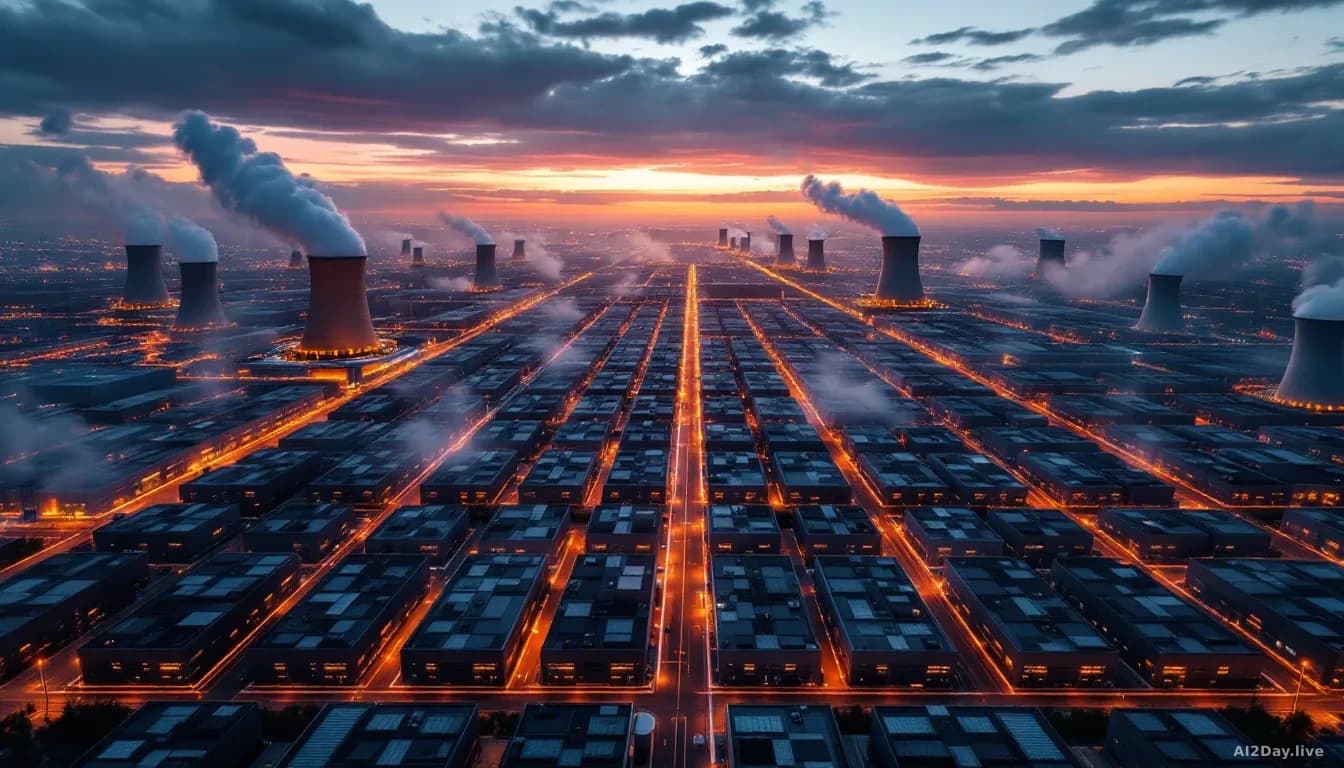
Capex, short for capital expenditure, is what companies spend on physical assets they expect to use for years: buildings, servers, specialised chips. For AI companies right now, that means data centres, warehouse-sized facilities packed with the powerful computers needed to train and run AI systems. Alphabet said it spent $44.9 billion on capex in Q2 alone, and its full-year forecast now sits between $195 billion and $205 billion. Tesla pledged more than $25 billion for the year, roughly 200% growth on 2024.
As our earlier story "Google Made $119.8 Billion Last Quarter and Still Ran Out of Cash" noted on 23 July, AI infrastructure spending pushed Alphabet into negative cash flow even as its cloud and search businesses hit record highs.
Why is so much money going out?
Both companies are racing to build infrastructure they believe AI will demand. Alphabet is expanding data centres to support its Gemini model, which competes with ChatGPT, and to grow its cloud computing business, which rents computing power to other organisations. Tesla is retooling factories for the Cybercab, a two-seat driverless taxi, and Optimus, its humanoid robot, while starting construction on an AI chip-manufacturing plant in Texas.
Musk put it plainly on the earnings call: "We should be spending on capex as fast as we can spend, as fast as we can without it being too wasteful." He compared the build-out to Henry Ford's mass production of the Model T. "I think probably this is the fastest industrial scale-up since World War II in America," he said.
Should ordinary people be worried?
Not directly, for now. The pain is falling on shareholders rather than customers, and Alphabet's core advertising business remains strong. Analysts at Mizuho described Google's capex increase as "broadly anticipated" and pointed to cloud revenue jumping 82% year-on-year as evidence the investments are already producing results.
The concern sits one level up: at the wider tech industry. Meta, Microsoft, Amazon and Apple all report results the following week, and investors will scrutinise their spending plans just as closely. Much of the AI build-out so far has rested on a handful of companies pouring money into model developers such as OpenAI and Anthropic. Cheaper open-source AI models, many from China, are pressuring those bets and raising questions about whether returns will justify the costs.
| Company | Q2 2025 Capex | Free Cash Flow Q2 2025 | Full-Year Capex Forecast |
|---|---|---|---|
| Alphabet | $44.9 billion | -$5.9 billion | $195B to $205B |
| Tesla | $5.79 billion | -$1.1 billion | $25B+ |
| Amazon | Not yet reported | Not yet reported | $200B+ (prior guidance) |
Rebecca Wettemann, CEO of tech research firm Valoir, said in a statement to CNBC that Google's core business "should calm some market fears about AI overspending." Keith Fitz-Gerald, principal at investment consulting firm Fitz-Gerald Group, compared Tesla's strategy to Amazon and Netflix, companies that sacrificed short-term profits to build infrastructure that later generated enormous returns, and told CNBC he expects it "to pay off in spades over the next 12-24, even 36 months."
What matters most here is the gap between confidence and proof. Both companies are betting that building now locks in advantages that will be obvious in hindsight. They may be right. But the market's reaction this week shows that faith only stretches so far without numbers to back it up, and every megacap reporting next week will face exactly the same question.