Freelancers Are Drowning in AI Slop Cleanup Work, and Now They're Walking Away
A graphic designer in Spain spent most of 2024 fixing broken AI-generated logos for low pay. Her story captures a quiet crisis spreading across the freelance economy.
Key points
- By 2025, 90% of one freelance designer's logo and packaging requests involved fixing AI-generated work, not creating original designs.
- That cleanup work made up 60% to 70% of her annual income.
- Clients consistently offered less money for cleanup jobs than for original design work.
- Some AI-generated files were so badly made she had to rebuild them entirely from scratch.
- By late 2025, she stopped taking the work altogether.
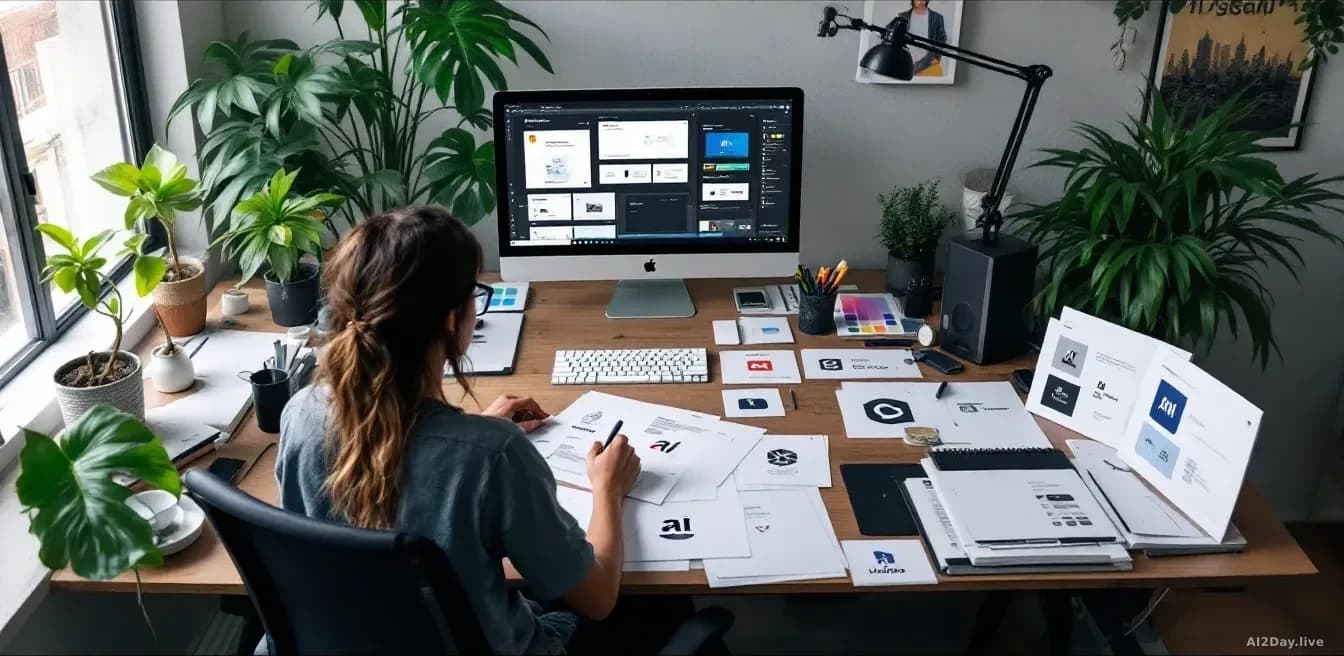
Lisa is a freelance graphic designer based in Spain who asked not to be fully named. Before 2022, her work was straightforward: clients hired her to create logos, packaging, brand identities. Then ChatGPT arrived, bringing image-generating AI tools that let almost anyone produce a passable-looking design in seconds.
What happened next surprised her. The jobs didn't dry up. They mutated.
As first reported by The Guardian AI, Lisa began receiving floods of requests to fix AI-generated designs rather than make new ones. Fuzzy images that couldn't be printed at full size. Logos built from corrupt files. AI artwork that looked acceptable on a phone screen but fell apart under professional scrutiny. Clients had used an AI tool, got something almost-finished, and needed a human to cross the line.
So what exactly is 'AI slop cleanup'?
Think of AI image generators as fast but clumsy apprentices. They can produce something that looks like a finished design in seconds, but the underlying file is often a mess: blurry edges, wrong colour formats or shapes a printing press cannot read. A trained designer then has to open the file and fix, or sometimes completely rebuild, what the AI produced.
That's the work Lisa found herself buried in.
By 2025, nine out of every ten logo or packaging requests she received were cleanup jobs, paying 60% to 70% of her annual income. That sounds like job security until you factor in the conditions. Clients who'd paid almost nothing for an AI tool expected human expertise at a matching price. Some files were so broken that fixing them took longer than designing from scratch. Lisa also worried about copyright: AI image generators are trained on other artists' work, frequently without consent, and legal risk can pass silently to whoever finishes the file. That last problem, in particular, is one EDM producers know well, as we reported on 29 August 2026.
Why did she stop taking the work?
Exhaustion, mainly. Low pay, murky legal ground, and the creeping sense that she was propping up a process she didn't believe in.
By the end of 2025, Lisa began turning the cleanup jobs down.
Her story isn't unique. Across illustration, copywriting and photography, freelancers are reporting the same pivot: the work hasn't vanished, it's shifted. Instead of paying for original human skill, clients want humans to polish machine output at machine-level prices.
For anyone hiring a freelancer right now, that tension is worth understanding. AI tools cut your upfront cost. But the hidden cost, paid either in a freelancer's time or in a printed logo that smears and warps, doesn't disappear. It moves.
Lisa's answer was to stop subsidising it. That's not a protest. It's arithmetic.