China's AI Boom Has a Surprising Home: A Grassland City in Inner Mongolia
Nearly 100 data centres have opened or begun construction in Ulanqab since 2016. DeepSeek, ByteDance and Alibaba are all building there. A water crisis is already brewing.

Key points
- Chinese companies have pledged a combined 12.5 gigawatts of data centre capacity in Ulanqab, Inner Mongolia, more than the planned total of OpenAI's $500 billion Stargate Project.
- Over 70 percent of those commitments were announced in the past year alone, according to a Goldman Sachs research note.
- DeepSeek, ByteDance, Alibaba and Xiaohongshu are all reportedly building their own data centres in the city.
- About 37 percent of electricity in Ulanqab still comes from coal, despite the region's fast-growing wind and solar capacity.
- Ulanqab receives roughly 14 inches of rain per year, and its local water company already shuts off supply for seven hours each night to manage demand.
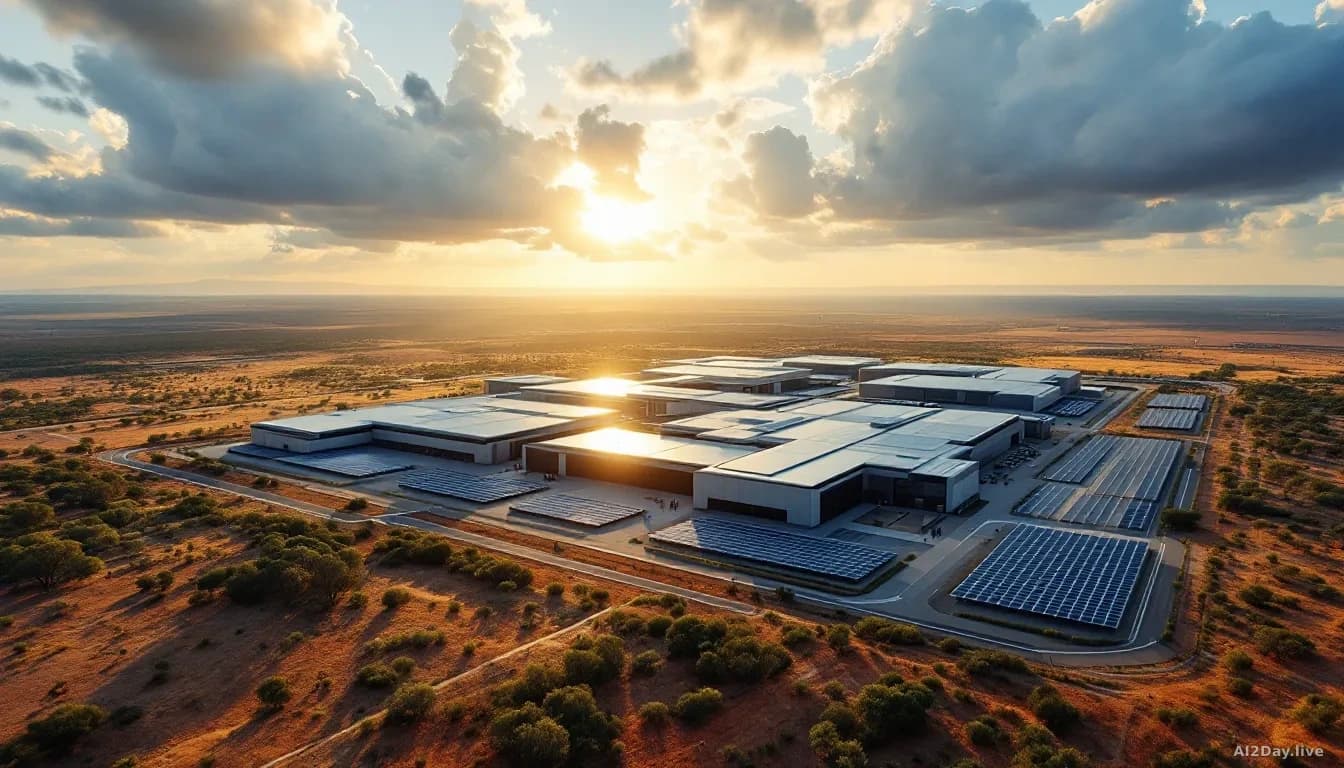
Two hours west of Beijing by train, rolling grasslands give way to ancient volcanic craters and a city of 1.5 million people that almost nobody outside China has heard of. Ulanqab, in the semi-arid region of Inner Mongolia, used to be known for sheep farming and coal. Now it's quietly becoming one of the most consequential places in the global AI race.
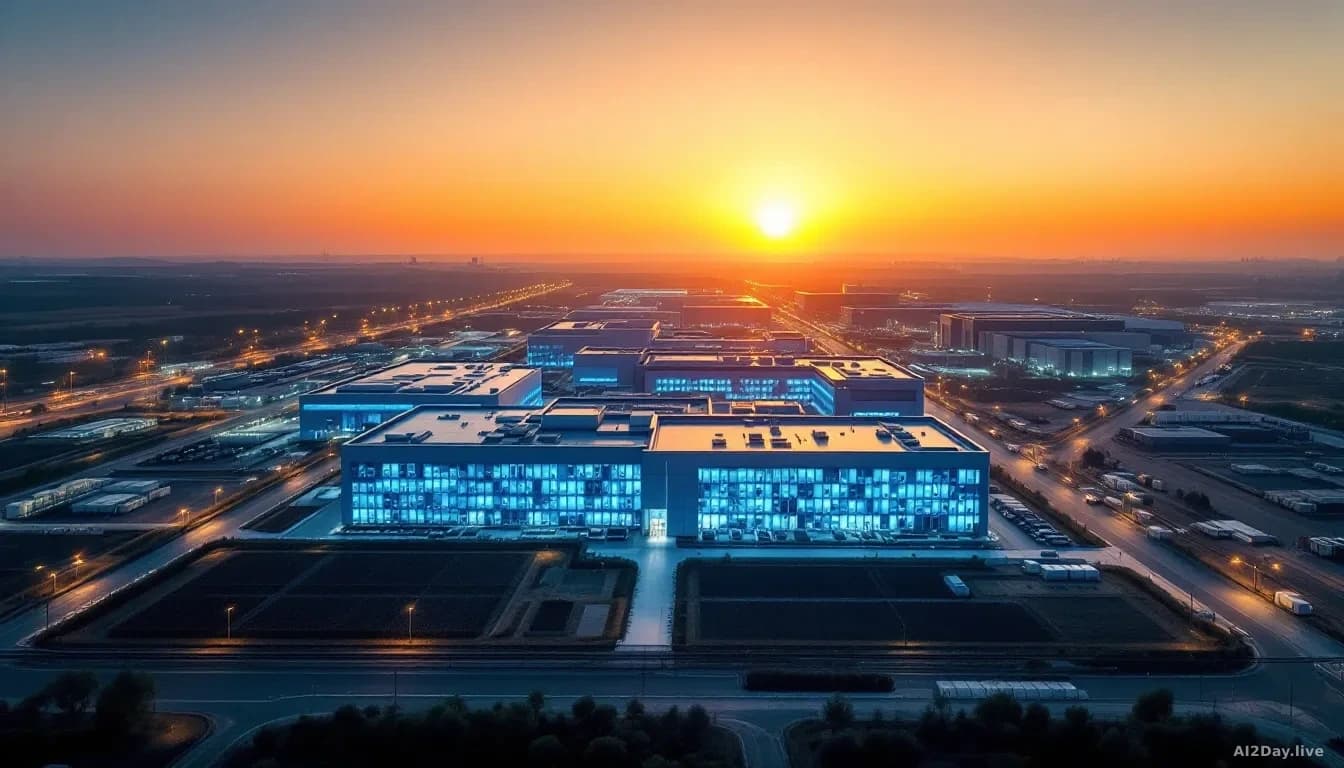
Nearly 100 data centres have opened or begun construction in Ulanqab since 2016. Chinese companies have pledged projects totalling an estimated 12.5 gigawatts of computing capacity, a measure of electrical power that signals how much raw processing a facility can run. OpenAI's $500 billion Stargate Project is planned to reach only 10 gigawatts when fully built, a comparison worth holding in mind given what we reported on 19 August about NVIDIA's role anchoring that Ohio campus.
Why does an obscure city in Inner Mongolia win out?
Three practical factors make Ulanqab attractive. Cold winters at high elevation cut the energy bill for cooling. The city sits close enough to Beijing that data travels with minimal delay, under five milliseconds over dedicated fibre-optic cables built in 2017 and 2019. Electricity is cheap, drawn from a mix of coal and fast-growing wind and solar farms.
What makes this moment different is who is building. For the first time, major Chinese AI companies are investing in their own physical infrastructure rather than renting computing power from cloud providers. DeepSeek, ByteDance, Alibaba and Xiaohongshu are all reportedly putting up facilities in Ulanqab. As Wired AI reported, Chinese AI firms have historically spent far less on physical infrastructure than their American counterparts, even while producing competitive AI software. That pattern now appears to be changing fast.
What is the catch?
Water. Ulanqab gets around 14 inches of rain per year. Data centres consume large quantities of water for cooling, and the city is already struggling: last month, the local water company cut supply for seven hours each night just to keep up with existing residents' needs, before most of the planned facilities are even running. Ulanqab government data shows the centres only need extra cooling water during two months of the year, but the cumulative pressure across dozens of sites is the real concern.
The energy picture is mixed too. Envision, one of China's largest wind turbine manufacturers, announced this month it will build a 2 gigawatt data centre in Ulanqab connected to its own clean power supply. But roughly 37 percent of the city's electricity still comes from coal, according to research by Andrew Stokols, a professor at Singapore Management University who studies China's computing infrastructure. Because data centres must run continuously, operators have long preferred the reliability of fossil fuels over intermittent renewables.
| Factor | Ulanqab figure |
|---|---|
| Data centres opened or under construction (since 2016) | ~100 |
| Total pledged computing capacity | 12.5 gigawatts |
| Share of commitments made in past year | Over 70% |
| Annual rainfall | ~14 inches |
| Share of electricity from coal | ~37% |
| Fibre-optic latency to Beijing | Under 5 milliseconds |
"Inner Mongolia has long been the West Virginia of China. It's a coal country," says Damien Ma, director of Carnegie China. The region is racing to swap coal for renewables, but Ma puts a specific number on the hope: "In three years, maybe it will be completely powered by renewables." Whether the water holds out that long is the question nobody in the investment decks seems to be answering.