NVIDIA Will Back a $600 Billion AI Computing Deal with OpenAI Anchored by a 20-Year Ohio Campus
The chipmaker is guaranteeing portions of lease and power costs at a giant data centre site in Portsmouth, Ohio, where OpenAI will run what NVIDIA says could eventually hold 1.5 million of its processors per generation.

Key points
- NVIDIA announced a partnership with energy developer SB Energy to secure a 20-year data centre site at the PORTS-Pike Technology Campus in Portsmouth, Ohio.
- OpenAI will be the paying tenant at the site, which is expected to reach 4.25 gigawatts of computing capacity.
- Each generation of processors deployed at the site could represent roughly 1.5 million NVIDIA GPUs and between $150 billion and $200 billion in NVIDIA revenue.
- OpenAI's total commitments to NVIDIA computing infrastructure through 2030 could reach approximately $600 billion across roughly 12 to 16 gigawatts of capacity.
- NVIDIA's financial guarantee covers defined portions of lease and power payments, plus a residual-value commitment, not the full cost of the site.
NVIDIA is stepping into a role most chip companies avoid: landlord and financial backer for one of the world's most powerful AI laboratories.
The company has partnered with SB Energy, a clean-power developer we've tracked since our first report on 6 August, to lock in long-term land and power capacity at the PORTS-Pike Technology Campus in Portsmouth, Ohio. OpenAI, the company behind ChatGPT, will move in as the tenant and run its AI training and product work there.
What is actually being built here?
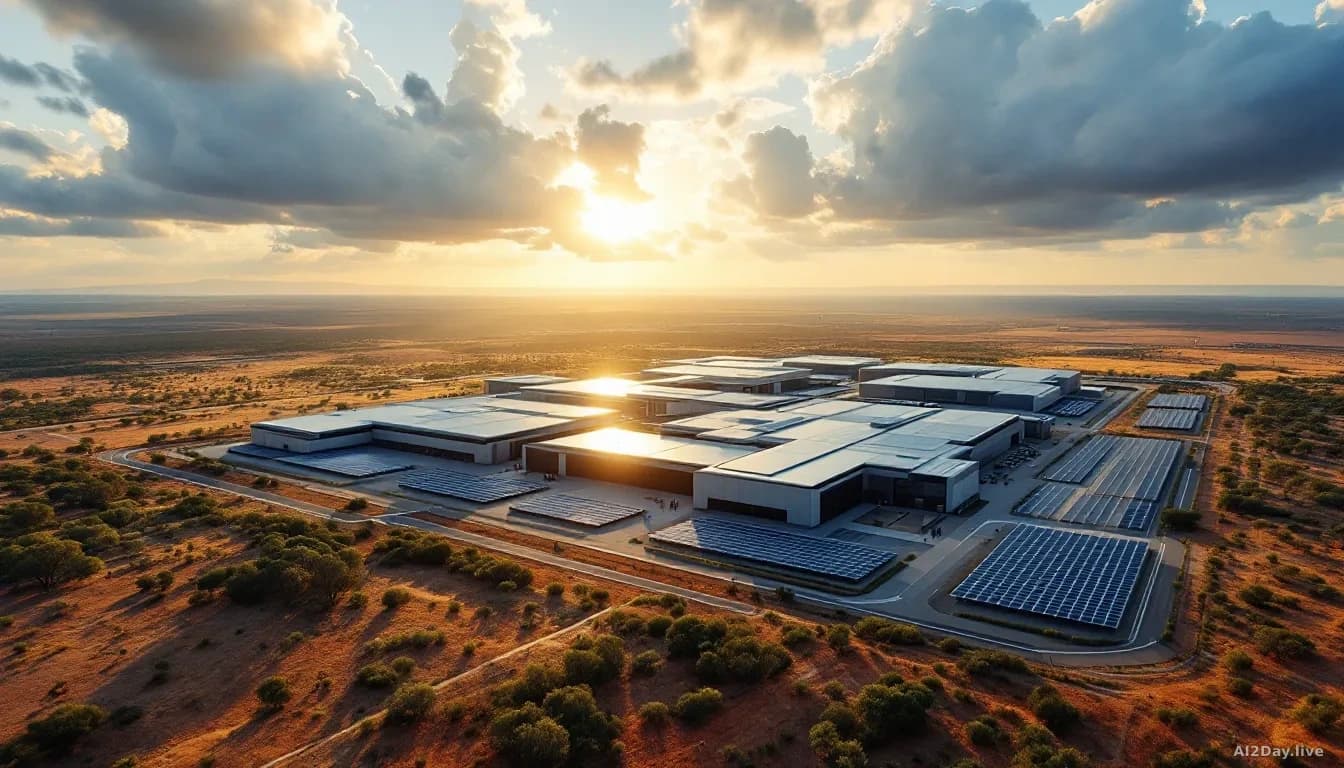
Think of it as a purpose-built factory, except instead of cars or microchips, it produces artificial intelligence. The site is expected to hold 4.25 gigawatts of computing capacity, a scale that will run processors continuously to train and serve AI models.
Each full deployment of NVIDIA's latest processors at the site could include around 1.5 million GPUs (the specialised chips that do the heavy number-crunching AI needs). NVIDIA says each such deployment represents between $150 billion and $200 billion in revenue.
The deal stretches 20 years, and the plan is to swap in newer, more powerful chips every few years as technology improves, the way a factory replaces its machinery without tearing down the building.
Why is NVIDIA guaranteeing the lease?
NVIDIA isn't just selling chips here. It's co-signing the real estate.
The company says frontier AI labs, a term for organisations doing the most advanced AI research and development, often grow faster than their finances can support. They may have strong revenue but lack the credit history that landlords and power companies need before signing 20-year contracts. NVIDIA, which has the balance sheet and long-term purchasing relationships those labs don't yet have, is stepping in to bridge that gap.
The guarantee covers defined portions of lease and power payments, plus a residual-value commitment. As OpenAI pays rent and data centres come online between 2028 and 2030, NVIDIA's exposure shrinks. This follows a pattern we noted in August: NVIDIA had already extended up to $105 billion in credit toward the Ohio facility, and separately recruited six Wall Street firms to help customers finance data centres at scale.
How big is the total OpenAI commitment?
The PORTS-Pike deal sits inside a much larger arrangement. OpenAI has committed to deploying NVIDIA computing infrastructure across roughly 12 gigawatts of capacity through 2030, with room to expand to 16 gigawatts if NVIDIA extends the Ohio agreement. At those scales, NVIDIA estimates the total opportunity at approximately $600 billion.
| Metric | Figure |
|---|---|
| Initial site capacity | 4.25 gigawatts |
| Potential site expansion | Up to 3.75 additional gigawatts |
| GPUs per generation at PORTS-Pike | ~1.5 million |
| Revenue per generation | $150 billion to $200 billion |
| OpenAI total capacity commitment (to 2030) | ~12 to 16 gigawatts |
| Total estimated NVIDIA revenue opportunity | ~$600 billion |
What does this mean for ordinary people?
For most people the direct impact is indirect. More computing capacity means OpenAI can build larger, more capable AI models, which flow into products like ChatGPT. Infrastructure at this scale tends to bring faster, more capable AI tools to consumers sooner.
NVIDIA is also clear that if OpenAI ever vacates the site, the company believes it can find another tenant from its network of cloud providers and AI labs.
Common questions
Is this a loan from NVIDIA to OpenAI?
NVIDIA says no. OpenAI pays the lease directly. NVIDIA's role is closer to a co-signer: it uses its own financial scale and long-term supplier relationships to help secure the site, then steps back as OpenAI's payments reduce the shared exposure over time.
When will this actually be running?
Data centres at the site are expected to come online in phases between 2028 and 2030. The 20-year term means new chip generations will keep arriving well into the 2040s.
Could NVIDIA do this for other AI companies?
Selectively, yes. Most of NVIDIA's customers, including large cloud providers, are expected to keep securing their own land and power independently. NVIDIA says it'll focus on sites that can support multiple chip generations and tenants with durable long-term demand.