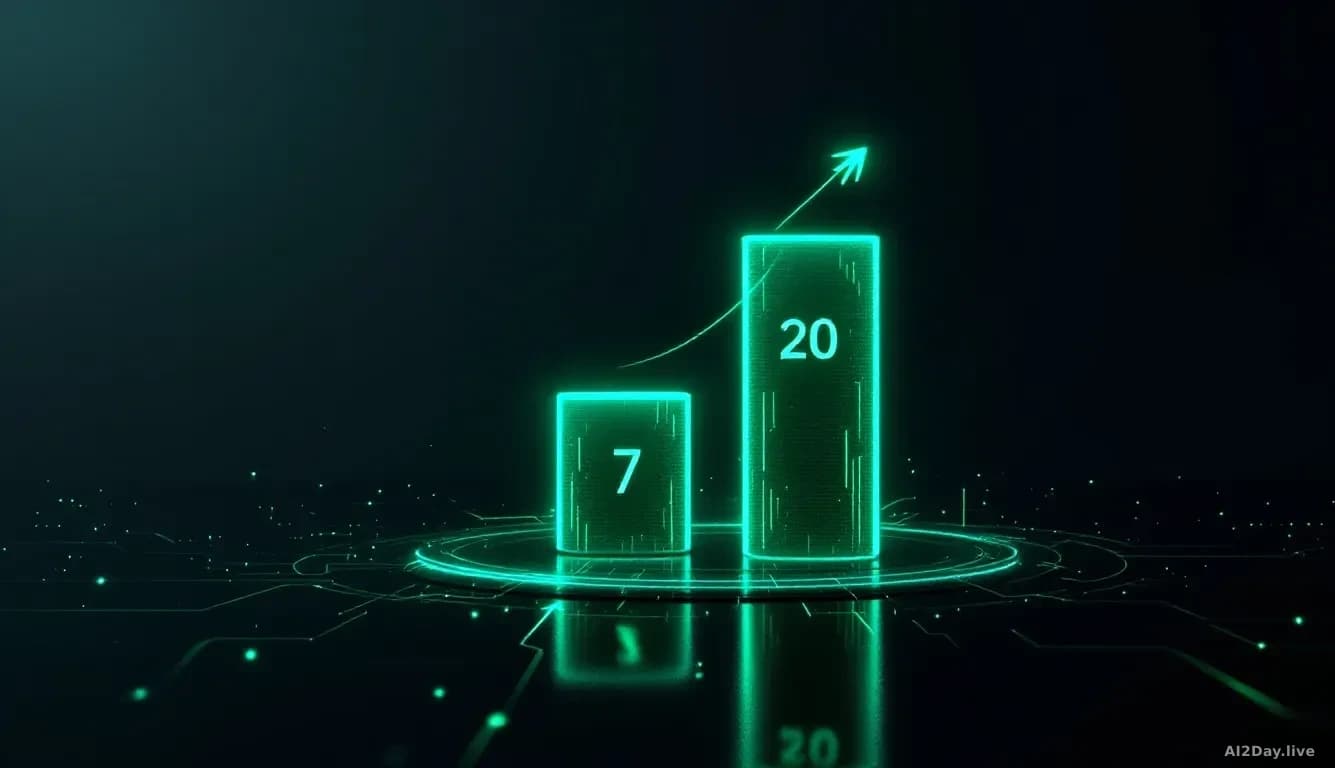
AI reads your website but sends people to your front door. Most sites are not ready for that.
Traffic from Google Search has collapsed for many publishers. But a new kind of visitor is arriving through AI chatbots, and they land somewhere completely different from where the AI found the information.
Key points
- When Google shows an AI summary, users click a traditional search result only 8% of the time, compared with 15% when no summary appears, according to Pew Research Center.
- Page views from Google Search fell 34% across Chartbeat's publisher network between December 2024 and December 2025.
- ChatGPT referral traffic surged 157% in one week after a May 2026 update that added clickable brand links inside answers.
- Sponsored ads appeared in 26% of U.S. Desktop ChatGPT conversations in June 2026, up from 14% the month before.
- Google's share of U.S. Search advertising is projected to fall below 50% in 2026 for the first time since around 2004.
If you run a website and depend on Google to send you visitors, the numbers are ugly. Pew Research Center tracked the browsing habits of 900 U.S. Adults and found that an AI-generated summary at the top of results cuts the click rate on traditional links beneath it roughly in half: 8% versus 15% without one. Links cited inside those summaries fare even worse, with only around 1% of users clicking them.
The knock-on effect has been severe. Chartbeat, a firm that measures web traffic for publishers, recorded a 34% drop in page views arriving from Google between December 2024 and December 2025. Small publishers have lost roughly 60% of their search referral traffic over two years. Business Insider's organic search traffic fell 55% over three years. Some smaller outlets have already closed.
So is AI destroying the web?
Not exactly, and the picture's more complicated than that.
A 2026 report by Similarweb, a web analytics firm, points out that while AI tools send fewer humans to websites, the AI systems themselves are reading the web more than ever. Every time you ask ChatGPT a question, it often fetches live pages from across the internet to build its answer. The share of ChatGPT answers that include live web citations grew more than fivefold in under a year, reaching 6.8% of all answers by May 2026. In travel, that figure hits 22.6%.
We've been tracking this squeeze on publishers closely. Our 24 July story "The Google traffic deal is dead. What does that mean for the web?" found publishers already starting to fight back, and on 27 July we reported that Google's AI search answers now appear in nearly half of all searches, a threshold that would have seemed implausible twelve months ago.
This creates a strange loop. AI answers depend on well-funded websites to stay accurate. But those websites are losing the ad revenue that kept them running, because AI answers are replacing the clicks that generated it.
Where is the money moving?
Inside AI conversations, and fast.
When ChatGPT added prominent clickable brand links to its answers in a May 7, 2026 update, referral traffic from ChatGPT jumped 157% in a single week, as first reported by VentureBeat. The destination shifted dramatically too. Before the update, around 25% of ChatGPT referrals landed on a brand's homepage. Afterwards, nearly 60% did.
That shift matters. Traditional search sent someone hunting for a specific article or product page. AI sends a visitor who's already done their research inside the chat, arriving at your front door ready to act rather than browse.
Similarweb's data shows AI-recommended brands receive two to four times as many follow-up visits as competitors the chatbot didn't mention.
| Metric | Figure | Date |
|---|---|---|
| Google AI Summary click-through rate | 8% | 2025 (Pew) |
| Google Search page views decline | -34% | Dec 2024 to Dec 2025 |
| ChatGPT traffic surge after brand-link update | +157% | May 2026 |
| Sponsored ads in ChatGPT conversations | 26% of U.S. Desktop sessions | June 2026 |
| Google's projected U.S. Search ad market share | Below 50% | 2026 (eMarketer) |
Advertising is following. Sponsored results showed up in 26% of U.S. Desktop ChatGPT conversations in June 2026, up from 14% just a month earlier. Two-thirds of those ads appear after the second message, targeted on what the user has been discussing rather than a single keyword. Click-through sits around 0.50%, low but comparable to early display advertising.
This is a direct challenge to Google's business model. EMarketer projects Google's share of U.S. Search advertising will fall below 50% in 2026, the first time since around 2004. Amazon's sponsored product listings are eating a large chunk of that lost share, growing three times as fast as Google's search ad business.
A federal court entered final judgment in the DOJ antitrust case against Google in December 2025, barring exclusive deals that made Google the automatic default on phones and browsers. Google appealed in January 2026. Whatever the courts decide, the era of Google controlling how almost everyone finds anything online is ending.
What should website owners actually do?
Audit where your AI traffic lands, and fix the mismatch.
Ahrefs found that more than 80% of AI-referred visitors to its own site land on the homepage or product pages rather than editorial articles. A separate analysis of 6.77 million AI-referred sessions by Previsible found that 28.8% of ChatGPT referrals land on internal site search pages, a part of most sites that's been neglected for years because Google was handling that navigation work.
Meanwhile the deep pages, detailed guides alongside technical documentation, are what AI systems actually cite when building answers. AI reads the depth; humans arrive at the surface.
One honest note: 67% of ChatGPT's most-cited sources are things marketers can't control, including Wikipedia, which alone accounts for nearly 30%. Getting cited by AI is harder to engineer than ranking on Google.
The doable first step: pull your referral logs, separate AI traffic from Google traffic, and see which pages get cited versus where visitors actually land. Build your homepage and key landing pages to welcome a pre-informed visitor. Make your deep content easier for machines to read by using clear headings and plain-language web addresses.
The web isn't dying. It's splitting into two jobs. Most sites are still built for one.