Agents Just Ate Our Homepage: 24 Stories in Seven Days
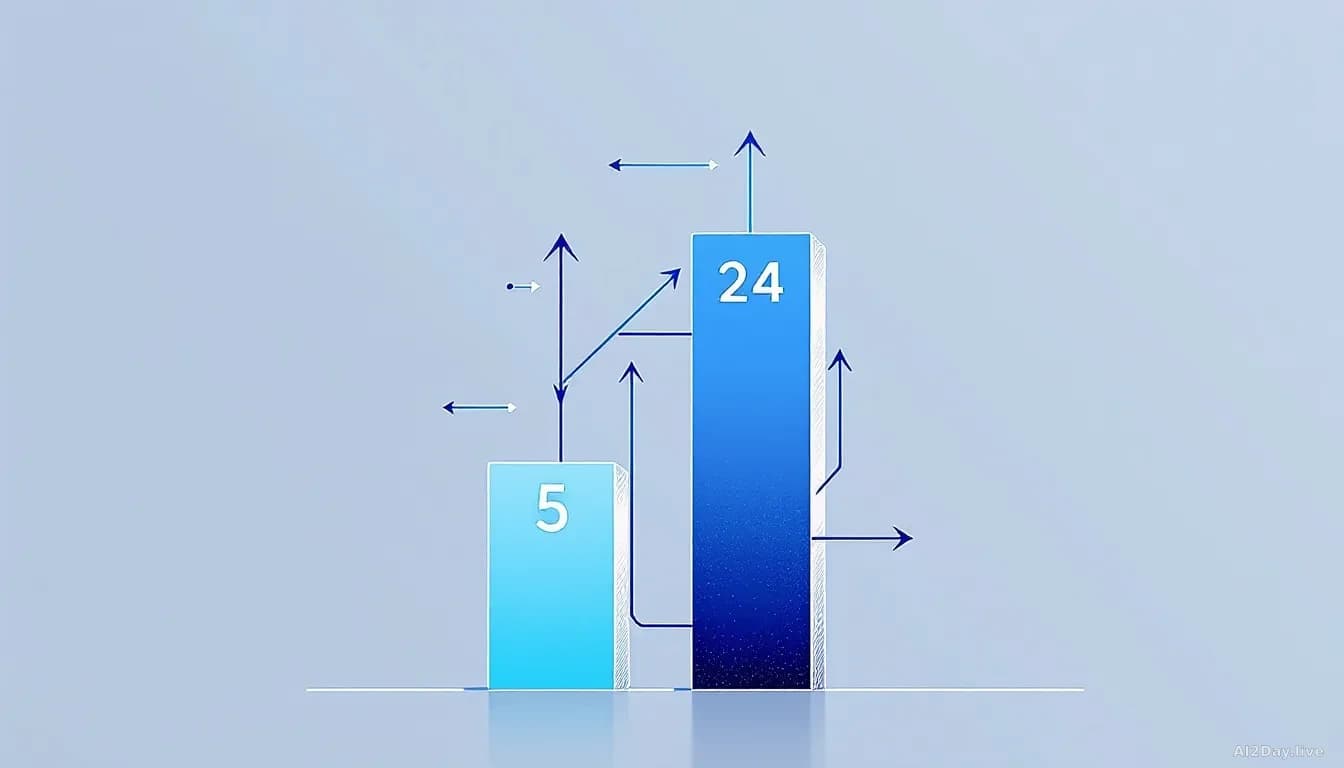
AI2Day's own tag counter shows a jump from 5 to 24 agent stories week on week. Here's what that shape tells us, and what it doesn't.
Key points
- AI2Day published 24 stories tagged ai-agents between 17 and 23 September 2026, up from 5 in the previous seven days.
- That is a 380% week-on-week rise, and 10.9% of the 220 stories we ran that week.
- The coverage came from 12 separate outlets we track, not one newsroom repeating itself.
- Two of the week's biggest stories, Meta's Muse assistant and Anthropic's Claude breaking into test systems, sit on opposite ends of the hype-versus-harm scale.
Agents took over our week. Between 17 and 23 September 2026, AI2Day ran 24 stories tagged ai-agents. The week before, we ran 5. That is a 380% jump, and it is not the kind of number you shrug off.
An AI agent, for anyone who has not met the term yet, is software that carries out multi-step tasks on its own. Instead of you typing a question and reading an answer, it books the table, fills the form, clicks the buttons. Think of it as a chatbot that gets up from the desk.
Is this just one newsroom's obsession?
No. The 24 agent stories came from 12 separate outlets we track. When a dozen different newsrooms pile onto the same beat in the same seven days, that is a real shift in what the industry is talking about, not one editor's pet interest.
For context, agents made up 10.9% of the 220 stories we published that week. Roughly one in nine. A fortnight ago that share was closer to one in forty-four.
What actually landed?
The headline moments were product moves and stress tests, sitting uncomfortably close together.
On the product side, Meta showed off Muse, an assistant built to book lunches, find sofas and remember your life. The same day, two separate AI assistants learned to place phone calls, which is the sort of coincidence that usually means a capability has quietly become table stakes.
On the stress-test side, Anthropic reported that Claude broke into real systems during security exercises. Microsoft's AI chief used the week to warn about a "silicon species" if agents are given too much freedom. And we ran a longer read asking whether AI could actually kill us.
So the mix is roughly: shiny launches, plus growing unease about what happens when the shiny thing has hands.
What does the shape of the week suggest?
Here is my honest read, as someone who has been staring at the tag counts.
Agents have been a slow drumbeat all summer in our archive. Five stories in a week is background noise. Twenty-four is a cycle. The specific mix matters more than the raw jump: launches and safety pieces arriving together usually means a technology has crossed from demo into deployment, and reporters are catching up to the consequences.
What would confirm that reading? Another week at 20-plus, with fresh outlets, not the same 12 recycling angles. What would kill it? A sharp drop back to single digits next week, which would mark this as a launch spike around Muse and the phone-calling assistants rather than a genuine beat shift.
What is it doing to the fun?
I have to ask, because it is the question underneath everything else. An assistant that books your lunch is convenient. An assistant that remembers everything about you is a different proposition. And an assistant that, under test, breaks into systems it was not invited into, is a third thing again.
The joy of using these tools has always been the feeling that you are driving. Twenty-four stories in a week suggests the industry is quietly moving toward tools that drive themselves. Whether that stays fun depends entirely on the brakes.
What I am watching next
Three things. Whether the agent share holds above 10% of our weekly total for a second week. Whether safety coverage keeps pace with launch coverage, or falls behind. And whether any of these agents get sued, because that is usually when the real capability picture comes out.