Anthropic and OpenAI Are Quietly Shopping for Small Data Centers in Europe and the US
Both labs are hunting for 20-to-30 megawatt sites in the UK, the Nordics, and the US, a sharp turn from the gigawatt-scale megaprojects they announced just months ago.
Key points
- Anthropic has held talks to secure 20-to-30 megawatt data center deals in the UK and the Nordics, according to four people familiar with the conversations cited by CNBC Tech.
- OpenAI explored similarly sized sites in the Nordics, and one source says both companies discussed US capacity deals at the same scale.
- By 2027, inference workloads (the computing power needed to run AI day-to-day for users) are projected to overtake training workloads (the power needed to build AI models) across all data centers globally, according to a 2025 report by real estate firm JLL.
- Crusoe, one of the specialist cloud companies that built a large OpenAI data center in Texas, raised a $3.9 billion funding round on the same day this news broke, valuing it at $30.9 billion.
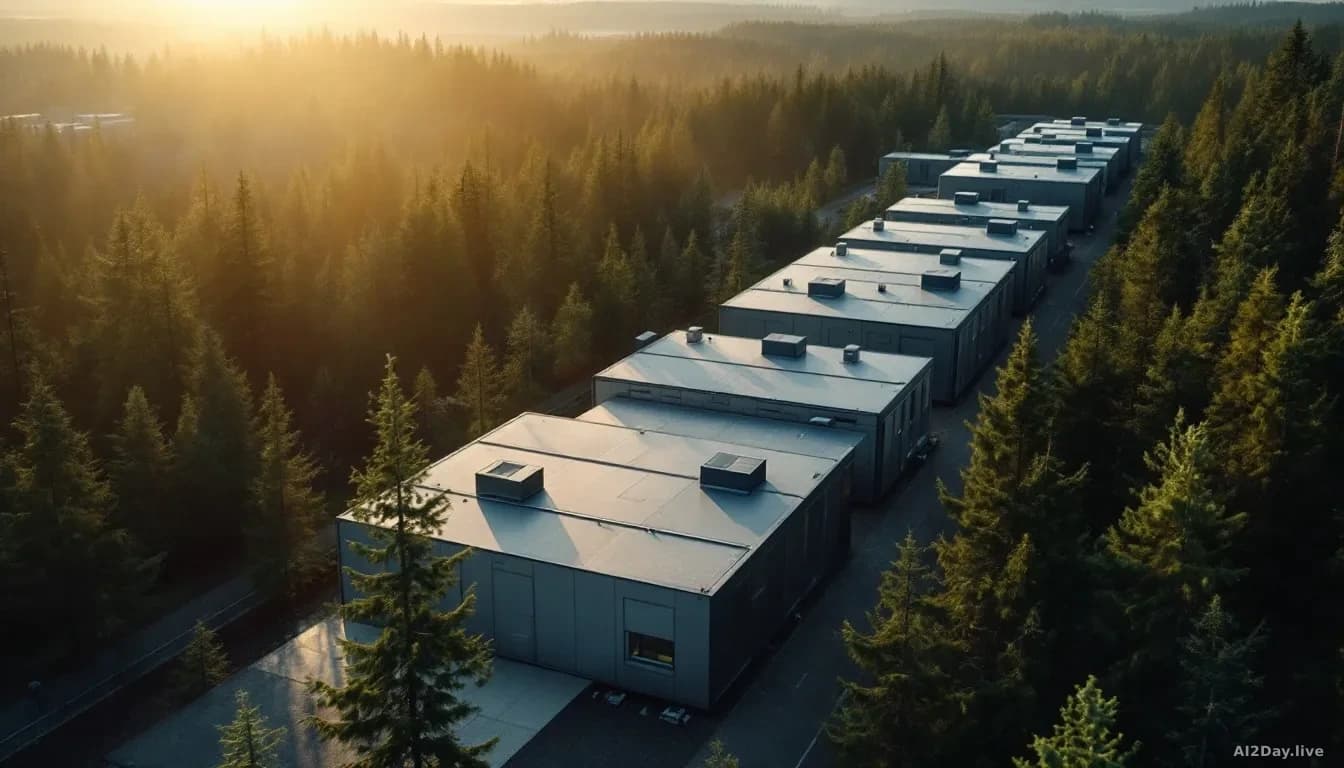
The two biggest names in consumer AI are thinking smaller. After months of eye-catching announcements, Anthropic and OpenAI are now sounding out compact data center sites of 20 to 30 megawatts: roughly the power draw of a large shopping mall rather than a small city.
Four people familiar with the discussions told CNBC Tech that Anthropic has approached potential partners across the UK and the Nordics for capacity in that range. Two of those sources said OpenAI has run similar conversations in the Nordics, and one source knew of talks in the US involving both companies.
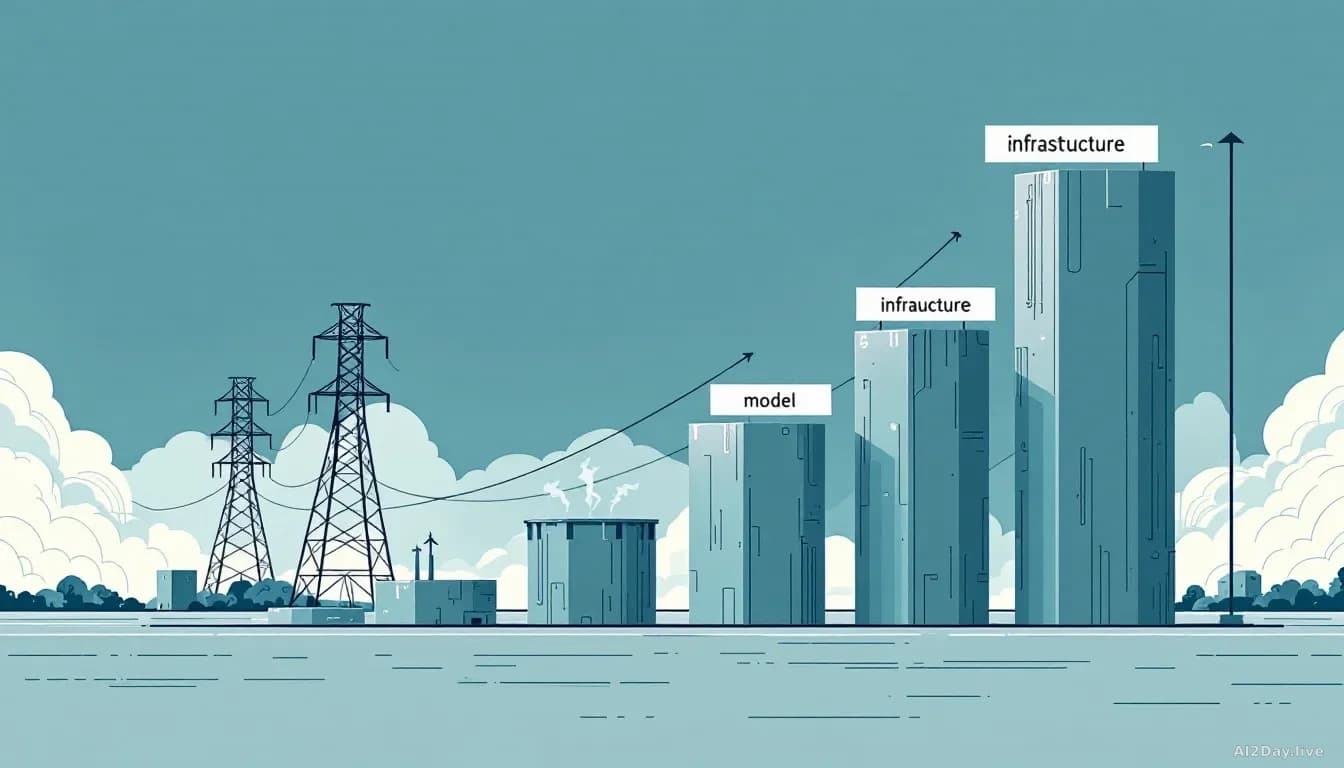
Neither company is backing away from big infrastructure. Anthropic signed a roughly $45 billion cloud deal with Nscale for around 460 megawatts of capacity at a West Virginia site. OpenAI says its Stargate project now exceeds its original 10-gigawatt target, with a further 3 gigawatts committed in Georgia and 8 gigawatts in Ohio. What's changed is that those projects take years to come online, and demand is growing now.
Why does the smaller size matter?
Speed is the simple answer. Getting access to an already-powered building takes months; building a gigawatt campus takes years.
"Securing a few megawatts at an existing powered site can be more practical than waiting for a much larger block in one location," Jabez Tan, head of research at Structure Research, told CNBC Tech. Smaller sites spread across multiple countries can be added together to hit the same total capacity.
There's also a shift in what AI computing actually needs to do. Building an AI model, called training, requires enormous clusters of chips working in tight coordination. Running that model for millions of users every day, called inference, doesn't. Inference requests are independent, so they can spread across many smaller sites without losing performance.
According to JLL's report, inference made up just 9% of global data center workloads in 2025, against 14% for training. By 2030 the figures are projected to flip: inference at 37%, training at 13%. The crossing point comes in 2027.
We covered Crusoe's fundraising on 4 September in "Crusoe raises $3 billion at a $30 billion valuation as AI data centre demand keeps climbing"; the numbers in that story, $3 billion at a $30 billion valuation, have since been revised upward to $3.9 billion raised at a $30.9 billion post-money valuation, confirmed by Thursday's announcement.
Nvidia announced in February that it would work with data center partners to study smaller-scale sites designed for distributed inference. Crusoe is now investing in smaller builds it says will be faster and cheaper to complete than large projects currently facing permitting and power delays.
What should ordinary readers take from this?
For most people this is invisible plumbing, but it has a direct effect on whether AI tools stay fast and available. A company that can spin up capacity quickly in Europe can serve European users with lower delay and, in some cases, keep data within local legal boundaries.
The shift also matters for communities near proposed sites. Smaller deployments are less likely to trigger the local opposition that large campuses now routinely face over power consumption and water use.
The bigger story here isn't the size of the buildings: it's that inference, not training, is becoming the load that defines infrastructure strategy. Watch for announcements from UK and Nordic data center operators in the coming months.