A Robot Watched One Video and Flipped a Pancake. Skild AI Says That Changes Everything.
Skild AI's new S1 model lets robots learn tasks from a single video clip, without weeks of retraining. The company has raised nearly $1.7 billion to make it happen.
Key points
- Skild AI launched S1, its flagship robot foundation model, claiming robots can learn new tasks from a single video demonstration.
- The company has raised nearly $1.7 billion since its founding in 2023 to build what it calls a general-purpose robot brain.
- S1 uses in-context learning, a technique that lets a model act on an example shown at the moment of use, with no retraining required.
- Skild CEO Deepak Pathak confirmed a pancake-flipping behaviour emerged on its own, with no flipping examples anywhere in the training data.
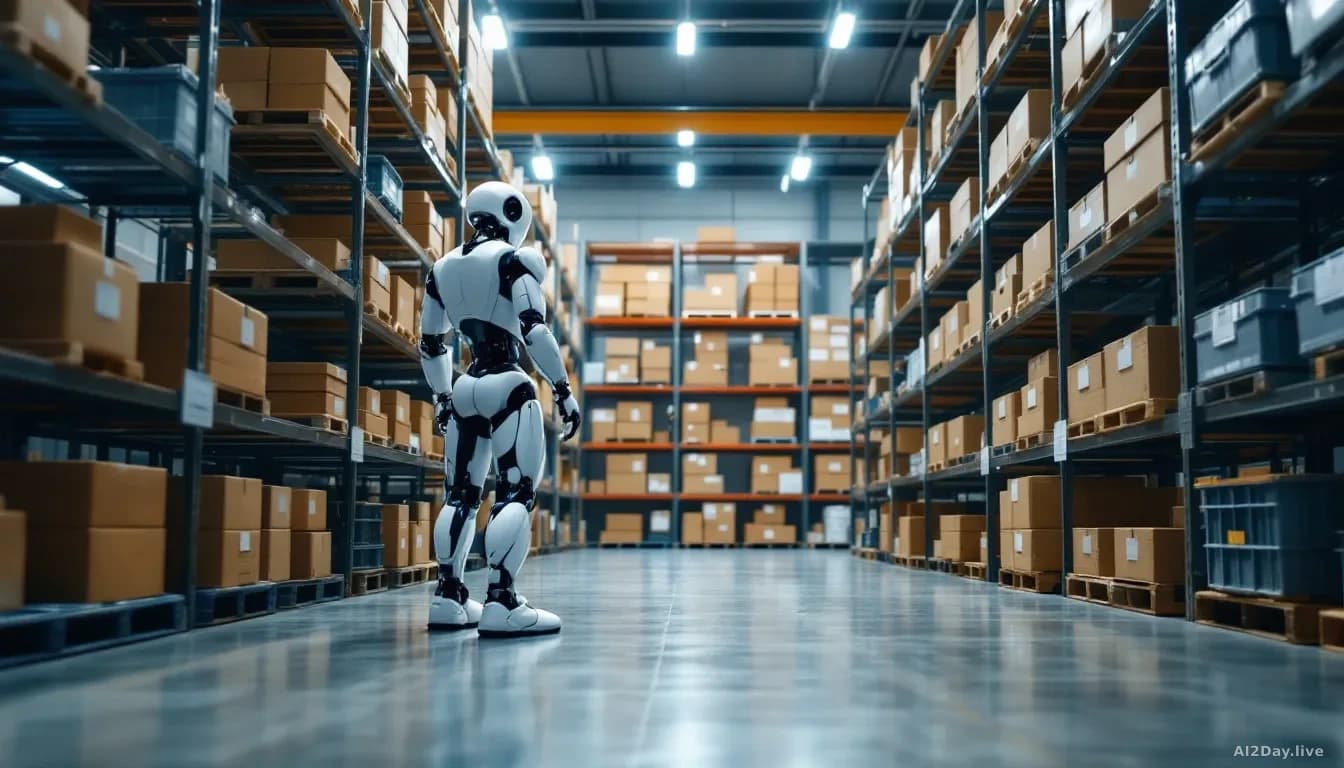
- S1 runs on quadrupeds, tabletop arms and humanoid robots.
Teaching a robot a new skill normally takes weeks. Engineers collect examples, retrain the software, test it, repeat. Skild AI wants to cut that entire process down to showing the robot a video.
The Pittsburgh-based startup recently revealed S1, its first full robot foundation model. A foundation model is a large AI system trained on vast amounts of varied data, the same kind of technology that sits underneath ChatGPT. Instead of building a narrow system for one job, the idea is one brain flexible enough to handle many.
How does learning from a single video actually work?
S1 uses in-context learning: the robot is shown an example at the moment it needs to act, rather than going through a separate training process. Skild's approach is close to what Generalist, another physical-AI startup, described when it raised nearly $200 million in August, though Generalist's demos used clips as short as three seconds while Skild is targeting tasks up to ten minutes long.
"You just add a video of a human doing something in the prompt, also called the context of the model, and it can just follow it on the robot," Pathak told The Robot Report.
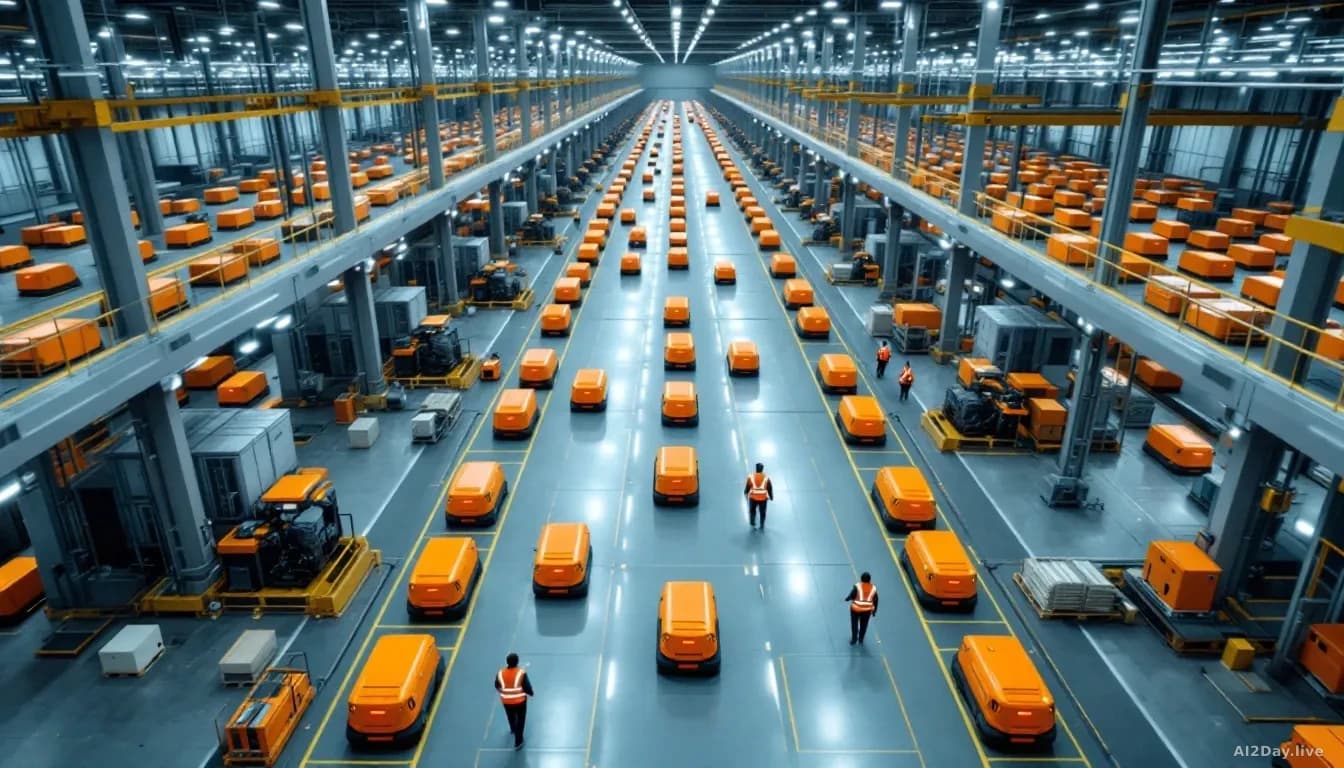
Jobs that long include repotting a plant, brewing coffee or cooking pancakes from scratch. That's a different class of problem from the quick pick-and-place tasks most warehouse robots handle today.
The pancake example is the one worth dwelling on. When the robot flipped a pancake, Skild's team searched millions of hours of training data for any flipping motion to explain it. They found none. The behaviour had emerged from the model watching how a spatula moves, not from a direct example.
What data does S1 train on?
Most robot AI companies rely on one main data source. Skild uses four.
| Source | Strength | Weakness |
|---|---|---|
| Teleoperation (human drives robot directly) | Highest quality, straight from hardware | Slow to collect, low variety |
| Human videos | Huge volume, very diverse | Hard to apply directly to robot bodies |
| Simulation (virtual environments) | Cheap and scalable | Gap between virtual and real world |
| Data-capture gloves | More scalable than teleoperation | Slightly less direct than hardware |
"The pros of one source compensates for the downside of another source," Pathak said. That's the honest version of a claim that sounds obvious until you consider how few teams actually execute it.
S1 also runs across different robot body types. Pathak says stronger humanoid performance is a priority for future work.
Is this the moment robots become as useful as ChatGPT?
Not yet, by Pathak's own account. Language AI once needed retraining for every new task; ChatGPT changed that by letting users simply type what they needed. Pathak sees S1 as the equivalent shift for robots, but an early one. Our August story on the wider field found developers openly admitting their robots are still stuck in a pre-ChatGPT era, so Skild's claim lands in a contested space.
"Is it completely ready to be rolled out to people's homes? Not quite. But this is the first sign of what we believe might come," Pathak said.
Skild recently acquired Fetch Robotics, a company with experience deploying robots in working warehouses, to speed that transition. Pathak says S1 is already helping the company acquire customers, with production results expected within weeks.
The benchmark that matters isn't a pancake flip in a lab. It's whether S1 holds up across shifts, across operators and across the unpredictable mess of a real workplace.