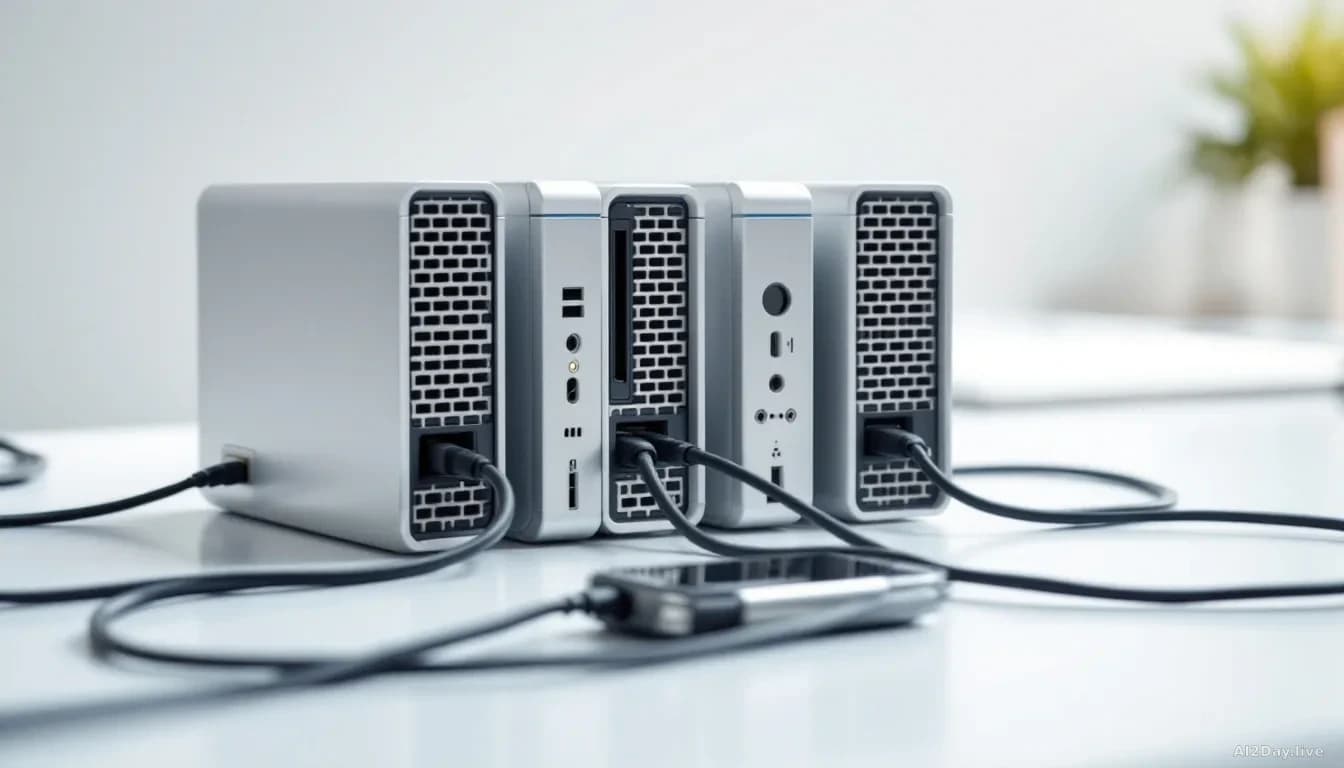
Ugreen Wants to Run Your Entire Smart Home From a Box in Your Living Room
A new platform called HomeAgent keeps your cameras, files, and AI assistant local, meaning your data never has to touch the cloud. No monthly fees, either.
Key points
- Ugreen launched its HomeAgent smart home platform at the IFA tech show in Berlin, with a Kickstarter planned for October 2026.
- Three hub models handle everything from basic voice commands to advanced AI processing, all stored inside your home.
- The top-tier MasterAgent MA100 uses an NVIDIA Jetson Thor T5000 chip and can reach up to 2,070 TFLOPS of AI processing power.
- Push notifications and remote camera viewing still need an internet connection, even on the fully local setup.
- Full retail pricing has not been announced; early-bird discounts will appear on Kickstarter first.
Ugreen makes the phone chargers and portable batteries you see on every desk. Now the company is taking a swing at your entire home.
At IFA, the big consumer tech show in Berlin, Ugreen unveiled HomeAgent: a smart home hub that stores security camera footage, runs an AI assistant, and controls smart lights and sensors, all from a box sitting in your house rather than on a company's server farm.
What does "local AI" actually mean here?
Local AI means the processing happens on hardware you own, not on a distant server you rent from a company. Your video footage and personal files stay inside your home.
The voice assistant built into HomeAgent is called Uliya. Ask it "where is my pet right now?" and it'll scan your camera feeds to answer. It can also set automations, describe what happened in a clip, and search footage using plain-English phrases, all without your video leaving the house.
Three hub options offer increasing levels of processing power:
| Model | AI capability | Key feature |
|---|---|---|
| HA100 | Basic rule-based commands | Entry-level control |
| HA100 Pro | Context-aware understanding | Smarter voice responses |
| MasterAgent MA100 | 2,070 TFLOPS (NVIDIA Jetson chip) | Cross-camera tracking, full AI |
Pricing isn't set yet, and the MA100 will almost certainly cost considerably more than the entry models.
Why does this matter for ordinary people?
Two things drive most smart home frustration: subscription fees and privacy worries. Services like Amazon Ring and Google Nest charge monthly fees to store footage in the cloud. HomeAgent stores everything on the hub itself, so there's no ongoing bill for video storage.
As The Verge reported from hands-on time at Ugreen's IFA booth, a journalist controlled Nanoleaf lights and smart blinds using only voice commands to Uliya. The hub supports Matter, the industry standard that lets devices from different brands talk to each other, alongside Wi-Fi, Zigbee, Thread, Bluetooth, NFC, and a handful of other connection types.
The approved device list is short right now. Aqara, SwitchBot, ThirdReality, and Eve are confirmed. Ugreen says any Matter device should theoretically work, but advises sticking to approved products, and the first batch covers only lights, switches, sensors, and curtains.
Ugreen is also launching its own security cameras, a smart speaker running Uliya, and an E Ink digital photo frame that pulls photos straight from the hub. That local-first approach to photos is something we noticed when covering Perplexity's on-device AI computer on 27 August: keeping files off the cloud is becoming the pitch, not the exception.
What should you watch out for?
Remote camera viewing and push notifications both require an internet connection. You can also run Uliya through the cloud instead of locally, though that undercuts the privacy argument considerably.
The Kickstarter launch in October means early buyers are funding a product that hasn't shipped. Compatibility, setup ease, and real-world reliability are all unknowns. If those things matter to you, waiting for independent reviews is the sensible move.
The honest read on this one: the local-AI-hub idea is genuinely compelling, but Ugreen's track record is in charging bricks, not complex software ecosystems. Watch how the Kickstarter goes, and watch whether that device compatibility list grows quickly enough to matter.