50,000 robots, 25 million hours: Brain Corp's CTO on what comes after teach-and-repeat
John Black built one of the largest fleets of self-driving floor robots on the planet. Now he says the next shift is AI that finds its own path, with no human guidance required.
Key points
- Brain Corp has deployed more than 50,000 autonomous mobile robots across real-world public spaces as of 2025.
- Those robots have collectively logged over 25 million hours of safe operation running on Brain Corp's BrainOS software.
- CTO John Black argues the industry is moving from "teach-and-repeat" programming to AI that plans its own routes, which the company calls SelfPath AI.
- XPeng Motors' humanoid robot unit Dogotix raised $900 million, signalling heavy investor appetite for physical AI.
- NVIDIA's Jetson Orin Nano 2 chip doubles processing speed for robots that need to think on the spot without a connection to a remote server.
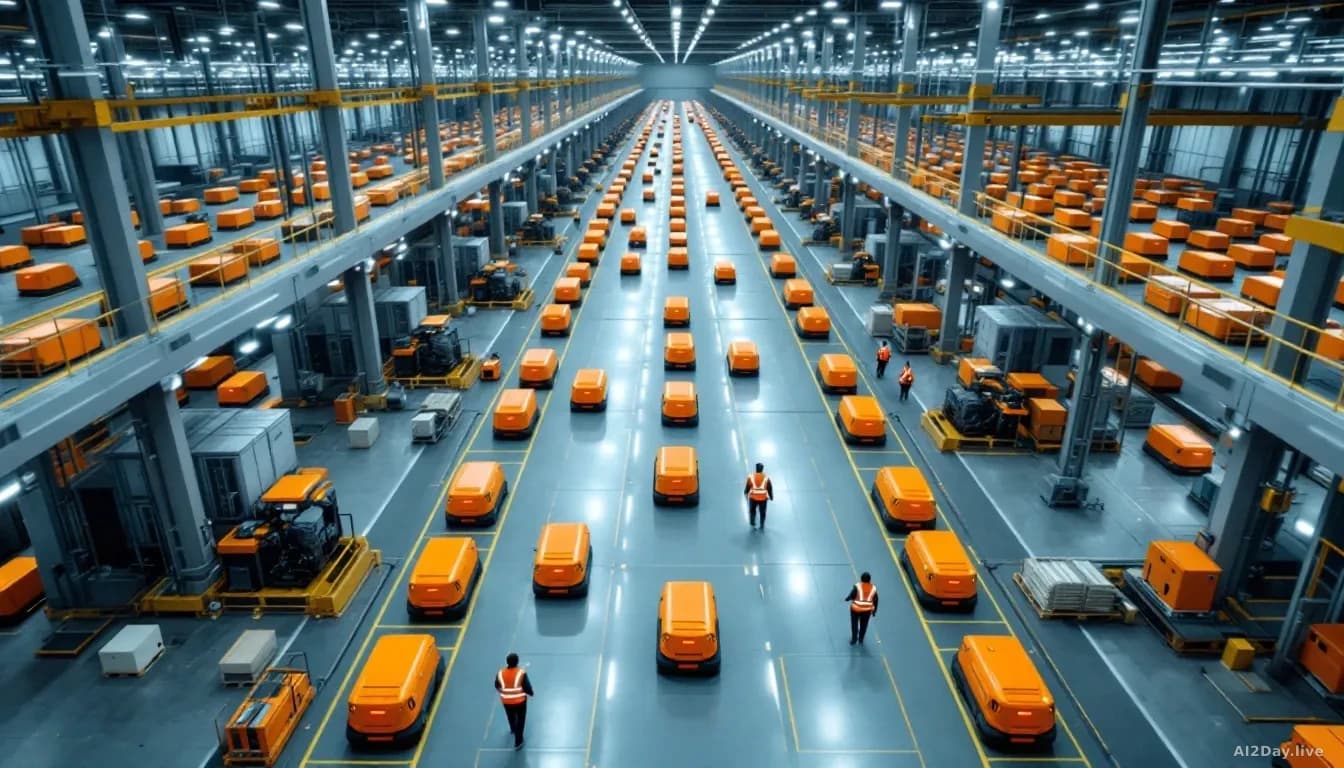
If you've seen a large floor-cleaning machine rolling quietly through a shopping centre or airport, there's a reasonable chance it was running software made by Brain Corp. The San Diego company has put more than 50,000 autonomous mobile robots, or AMRs (self-driving machines that move around people without a fixed track), to work in the real world.
What is "teach-and-repeat" and why does it matter?
Older commercial robots learn a route the same way you might teach someone a new commute: a human drives the machine along the path once and the robot memorises it. That works, but it breaks the moment something changes: a stack of boxes appears in the aisle, a crowd blocks the corridor.
Brain Corp's CTO John Black, speaking on episode 259 of The Robot Report podcast, says the field is now moving toward what his company calls SelfPath AI. Instead of following a memorised path, the robot works out its own route in real time, adjusting to whatever it finds. Think of the difference between following printed directions and using a live sat-nav.
Black is a Carnegie Mellon University graduate, a TÜV Rheinland-certified functional safety engineer (TÜV Rheinland being the German body that approves safety-critical products), and chairs the Corporate Affiliates Program advisory board at the UC San Diego Jacobs School of Engineering.
What does this mean for people who encounter these robots?
For shoppers and hospital visitors, the practical change is that robots become less likely to stop dead or take odd detours when the environment shifts. A machine that plans its own path can handle the unexpected, which means fewer collisions and fewer moments where a robot just sits there blocking the way.
For the businesses deploying them, the appeal is simpler management. A fleet that each needs a human to re-teach its route every time a store is rearranged is expensive. AI that re-routes itself cuts that overhead. We first covered the autonomous mobile robot boom on 6 August, when two market forecasts projected the industry doubling or tripling by 2030 on the back of labour costs and better navigation.
What else is moving in robotics right now?
The podcast also touched on a cluster of news items that show how quickly investment is flowing into physical AI. XPeng Motors' humanoid robot spinoff Dogotix raised $900 million (we reported the full valuation and production plans on 24 August). Startup Generalist pulled in another $200 million. NVIDIA released the Jetson Orin Nano 2 chip, which the company says doubles how fast a robot can process information locally, without sending data to a distant server. Warehouse automation firm Symbotic topped a new industry ranking from research group Interact Analysis.
None of those figures come from peer-reviewed research; they're company announcements and analyst reports. Real-world safety data, like Brain Corp's 25 million operating hours, carries more evidential weight than funding rounds. The money signals where the bets are going, but that's different from proof.
Black's core argument is that scale and safety aren't opposites. Twenty-five million logged hours is a meaningful dataset. Whether SelfPath AI delivers will show in the next wave of real-world results, not in podcast claims.
Common questions
Are these robots safe around children and elderly people?
Brain Corp's 25 million hours of logged operation without a serious safety incident is encouraging, but "safe" in robotics means different things in a controlled warehouse versus a busy public space. Regulators and buyers should ask for independent safety audits, not just company figures.
Do these robots collect data about the people they pass?
Floor-cleaning AMRs typically map their environment using sensors that detect obstacles without identifying individuals. Exact data practices vary by manufacturer and deployment; if you manage a venue running this technology, the vendor's data-processing agreement is worth reading carefully.