Weekend Science: A Quantum Computer Just Helped Invent New Drug Candidates
Researchers at the Technical University of Denmark ran their AI model on a printer-sized quantum computer and produced better peptide candidates than a standard machine, with the sharpest gains where medical training data was thin.
Key points
- Researchers at the Technical University of Denmark used a quantum-assisted AI model in 2024 to generate novel peptides, short protein-like chains used in drug development.
- Lab tests confirmed the quantum-assisted model produced more successful peptides than the classical equivalent, with the biggest gains where training data was scarce.
- The team funded the work by pooling unspent money from other projects and working weekends, because no grant body would back it.
- Quantum computers are still too small to run full-scale drug-discovery models, so this result is a proof of concept, not a finished product.
- ORCA Computing, the British startup that built the quantum machine, says the study is one of the first clear near-term commercial uses of the technology.
A small team at the Technical University of Denmark (DTU) has shown that plugging a quantum computer into an AI drug-discovery pipeline can produce better medicine candidates than using a regular computer alone. They published the results after running the experiment on weekends, paying for it with leftover budget from other grants.
The AI model here is a generative model, software that creates new outputs rather than classifying existing ones. It was generating peptides: tiny chains of amino acids, the building blocks of proteins, that can latch onto specific targets inside the body. Finding peptides that bind reliably to a target protein is a critical early step in vaccine development.
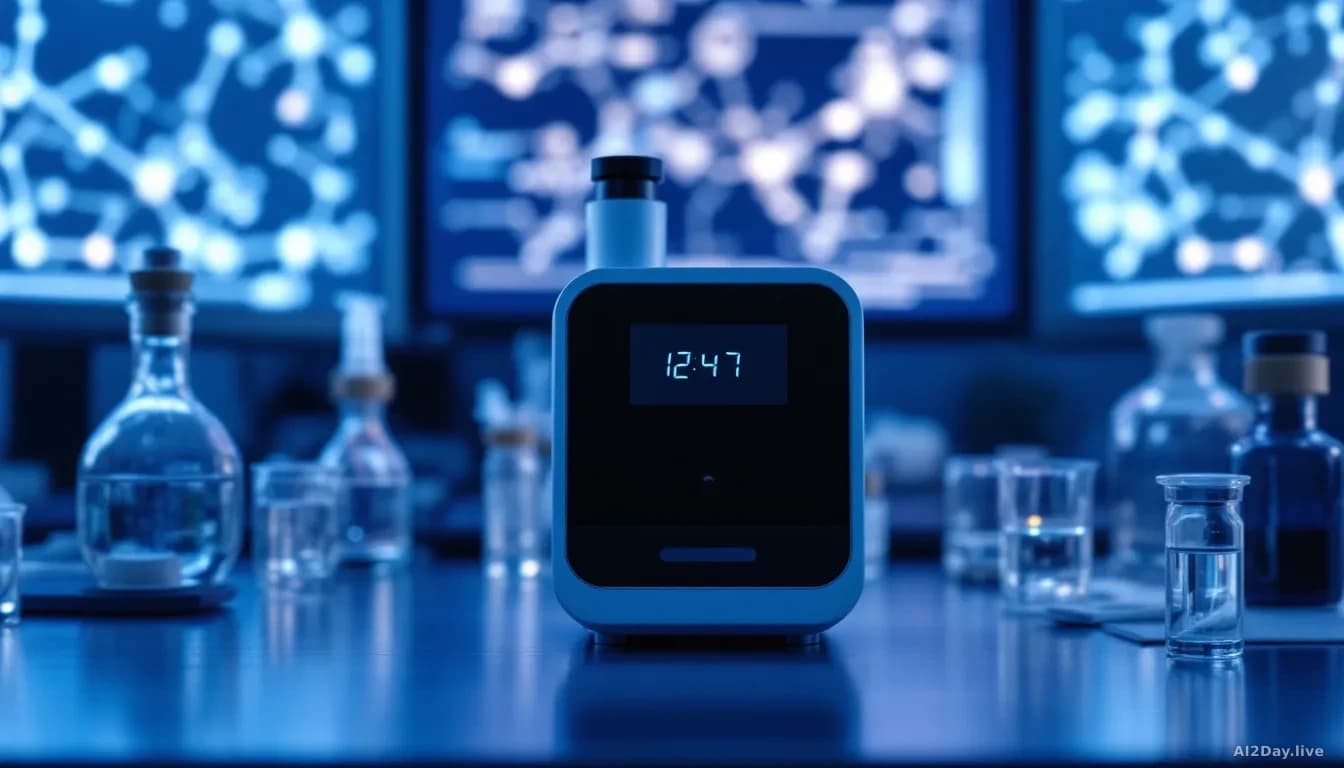
The quantum machine, built by British startup ORCA Computing, is roughly the size of a desktop printer. It doesn't replace a normal computer; it works alongside one, a setup called a hybrid system. The quantum component handles the part of the calculation where quantum physics helps explore a wider range of possibilities.
Lab tests mattered here. The team synthesised the peptides the model suggested and tested whether they physically stuck to their target proteins. They did, at a higher success rate than peptides generated by the classical version of the same model. The improvement was sharpest for proteins where training data was limited.
That last point carries real weight. Most medical research has focused on Western populations, leaving less genetic data for understudied groups in Asia, Africa and elsewhere. DTU professor Timothy Patrick Jenkins, who led the project, told Wired the quantum step appeared to help the model generate a more diverse set of candidates even with thin data, which could eventually help produce medicines that work across a wider range of patients. Jenkins himself had been a sceptic: "I was a huge quantum skeptic," he told Wired, expecting any useful application to be "decades away."
Does this mean quantum computers will change medicine soon?
Not yet. Today's machines are too small to run a full-sized antibody model, which is what the DTU team normally works with, and a standard high-end computer still outperforms them on most real drug-discovery tasks. DTU PhD student Jonathan Funk put it plainly: the level of complexity the team could encode "wasn't a normal-sized antibody."
ORCA Computing chief executive Richard Murray acknowledged the technology has long lacked clear near-term uses. He told Wired this study is one of the first concrete examples of a near-term commercial application.
Jenkins is already planning to test the workflow on larger proteins and more advanced AI models. He's also exploring whether the same approach could help design synthetic antidotes for snakebite venom, a neglected area that attracts little research funding.
For patients, practical impact is years away. What this study does is give researchers a small but real reason to keep exploring the combination, and for a field that's spent years promising future breakthroughs, a result you can hold in a lab dish is worth more than it might first appear.