US Navy shipbuilder commits up to $900 million to robot welding and sanding firms
Huntington Ingalls Industries is betting nearly a billion dollars that AI-driven robots can build warships faster than human crews alone.

Key points
- Huntington Ingalls Industries (HII) announced performance-based agreements worth up to $900 million with Path Robotics and GrayMatter Robotics on the same day.
- The deals run for seven years inside HII's HYPR program, launched in April 2025 to bring advanced automation to US Navy shipbuilding.
- Path Robotics handles robotic welding; GrayMatter handles robotic sanding and grinding.
- HII plans to outsource more than 2.5 million hours of shipbuilding work in 2026, a 30% increase on 2025 levels.
- Every dollar is conditional on both companies hitting defined technology and performance milestones.
Huntington Ingalls Industries, the largest military shipbuilder in the United States and the company behind aircraft carriers and nuclear submarines, has signed long-term deals with two robotics firms. Path Robotics gets the welding work. GrayMatter Robotics handles sanding. Together the contracts are worth up to $900 million across seven years, first reported by The Robot Report.
What is the HYPR program and why does it matter?
HYPR, short for High-Yield Production Robotics, is HII's push to bring physical AI, meaning software that controls real-world machines rather than just answering questions, into its shipyards. HII launched it in April 2025. We first covered HII's automation ambitions on 6 August 2026, as the Navy accelerates its bet on unmanned and automated platforms across the board.
The goal is straightforward: build Navy ships faster without needing proportionally more human workers. Ships in scope include aircraft carriers, submarines, destroyers, amphibious ships and future frigates.
How do the robots actually work?
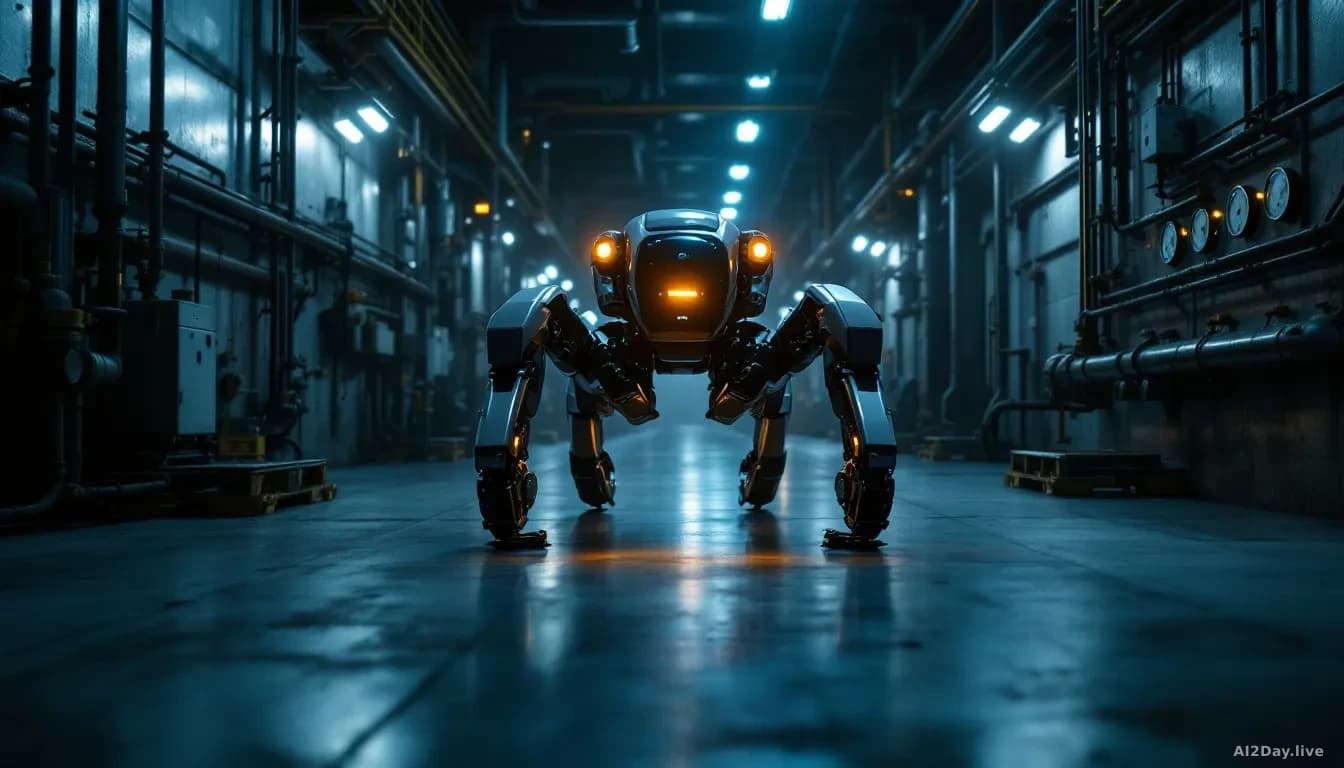
Path Robotics runs an AI model called Obsidian, trained to recognise complex metal joints and decide how to weld them without a human guiding each pass. It's paired with a quadruped robot, a four-legged machine that walks rather than rolling on a fixed track, so it can climb onto large assemblies that can't be moved to a welding station. Most factory welding robots sit bolted to the floor, which is exactly why this matters.
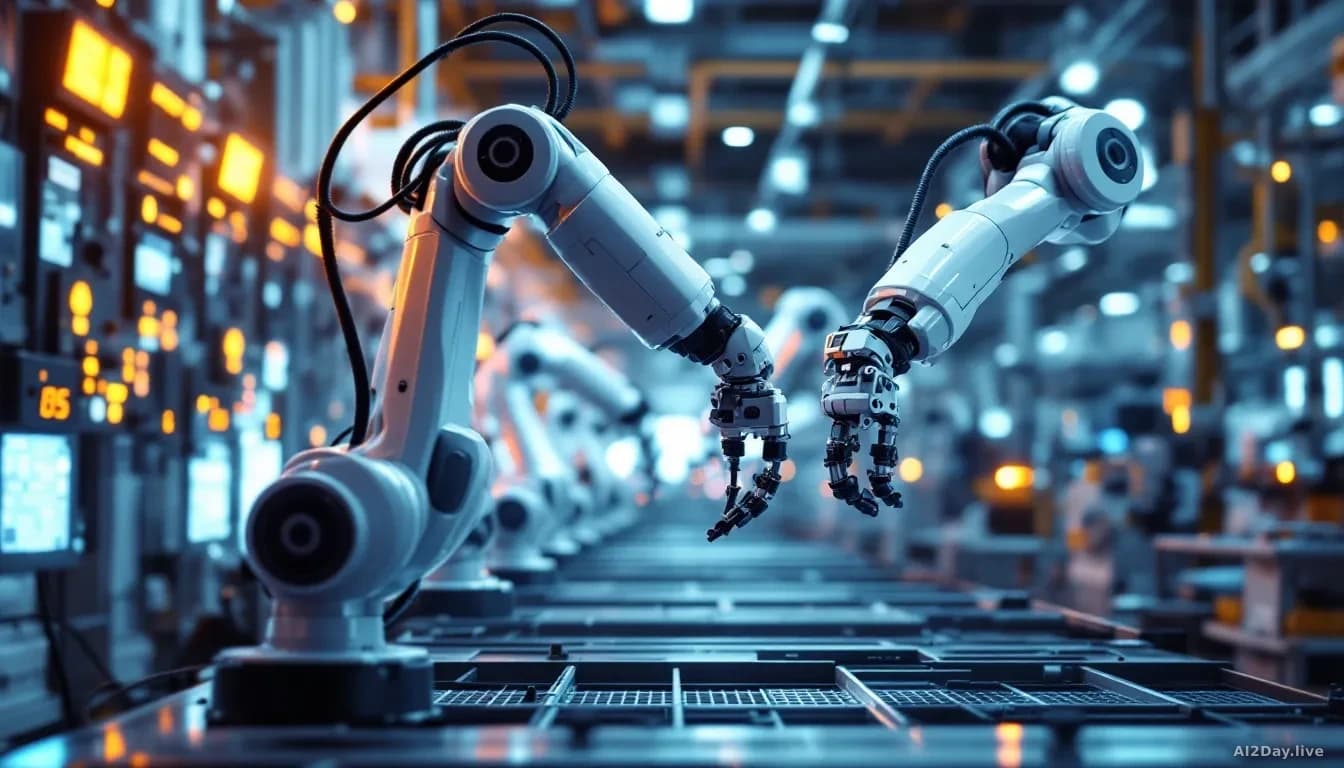
GrayMatter's robots handle sanding, grinding, blasting and painting, the repetitive finishing work that currently eats thousands of worker-hours per vessel.
| Company | Task | Contract share |
|---|---|---|
| Path Robotics | Autonomous welding | Part of up to $900 M total |
| GrayMatter Robotics | Sanding, grinding, blasting, painting | Part of up to $900 M total |
| Combined term | Both companies | 7 years |
| HII outsourced hours (2026 target) | All partners | 2.5 million+ hours |
What happens next?
The deal runs in two stages. First, both companies must prove their technology meets Navy-grade standards through a joint development and qualification process. Only after clearing that hurdle do they reach the delivery stage, where HII sends them paid production work, starting with small steel structures and scaling to larger ship modules.
The $900 million figure is a ceiling, not a guarantee. "The funding is contingent on the two companies meeting clearly defined technology and manufacturing readiness, as well as performance milestones," HII said.
For workers and suppliers in the shipbuilding chain, the practical upshot is that HII intends to push more fabrication outside its own yards to a growing network of assembly partners. The company says that expands capacity rather than cutting its core workforce, though how that balance holds depends on how quickly the robots pass their qualification tests.
Common questions
Does this mean robots are replacing shipyard workers?
HII frames the deals as expanding capacity by completing more work outside the main shipyards before final assembly. Whether that holds as the technology matures is worth watching closely.
Is the $900 million already guaranteed?
No. The amount is conditional on Path Robotics and GrayMatter meeting specific technology readiness and performance milestones at each stage of the program.