TSMC Pours Another $100 Billion Into Arizona as AI Chip Demand Shows No Sign of Slowing
The world's most important chipmaker is doubling down on its US bet, bringing its total Arizona commitment to $265 billion and pointing squarely at AI as the reason.

Key points
- TSMC committed an additional $100 billion to its Arizona chip factories in July 2026, raising its total US investment to $265 billion.
- The company raised its full-year capital spending target to between $60 billion and $64 billion for 2026.
- Chinese customers accounted for roughly 8% of TSMC's total revenue as of mid-2026.
- TSMC's phase-one Arizona plant, using 4-nanometer chip technology, is already producing chips and expanding output.
- US factory construction costs run four to five times higher than equivalent facilities in Taiwan.
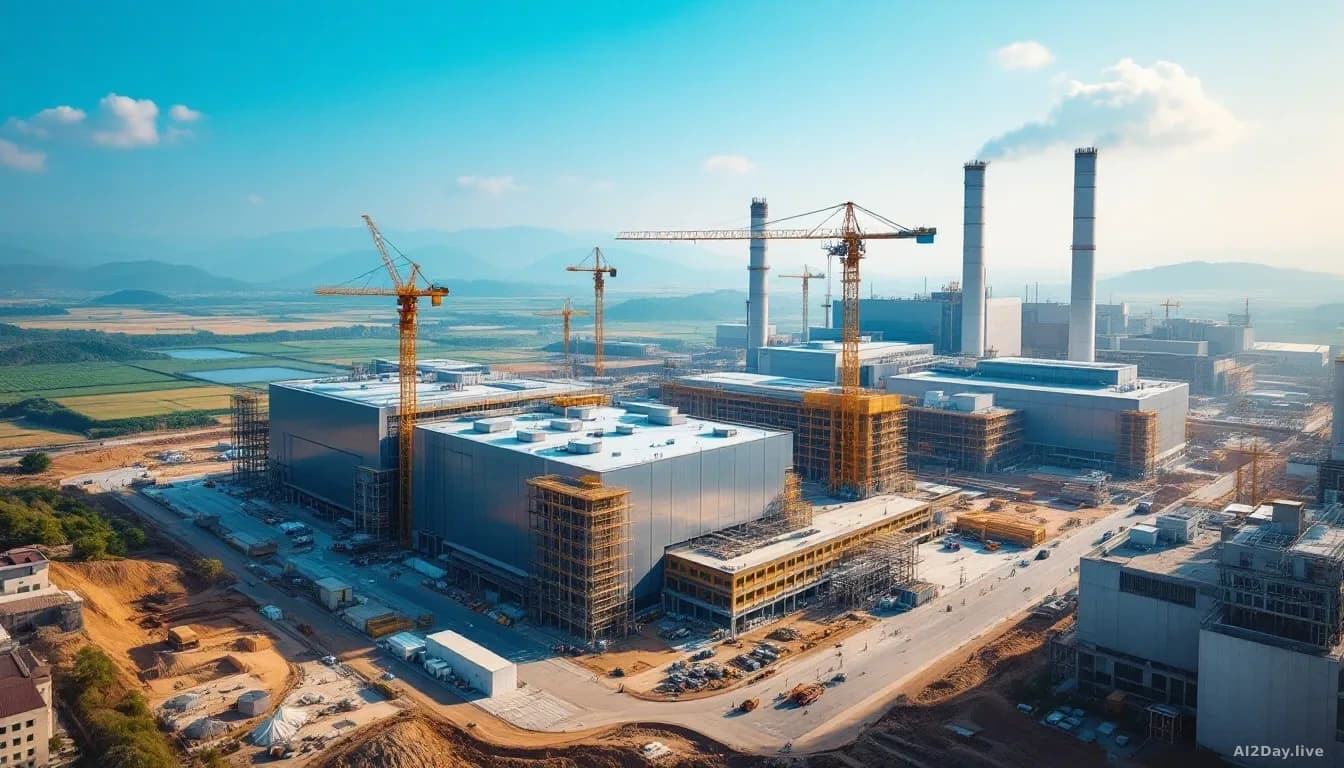
TSMC, Taiwan Semiconductor Manufacturing Co., makes the chips inside almost every smartphone and AI server on the planet. On Thursday, its chief financial officer told CNBC that the company is committing another $100 billion to its Arizona factories, lifting its total US investment pledge to $265 billion.
The driver is straightforward. Demand for AI chips is not a blip.
"We're seeing this strong-structure, multi-year demand, and we do not plan to leave any food on the table for anybody else," CFO Wendell Huang said.
To keep up, TSMC is converting some of its existing 5-nanometer production lines to the newer 3-nanometer process. The nanometer number describes the size of transistors, the tiny switches packed onto each chip. Smaller transistors mean more of them fit on a single piece of silicon, making chips faster and more power-efficient.
Phase one of the Arizona expansion, built around 4-nanometer technology, is already running. Huang described 2-nanometer technology as the company's next big revenue driver, with commercial production starting in the second quarter of 2026 and growing through the third.
Building in the US is expensive. Construction costs in Arizona run four to five times higher than equivalent facilities in Taiwan, a gap that will widen on profit margins as overseas operations grow. Even so, Huang said the expansion covers both the factories that print chips onto silicon wafers and the specialised packaging plants that prepare finished chips for use.
AI2Day has tracked this semiconductor investment wave since 18 July 2026, including ASML's revised sales forecast and the Asia chip stock sell-off that followed earnings season. The pattern is consistent: every major node in the AI supply chain is expanding fast and absorbing enormous capital.
Will this affect the chips inside everyday products?
Not immediately, but the direction is clear. TSMC's Arizona plants will gradually supply more of the chips used in US-sold devices and AI data centres, reducing dependence on overseas production. More local supply generally means more resilience if trade or politics cause disruption.
On China, Huang said TSMC continues to follow all export-control rules, government restrictions on which chips can be sold to which countries, while serving Chinese customers, a segment that made up about 8% of total revenue.
TSMC shares slumped roughly 7% on Friday after earnings, though the stock remains up around 48% for the year. Huang said the company can't control financial markets. "What we can do is really to focus on fundamentals of our business," he told CNBC.
The company also flagged a joint venture with Sony targeting image sensors, positioning physical AI, meaning AI that interacts with the world through cameras and robots, as another long-term growth area.
The judgement here: the cost gap between Arizona and Taiwan is the number to watch, not the headline investment figure. Margins will take the hit before consumers or governments do.