The AI Data Center That Fits in a Box: Inside Runware's Sonic Inference Pod
A startup wants to replace giant, water-hungry data centers with small, portable computing units that can be shipped anywhere there is a power socket. Here is what it is building, and whether it holds up.

Key points
- Runware launched the Sonic Inference Pod on Tuesday, a single transportable computing unit designed to run AI workloads near the people who need them.
- The company raised $50 million in a Series A round in December 2024 to build AI image-generation infrastructure.
- Runware currently has 10 pods active across the US, Europe and Asia-Pacific, with 160 potential sites already identified.
- The pods use a closed-loop cooling system that draws no water, unlike conventional data centers.
- Runware's clients include image-generation platform Higgsfield AI and website builder Wix.
Every time you ask an AI tool to generate an image or answer a question, a data center somewhere does the heavy lifting. Those centers are enormous, expensive and take years to build. Runware, an AI infrastructure company, thinks there's a better way.
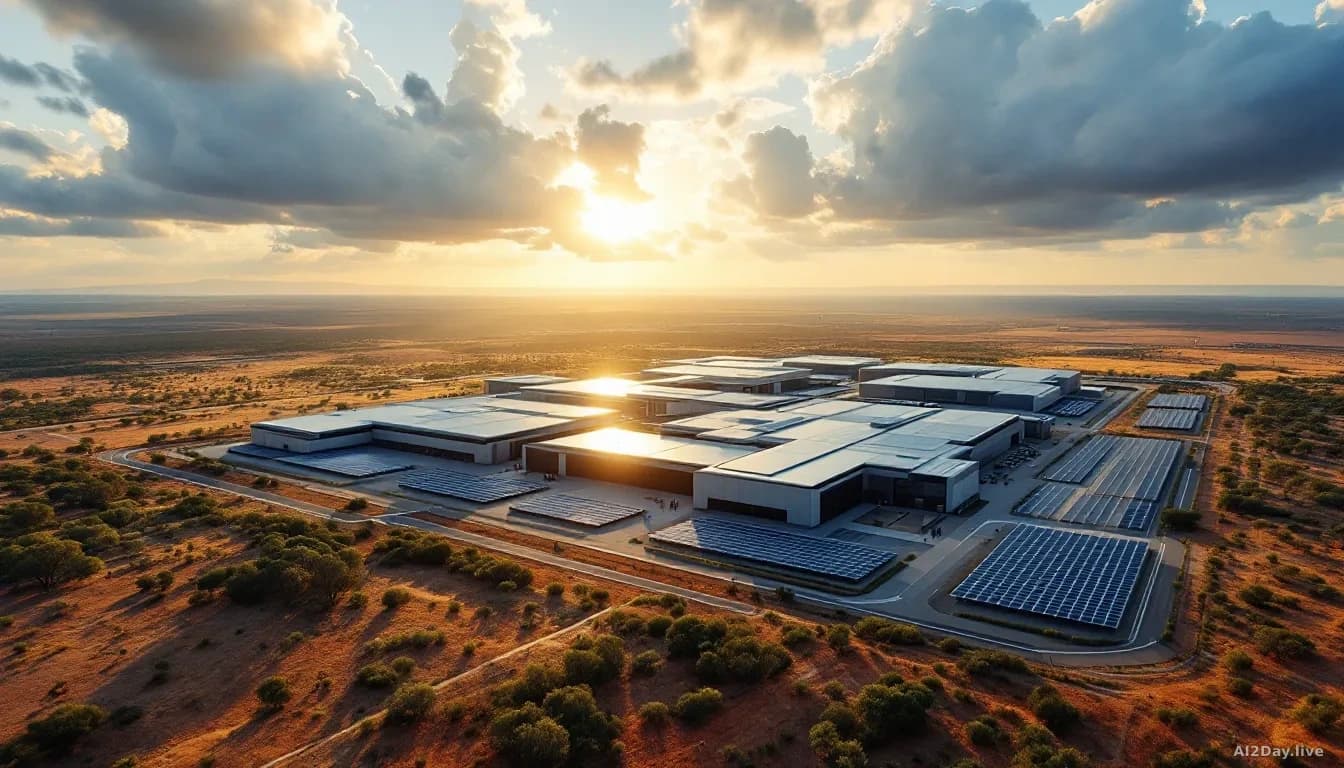
On Tuesday the company announced the Sonic Inference Pod: a modular, self-contained computing unit that can be shipped to almost any location with a power supply and set up in days. Think of it as a data center shrunk to the size of a large shipping container.
What does it actually do?
The pod handles inference, the process of running an AI model to produce an answer or an image, as opposed to the longer, costlier work of training a model. Runware claims its pods can do this at lower cost than competing cloud platforms while still delivering high-quality results.
Because the units are modular, adding capacity means shipping another pod, not breaking ground on a new building. Flaviu Radulescu, Runware's co-founder and CEO, told TechCrunch the design lets the company deploy anywhere there is power and adapt quickly when new chips arrive. "Demand for inference is growing faster than facilities can be built," he said.
Why does the cooling system matter?
Conventional data centers use enormous quantities of water to keep servers cool. The Sonic Inference Pod uses a closed-loop system instead, cycling the same fluid repeatedly with nothing drawn from local supplies. Runware says that matters both for the environment and for the communities near its sites.
The company isn't yet running entirely on renewable energy, and Radulescu acknowledged that AI power consumption will keep rising regardless of which company supplies the computing. His argument is that pods use power already on the grid rather than requiring new capacity, and that "more inference built this way means less new grid, less water, for the same amount of compute."
That is a company claim, not an independently verified finding. Readers should weigh it accordingly.
What does this mean for ordinary people?
Directly, not much yet. Runware sells computing capacity to businesses, not consumers. But if its cost claims hold, the companies building the AI tools people use daily could pass savings along.
The broader picture is worth watching. Our 4 August story "America Has a Data Center Problem, and AI Made It Worse" documented the fury ordinary Americans already feel about infrastructure arriving in their backyards, and rising utility bills are part of that story. A distributed model could ease that local pressure or simply spread it more widely. Nobody has independently tested which.
Runware's 10 active pods and 160 identified sites are a real start. The honest question isn't whether the concept is clever. It's whether a company at this scale can genuinely compete as OpenAI and others commit hundreds of billions to fixed infrastructure. The next two or three years will tell us far more than any launch announcement can.