Senator Markey's AI Bills Target Hiring Bots, Water Use, and Workplace Tracking
A package of four bills introduced in July 2025 would force companies to disclose how automated systems affect job seekers, workers, and local communities.
Key points
- Senator Ed Markey (Democrat, Massachusetts) introduced four AI accountability bills in July 2025.
- The bills address automated hiring tools, data centre resource use, workplace surveillance, and algorithmic bias in financial decisions.
- The International Energy Agency projected in its 2024 report that global data centre electricity demand could double by 2026, driven primarily by AI workloads.
- Under the hiring bill, applicants would have the legal right to know when software rejected them and to formally challenge that decision.
- None of the bills attempt to ban AI. They focus on disclosure, limits on data collection, and appeal rights.
Senator Ed Markey of Massachusetts introduced four bills in July 2025 designed to hold AI systems accountable for real-world harms happening right now. As first reported by Train2Secure, the package doesn't try to slow AI development. It tries to establish who pays when things go wrong.
Hiring software that no one questions
Most large employers now run job applications through automated screening tools before any human reads a resume. An algorithm, a set of rules a computer follows to score or filter candidates, can reject someone without a recruiter ever seeing their name. Markey's hiring bill would require companies to tell applicants when this is happening and give them a formal way to challenge a software rejection.
A 2023 study cited by the AI Now Institute found that these tools, trained on years of past hiring decisions, routinely penalise candidates from groups that were underrepresented in those historical hires. The bias isn't accidental. It's built into the training data.
Water and electricity: costs no one reports
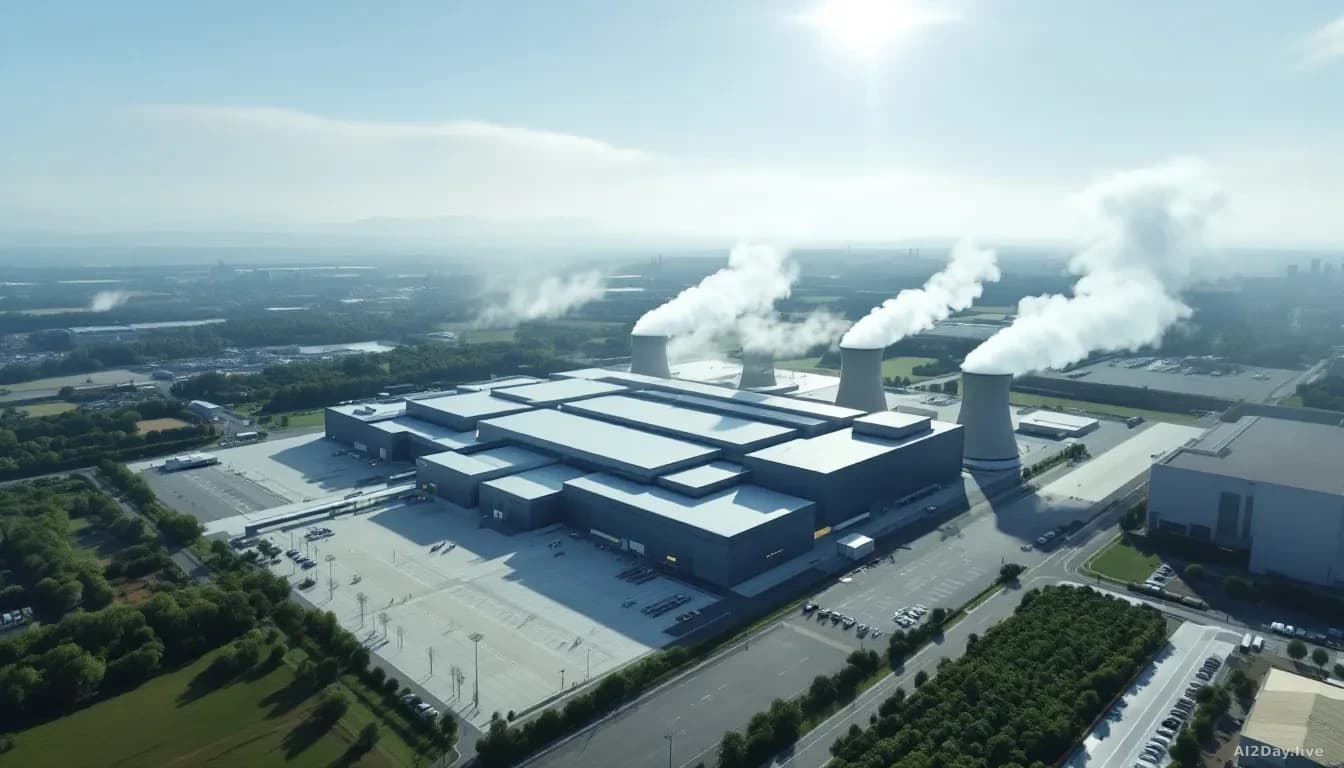
Running AI requires enormous amounts of electricity and water for cooling. A data centre is essentially a large building full of computers running around the clock. Neither cost appears on any consistent public record today.
Markey's proposal would require facilities to publish those figures. The International Energy Agency projected in its 2024 report that global data centre electricity demand could double by 2026. Our earlier story on Big Tech's AI Data Centres Now Emit as Much Carbon as a Third of France found that Microsoft, Amazon and Google collectively emitted 119 million metric tonnes of carbon dioxide last year, with new data centre construction the leading cause. Communities near those facilities absorb real costs today with almost no information on their scale.
Watching workers, second by second
Warehouse workers describe systems that track their movement speed in real time. Call centre staff report software that reads the emotional tone of their voice. Office workers face tools that log keystrokes or measure screen-away time. The third bill would restrict what data employers can collect this way and limit how it can be used to discipline staff.
Bias in loans and financial decisions
The fourth bill targets algorithmic bias, where software trained on historical data reproduces old patterns of discrimination in areas like loan approvals and fraud screening. No individual human may have made a biased choice, but the outcome is the same.
Should you worry about any of this?
For job seekers, the hiring bill means a legal right to know a computer screened them out and a path to ask why. Workers get tighter rules on granular employer tracking. Anyone living near a data centre would finally see hard numbers on water and power consumption.
None of this is law yet. The bills face the full legislative process. They do, however, map onto harms already affecting millions of American workers.
"We cannot afford to let Silicon Valley write the rules for a technology that affects every American worker and every American community," Markey said when introducing the package.
The thing worth watching here is the hiring-transparency provision. Disclosure rules with a real challenge mechanism are rare in labour law, and if this passes, it changes how every large employer in America documents its screening stack.



