OpenAI's First Hardware Device Is a Smart Speaker That Sees the Room
No screen, a roving camera, moving parts, and ChatGPT's voice built in. OpenAI's debut gadget is expected to land in 2027.
Key points
- OpenAI is building a screenless smart speaker with a camera and sensors, expected to launch in 2027.
- The device will run GPT-Live, OpenAI's upgraded voice model, announced in late June 2025.
- OpenAI partnered with former Apple designer Jony Ive after buying his design firm, io Products, for nearly $6.5 billion.
- The speaker is one of roughly five devices in OpenAI's planned hardware lineup.
- OpenAI is also partnering with keyboard maker Work Louder on a smaller gadget called the Codex Micro, due July 15th.
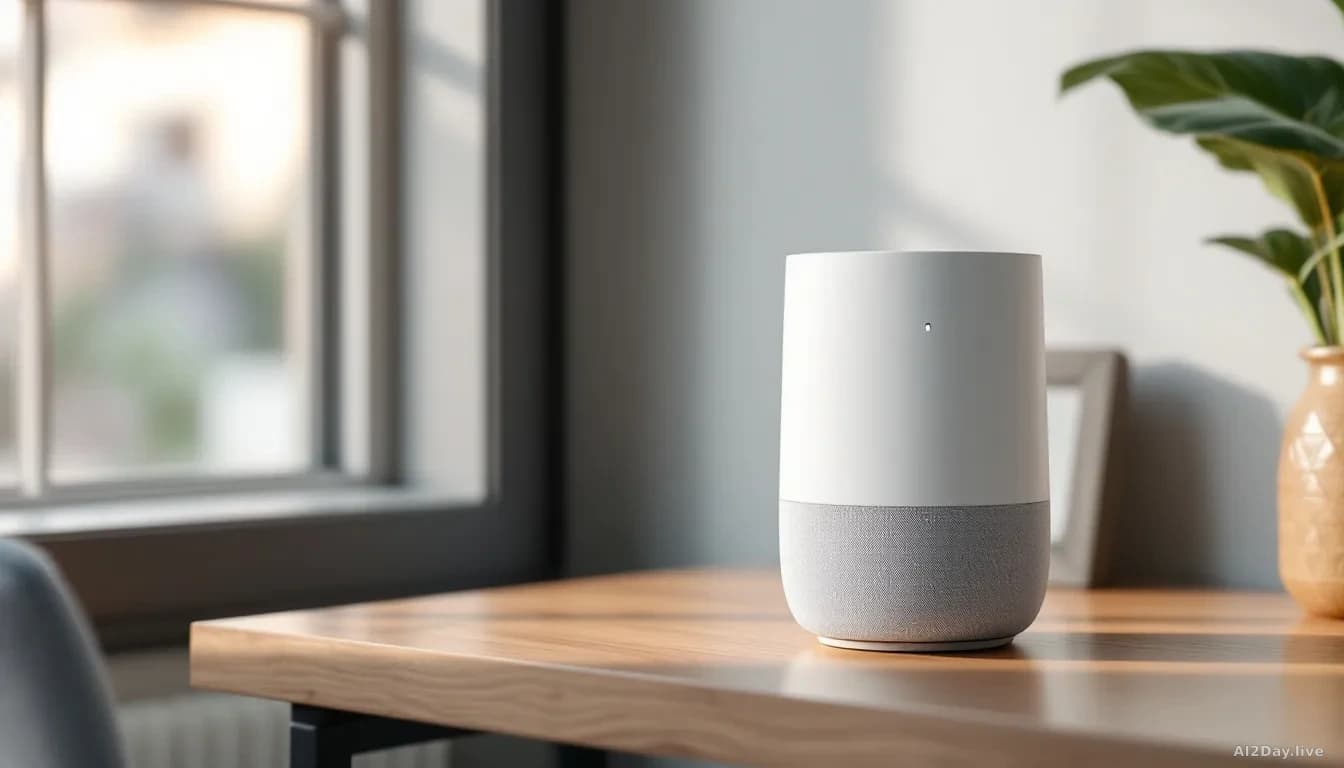
Picture a speaker you can carry in your bag. No screen, but a camera that watches the room around you, extra sensors that read your environment, and a voice with the full conversational smarts of ChatGPT. That is OpenAI's first piece of hardware, first reported by The Verge AI, citing Bloomberg.
It'll answer questions, play music, control smart-home gadgets like lights and thermostats, and reply to messages on your behalf. The rechargeable battery means it travels with you. Bloomberg also says mechanical parts let it physically turn or shift as you talk, a detail The Information previewed with a similar prototype back in February.
All of that runs on GPT-Live, OpenAI's upgraded voice model built for fluent, back-and-forth spoken conversation. We covered GPT-Live when it first appeared on 14 July 2026.
Who is actually building this thing?
Jony Ive is the designer behind it. He spent decades at Apple shaping the iPhone and the MacBook before OpenAI bought his design company, io Products, for close to $6.5 billion earlier this year. The hardware lineup runs to roughly five devices total.
There's a legal wrinkle worth knowing. Apple filed a lawsuit against OpenAI just days before Bloomberg's report, and we've covered the dispute in depth: the most detailed account is our 41-page lawsuit story from 13 July 2026, which found Apple accusing OpenAI of coaching departing staff to smuggle out confidential files and prototype parts. OpenAI said Tuesday it's "not aware of any evidence that this complaint has merit." The lawsuit is a separate matter from the device, but the timing is hard to ignore.
Should you worry about the camera?
The launch target is 2027, so there's time to think this through. A smaller accessory called the Codex Micro, built with Work Louder, arrives July 15th and will be the first OpenAI hardware most people can actually buy.
For anyone considering the speaker, the camera is the honest sticking point. It's opt-in and portable, but deciding how much of your living room you want an AI to see is a real call, not a small print one. Worth settling before day one.