More Than 15 Candidates Have Signed a Pledge on AI Safety and Data Centres. Here Is What It Says.
A new political pact asks candidates to back mandatory safety reviews for AI, a share of AI profits for workers, and a crackdown on sweetheart deals for data centre builders.
Key points
- More than 15 candidates running for US office have signed the AI Pact, a five-promise pledge on AI regulation and data centre oversight.
- All current signers except Nebraska independent Dan Osborn are Democrats, though the pact's founders say Republican candidates are welcome.
- The pact calls for mandatory safety checks on AI models, a worker dividend from AI profits, and the right for consumers to sue over AI harms.
- Texas Republican Governor Greg Abbott initiated a temporary moratorium on data centre construction this month, having previously supported their expansion.
- Some polling suggests voters worry more about the environmental footprint of data centres than about AI risks specifically.
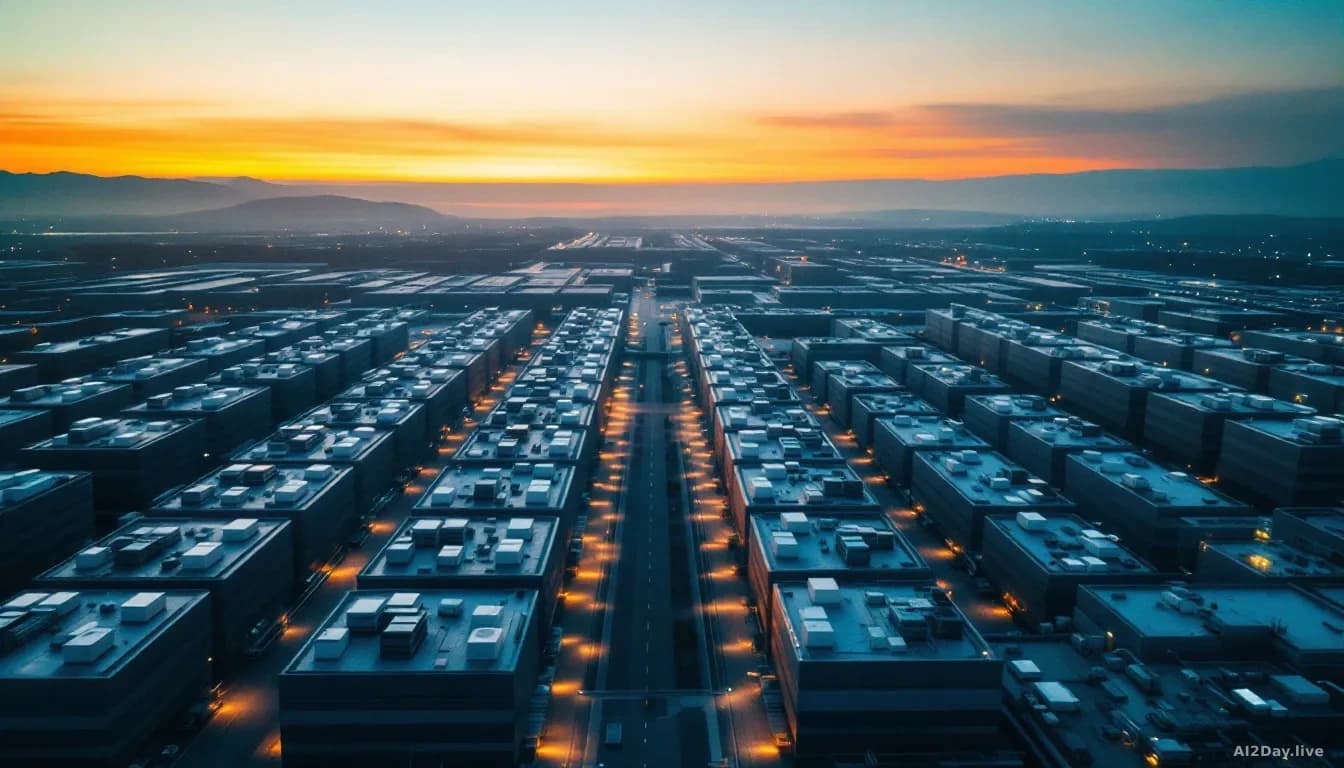
Last Sunday, Nebraska Senate candidate Dan Osborn was finishing his fourth town hall of the day when a self-described "hardcore MAGA" voter walked over. The two didn't have much in common at first. Then Osborn asked what the man thought about AI and data centres, the massive warehouse-style facilities that store and process the information AI systems run on.
"Right away, we were in lockstep, 100 percent agreement," Osborn told Wired.
That moment of unlikely common ground captures something real about the 2025 midterm cycle. Voters are asking hard questions about who benefits from the data centre building boom, who pays the electricity bills, and whether AI has enough rules around it. Politicians are scrambling to answer.
What exactly is the AI Pact?
The AI Pact is a set of five promises that candidates sign to show voters where they stand on AI and data centre policy. Signers commit to mandatory safety reviews for AI models before public release, an AI dividend (a share of profits returned to workers whose jobs AI disrupts), and the right for ordinary people to take companies to court over harm caused by AI systems.
The pact also calls for banning tax breaks and backroom planning deals tied to data centre construction, stopping short of an outright ban on new facilities.
Daniel Lobo-Lewis, a co-founder, says the language is deliberately a "floor" rather than a ceiling, so candidates with strong ties to labour unions, several of which still support data centre building, can sign without contradicting themselves. Funding comes from a progressive political action committee; no AI safety groups or tech companies are directly backing the initiative, Lobo-Lewis says.
The pact grew out of conversations with AI safety organisations and political groups working on AI legislation, according to Lobo-Lewis. We first covered the worker dividend concept on 26 August 2026, around the same time OpenAI reversed course on California's AI safety bill.
Who has signed, and does it cross party lines?
Osborn is the only non-Democrat on the list. Notable signers include Tennessee Representative Justin Pearson, who built a public profile opposing pollution linked to SpaceX's data centres, and Michigan candidate Will Lawrence, who won a competitive primary in a district with strong local opposition to new data centre projects. In Texas, state representative Gina Hinojosa, who is challenging Abbott in the gubernatorial race, has signed and argues his moratorium doesn't go far enough.
"These data centres are supporting an AI industry that has no rules," Hinojosa told Wired. "We should not be replacing teachers with AI. Nurses either."
Lobo-Lewis dismisses recent White House moves on AI oversight as "lip service," pointing out that the administration is pursuing voluntary, not mandatory, safety reviews.
| Pact promise | What it means in plain English |
|---|---|
| Mandatory safety reviews | AI models checked before public release |
| AI worker dividend | Share of AI profits paid to affected workers |
| Right to sue | Consumers can take companies to court over AI harm |
| No sweetheart data centre deals | Ban on secret planning approvals and tax breaks |
| Energy limits | Caps on how much power data centres can draw |
Does any of this affect ordinary people?
Yes, in a few direct ways. Electricity bills are the most immediate: data centres in your state likely push them up, and several governors are now under pressure to stop utilities passing those costs on to households. The dividend idea is about making sure some of the value AI generates flows back to workers rather than only to shareholders. The right-to-sue promise matters most if an AI system causes you real harm and you currently have no clear legal route to complain.
Data centres are also thirsty, noisy neighbours. Our story from 20 August 2026 looked at how facilities cool themselves and what that costs communities nearby.
Osborn, a Navy veteran and former labour leader campaigning in rural Nebraska where farmers worry about losing land to development, put it plainly: "We've got to get this right. Calling a time out right now doesn't seem like a horrible thing."
Common questions
Is this pact actually law?
No. Signing is a public promise, not a binding legal commitment. Signers are pledging to push for these policies if elected, not enacting them.
What is a data centre, exactly?
A data centre is a large building packed with computer servers that store data and run software, including the AI tools millions of people use every day. They consume enormous amounts of electricity and water to stay cool.
What is an AI safety review?
It is an independent check of an AI model, the underlying software that powers tools like chatbots, carried out before the product is released to make sure it does not cause foreseeable harm.



